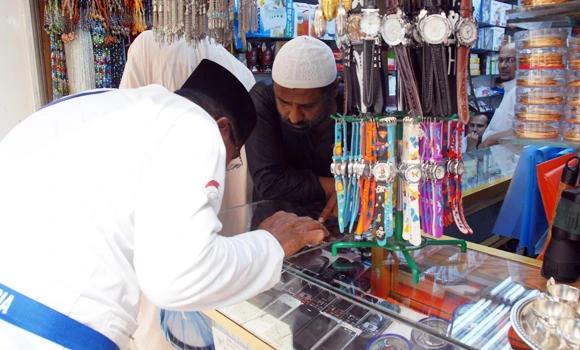
Rising inflation and the reduced number of Umrah pilgrims have seen revenues dive for traders in Makkah and Madinah.
They also complain that many foreign Umrah pilgrims in the two cities are not spending much money, possibly because of the poor economic situation in their home countries.
Nasif Ali, a Palestinian who sells perfumes, dates, incense and honey, told Arab News that the past Ramadan was the best month to make money.
“This year we are suffering because there is low demand from visitors for traditional Saudi products such as honey and incense. People don't buy even when we reduce our prices.” Most customers only buy necessary items, he said.
Abdullah Qaoud, the owner of a gift shop close to the Grand Mosque, said most Umrah pilgrims do not buy souvenirs because of rising inflation.
“We usually sell a large amount of accessories and bibelots, even at high prices. Umrah pilgrims from Egypt, Pakistan and North African countries are always interested in buying Saudi souvenirs. This year we noticed a sharp decline in sales. We are suffering because we also have to pay high rents to shop owners,” he said.
Walid Salem, an economist, told Arab News that three main factors have influenced trade in the holy month. “These are inflation, the weak purchasing power of visitors, and the limited number of Umrah performers,” he said. “Visitors are only allowed to stay for 15 days. This will affect the religious tourism season.”
“The recent announcement by the Makkah money exchange committee confirmed that the currency exchange rate dropped by 70 percent, which is clear evidence of the tough financial situation of most Umrah pilgrims,” he said.
He said many traders have themselves to blame because they have raised prices in an “illogical way.”
Mohammed Rida, an Egyptian pilgrim, decided not to buy any extra items this year. “I usually visit the Kingdom every five years, and buy gifts for my relatives. In Egypt, many of my friends normally ask me to buy dates and honey for them. This year, my relatives and friends decided not to buy anything because of their poor financial situation,” he said.

Traders not blessed with high profits this Ramadan