Many legal expatriates are worried that they may be liable to penalties under the new labor laws, which stipulate that the professions stated on their residency permits match the jobs they currently do.
The new law comes into effect Monday.
Arab News spoke with several Saudi shop owners in Batha, a hub for Asian workers.
“We cannot foresee the effects of the crackdown,” said one Saudi owner of an electronic shop requesting anonymity. “We will wait and see what will happen to market sales after the crackdown.”
He said he was in favor of the new regulation but that such a law “should not take effect at our cost and should not affect our sales volume.”
Such reactions have come in response to a much publicized advisory warning residents to match their professions and sponsors with the details provided on their residency permits.
According to the labor advisory, the inspection process will cover more than 500,000 buildings that are registered as organizations hiring expatriates and does not include Saudis.
Despite the fact that many workers have expressed concern over the situation, their companies continue to maintain that there is nothing to worry about as long as they work in the same line of business within the company that has sponsored them.
“These ongoing measures are only directed against people who flout the laws and exploit loopholes in the system. Expatriates who respect the law and are residing in the Kingdom legally have nothing to worry about,” said Rashid Arañas Fabricante, a veteran community leader.
Meanwhile, expats running commercial businesses either directly or indirectly for their own benefit, many of whom work in prominent markets, are concerned over the upcoming crackdown.
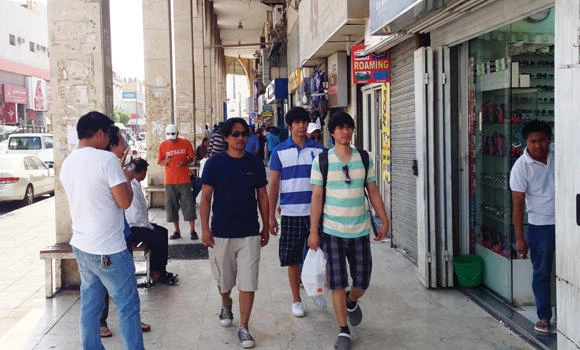
One such market is the Batha market in Riyadh’s city center, where there are hardly any Saudi-run or managed shops.
Every corner of the market is monopolized by workers from Asian countries such as the Philippines, India, Pakistan, Bangladesh and, more recently, Nepal.
Besides legal shops selling a variety of items, ethnic products such as food items, are on display along the sidewalk.
Arab News asked one Filipino selling home-made soup or spring rolls to fellow compatriots on the street what he would do when inspections begin Monday.
He said he would assess the situation before taking any rash decision. “I am legally employed, but make use of my weekends to sell food in Batha for extra money,” he told Arab News.
For an Indian salesman, the prospects seem bleak. “My colleagues and I pay a fixed amount to our sponsor (kafeel), who owns this shop, but he does not come here at all.
He only takes money from us in exchange for us being able to trade on his property,” he said. He did, however, say that his sponsor would protect them when inspectors appear.
A Bangladeshi tea boy has had his sponsorship transferred but will have to shell out SR9,000 to his new sponsor. “I have to pay him the money in installments of SR1,000 every month.”
Many such workers have now become a source of income for various establishments. “Many of my friends have paid much more than this to remain legally in the country,” the tea boy, who did not want to be identified, told Arab News.
Taher Qasim, a Yemeni salesman at an electronics shop, welcomed the new labor laws. “We welcome this system because any thriving market requires sound regulations and systems,” he said. “Having operated for many years without a regulatory system, the Batha market is chaotic.”
“Our business is legal and we welcome the new laws that will make the market more systematized.”
Under the new labor laws, expats who run commercial businesses on their own account and female housekeepers, drivers and guards who work for people other than the sponsors stated on their permits will become liable for legal action.
Drivers have been warned to drive vehicles owned by their sponsors and guards and housemaids have been told to work solely in buildings owned by their sponsors.
With raids looming, shop owners fear revenue loss