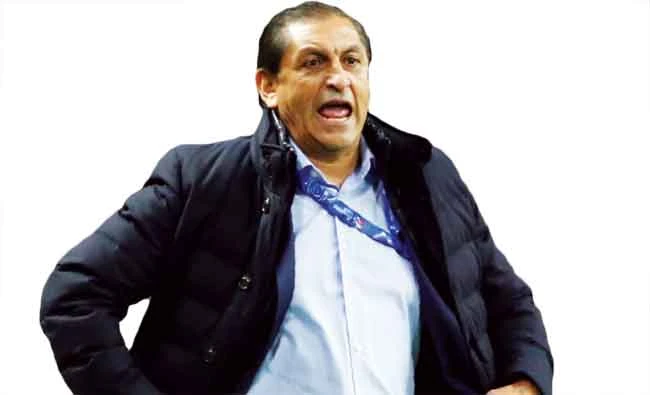
TOKYO: Al-Hilal coach Ramon Diaz said that his side can take positives from the result, but most importantly they need to analyze what they can do to improve on their second runner-up finish in four years. Here we take a look at five key reason why the Riyadh giants lost the battle of Saitama.
Futile Possession
Al-Hilal were unchanged from the first leg apart from the introduction of Nawaf Al-Abid to replace the injured Carlos Eduardo. A similar line-up produced a similar scenario as the Saudi side enjoyed 63 percent of the possession and made twice as many successful passes (488) as Urawa (236). Crucially, however, Al-Hilal were not as efficient as they were in Riyadh. Only one of their 12 shots was aimed between the sticks.
Diaz was left to rue the team’s failure to create chances more consistently, which undermined their pursuit of a goal in Saitama. Cliché, it may be, but if you don’t create chances, you don’t score goals.
Disconnect Between Midfield and Attack
Al-Hilal’s clearest chance of the game came in the final five minutes of the first half when central midfielder Nicolas Milesi moved higher up the pitch and exchanged passes with Omar Khribin before firing his shot from inside Urawa’s penalty area wide.
Throughout the 90 minutes, Diaz’s men were unable to replicate this combination play as the attacking trio looked constantly isolated from the three central midfielders. Ultimately, the attacking intent that served the Riyadh giants so well throughout the competition was absent in Japan and the result was failure to score for just the third time in their 12 matches in the competition.
Failure to Stretch Play
Attacking trio Al-Abid, Khribin and Salem Al-Dawsari played in a compact triangle as the full-backs looked to stretch play on the flanks. However, Al-Dawsari’s insistence on penetrating individually down the middle undermined their att-empts to break Urawa’s defense.
The winger failed to find left back Yasir Al-Shahrani out wide on multiple occasions and ultimately, it was his solo approach that led to his dismissal after the ball escaped him and he rushed into a high tackle to earn a 78th-minute red card.
On the opposite flank, Mohamed Al-Burayk was of Al-Hilal’s attacking outlets in the first leg, but Urawa Reds coach Takafumi Hori learned his lesson from last week and sent out his left-back Tomoya Ugajin to cancel out the threat of Al-Hilal’s right-back. Urawa’s No.3 was fully successful in the challenge as Al-Burayk failed to register a single successful cross into the box all game.
Lack of Options on the Bench
Khribin was at the receiving end of a heavy challenge inside the first quarter of an hour and the Syrian struggled with a niggling injury until Diaz eventually had to withdraw him prematurely in the 62nd minute.
Khribin’s injury coupled with Al-Dawsari’s sending off may have hindered Al-Hilal’s pursuit of an away goal, but as Diaz looked for solutions on the bench, he only had veterans Yasser Al-Qahtani and Mukhtar Fallatah to choose between. The duo had played fewer than 60 minutes in the competition and had not scored a single goal. It was unrealistic to expect them to turn the game around in the final half an hour, but Diaz had no other options.
Intelligent Urawa Tactics
Hori fielded the same Urawa starting XI that secured a 1-1 draw in Riyadh last week, but Urawa applied advanced pressure higher up the field than they did in the away leg and their pressing forced mistakes in Al-Hilal’s backline. Just a minute into the game, Abdullah Otayf failed to control an overhit pass by center-back Mohamed Jahfali allowing Kazuki Nagasawa to seize possession on the edge of the area, but his left-footed effort sailed wide. Urawa’s pressure continued to disturb Al-Hilal’s ability to build from the back and their quick counter-attacking style eventually produced a goal through Rafael Silva. Diaz was unable to cancel the Japanese threat on the counter, especially after his side were reduced to ten men.
Futile Possession
Al-Hilal were unchanged from the first leg apart from the introduction of Nawaf Al-Abid to replace the injured Carlos Eduardo. A similar line-up produced a similar scenario as the Saudi side enjoyed 63 percent of the possession and made twice as many successful passes (488) as Urawa (236). Crucially, however, Al-Hilal were not as efficient as they were in Riyadh. Only one of their 12 shots was aimed between the sticks.
Diaz was left to rue the team’s failure to create chances more consistently, which undermined their pursuit of a goal in Saitama. Cliché, it may be, but if you don’t create chances, you don’t score goals.
Disconnect Between Midfield and Attack
Al-Hilal’s clearest chance of the game came in the final five minutes of the first half when central midfielder Nicolas Milesi moved higher up the pitch and exchanged passes with Omar Khribin before firing his shot from inside Urawa’s penalty area wide.
Throughout the 90 minutes, Diaz’s men were unable to replicate this combination play as the attacking trio looked constantly isolated from the three central midfielders. Ultimately, the attacking intent that served the Riyadh giants so well throughout the competition was absent in Japan and the result was failure to score for just the third time in their 12 matches in the competition.
Failure to Stretch Play
Attacking trio Al-Abid, Khribin and Salem Al-Dawsari played in a compact triangle as the full-backs looked to stretch play on the flanks. However, Al-Dawsari’s insistence on penetrating individually down the middle undermined their att-empts to break Urawa’s defense.
The winger failed to find left back Yasir Al-Shahrani out wide on multiple occasions and ultimately, it was his solo approach that led to his dismissal after the ball escaped him and he rushed into a high tackle to earn a 78th-minute red card.
On the opposite flank, Mohamed Al-Burayk was of Al-Hilal’s attacking outlets in the first leg, but Urawa Reds coach Takafumi Hori learned his lesson from last week and sent out his left-back Tomoya Ugajin to cancel out the threat of Al-Hilal’s right-back. Urawa’s No.3 was fully successful in the challenge as Al-Burayk failed to register a single successful cross into the box all game.
Lack of Options on the Bench
Khribin was at the receiving end of a heavy challenge inside the first quarter of an hour and the Syrian struggled with a niggling injury until Diaz eventually had to withdraw him prematurely in the 62nd minute.
Khribin’s injury coupled with Al-Dawsari’s sending off may have hindered Al-Hilal’s pursuit of an away goal, but as Diaz looked for solutions on the bench, he only had veterans Yasser Al-Qahtani and Mukhtar Fallatah to choose between. The duo had played fewer than 60 minutes in the competition and had not scored a single goal. It was unrealistic to expect them to turn the game around in the final half an hour, but Diaz had no other options.
Intelligent Urawa Tactics
Hori fielded the same Urawa starting XI that secured a 1-1 draw in Riyadh last week, but Urawa applied advanced pressure higher up the field than they did in the away leg and their pressing forced mistakes in Al-Hilal’s backline. Just a minute into the game, Abdullah Otayf failed to control an overhit pass by center-back Mohamed Jahfali allowing Kazuki Nagasawa to seize possession on the edge of the area, but his left-footed effort sailed wide. Urawa’s pressure continued to disturb Al-Hilal’s ability to build from the back and their quick counter-attacking style eventually produced a goal through Rafael Silva. Diaz was unable to cancel the Japanese threat on the counter, especially after his side were reduced to ten men.