LONDON: It’s indicative of just how impressive Manchester City’s start to the season has been that their recent run of four single-goal victories, followed by defeat with a weakened team away to Shakhtar having already won their Champions League group, is being seen as evidence of a possible slump.
For the first three months of the season, City played extraordinary football, breaking goal-scoring records that had stood since the 19th century and pulling away at the top of the table. Should they beat Manchester United at Old Trafford tomorrow, the gap will be 11 points and the title race would feel as good as done.
And yet this recent run does feel significant, in part because of the memory of last season. Then too, City began the season brilliantly, winning their first 10 games. By the end of September they had a comfortable lead in the Premier League, but then came a run of six games without a win from which they never really recovered.
This present slowdown is not as severe as that, clearly, and it has come two months later, but it’s possible that the cause is similar. Could it be that Pep Guardiola’s summer planning, the physical and tactical work he does, slowly loses its potency, that in the rush of games fatigue sets in and there is insufficient time to reset and reapply his principles in the training ground? It would make sense that that entropic process would take longer to take effect in a second season.
There are those who suggest that the past five games — victories over Feyenoord, Huddersfield, Southampton and West Ham secured with goals in the final ten minutes, followed by the defeat in Ukraine — offer evidence City have been “worked out”. Perhaps there is an element of that; it happens to every side that rivals, after sufficient time and with sufficient evidence to analyze, begin to see weaknesses or at least ways to combat strengths. But it could equally be that City had already secured progress to the last 16 of the Champions League and that the three Premier League matches were all against opponents who set up in a similar style.
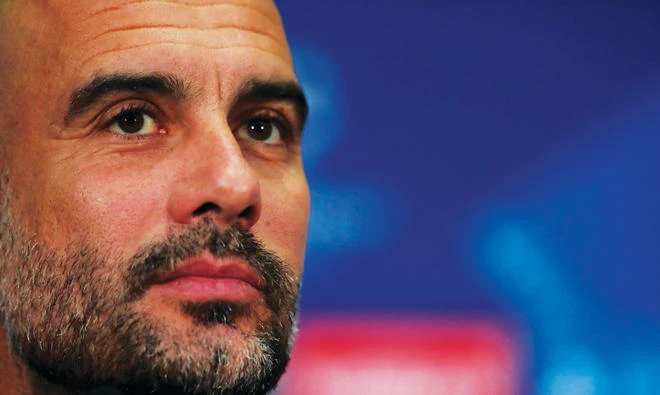
All three teams sat deep, allowed City to have the ball, denied them space and looked to play on the counter. That’s not really working City out: Huddersfield, Southampton and West Ham would naturally play like that against a top side and, anyway, it’s been accepted since Guardiola’s first weeks at Barcelona that that’s the most efficient way to play against his sides. It’s clearly rattled Guardiola who, as well as his bizarre buttonholing of Nathan Redmond as he left the pitch after the Southampton game, apparently to tell him he was too good to play so defensively, also criticized West Ham for their negativity. It’s safe to assume Jose Mourinho (pictured) will have his United side set up in that way on Sunday.
City have win a record-equaling 13 games in a row in the Premier League. This is a downturn in form of which most sides could only dream, and yet it does feel that they’re entering a critical phase of the season. If preparation time is the issue, City will be tested over the winter period. Last season they lost three games in December and dropped a further five points into January. They are two games in to a run of 10 matches in a month before the FA Cup offers some respite at the beginning of January.
That is a test of squad depth and physical fitness — on both of which points City should be fine — but it is also a test of player initiative. Guardiola is famous for the meticulousness of his preparation but with just three days between games, which have to include recovery and travel time, it simply isn’t possible to impose new plans for every opponent. Mourinho has in the past spoken of creating in his players a mental state that allows them to respond in the way he wants in any given situation. Guardiola’s input is far more direct, far more about designing specific strategies for specific circumstances.
The effectiveness of that approach in the context of English football will be severely tested over the next month — although by then the title may already have been won.
For the first three months of the season, City played extraordinary football, breaking goal-scoring records that had stood since the 19th century and pulling away at the top of the table. Should they beat Manchester United at Old Trafford tomorrow, the gap will be 11 points and the title race would feel as good as done.
And yet this recent run does feel significant, in part because of the memory of last season. Then too, City began the season brilliantly, winning their first 10 games. By the end of September they had a comfortable lead in the Premier League, but then came a run of six games without a win from which they never really recovered.
This present slowdown is not as severe as that, clearly, and it has come two months later, but it’s possible that the cause is similar. Could it be that Pep Guardiola’s summer planning, the physical and tactical work he does, slowly loses its potency, that in the rush of games fatigue sets in and there is insufficient time to reset and reapply his principles in the training ground? It would make sense that that entropic process would take longer to take effect in a second season.
There are those who suggest that the past five games — victories over Feyenoord, Huddersfield, Southampton and West Ham secured with goals in the final ten minutes, followed by the defeat in Ukraine — offer evidence City have been “worked out”. Perhaps there is an element of that; it happens to every side that rivals, after sufficient time and with sufficient evidence to analyze, begin to see weaknesses or at least ways to combat strengths. But it could equally be that City had already secured progress to the last 16 of the Champions League and that the three Premier League matches were all against opponents who set up in a similar style.
All three teams sat deep, allowed City to have the ball, denied them space and looked to play on the counter. That’s not really working City out: Huddersfield, Southampton and West Ham would naturally play like that against a top side and, anyway, it’s been accepted since Guardiola’s first weeks at Barcelona that that’s the most efficient way to play against his sides. It’s clearly rattled Guardiola who, as well as his bizarre buttonholing of Nathan Redmond as he left the pitch after the Southampton game, apparently to tell him he was too good to play so defensively, also criticized West Ham for their negativity. It’s safe to assume Jose Mourinho (pictured) will have his United side set up in that way on Sunday.
City have win a record-equaling 13 games in a row in the Premier League. This is a downturn in form of which most sides could only dream, and yet it does feel that they’re entering a critical phase of the season. If preparation time is the issue, City will be tested over the winter period. Last season they lost three games in December and dropped a further five points into January. They are two games in to a run of 10 matches in a month before the FA Cup offers some respite at the beginning of January.
That is a test of squad depth and physical fitness — on both of which points City should be fine — but it is also a test of player initiative. Guardiola is famous for the meticulousness of his preparation but with just three days between games, which have to include recovery and travel time, it simply isn’t possible to impose new plans for every opponent. Mourinho has in the past spoken of creating in his players a mental state that allows them to respond in the way he wants in any given situation. Guardiola’s input is far more direct, far more about designing specific strategies for specific circumstances.
The effectiveness of that approach in the context of English football will be severely tested over the next month — although by then the title may already have been won.