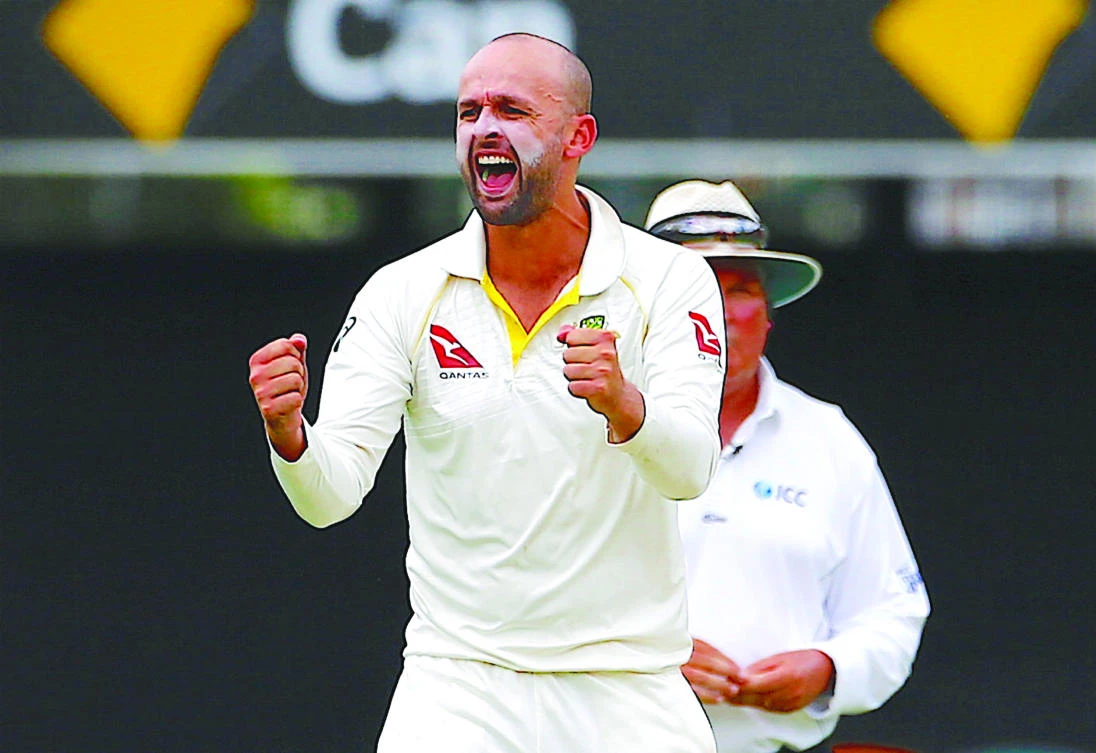
LONDON: After three days of cut, thrust and parry, the first Ashes Test at the Gabba in Brisbane was poised on a knife edge. But with England’s batting collapsing the second time, the hosts reached the target of 170 without the loss of a wicket to canter to a 10-wicket victory . Here, we look at five things we learned from the series opener.
Smith is the modern-day Bradman
In 16 home Tests as captain, Steve Smith has now scored eight centuries, at a Bradman-esque average of 83.81. With his match-winning 141 he has also gained entry into the Greatest Ashes Innings club. There have been few comparable innings by Aussie captains in an Ashes clash. Unsurprisingly, Bradman still sets the standard with his 270 from No. 7 — he reversed the batting order on a sticky wicket — at the MCG, when Australia were 2-0 down in the 1936-37 series. They would go on to triumph 3-2.
Smith’s innings was all the more remarkable because this wasn’t your traditional fast Gabba pitch. Australia’s run rate in the first dig (2.51) was their lowest in a completed innings there since November 1990.
Variety isn’t England’s spice
Smith aside, you can look at the bowling figures for each side’s third seamer to understand why England were so badly beaten. Chris Woakes had match figures of one for 113. Pat Cummins took four for 108, including the vital wickets of Joe Root and Jonny Bairstow in the first innings. Cummins was also genuinely quick, with the vicious bouncer to Jake Ball — who did well to avoid bodily harm — that ended England’s second innings a grim reminder of the potential damage a cricket ball can do. By contrast, there was a sameness to England’s four-man seam attack, with all of them in the same pace bracket. Not one was anywhere near as quick as Mitchell Starc or Cummins, and it may not be the worst idea to keep Mark Wood, currently with the England Lions, on standby.
Spin for the win
Despite its reputation as a pace bowler’s paradise, the Gabba has also been a happy hunting ground for quality spinners. The great Shane Warne took 68 wickets there from 11 Tests, at a miserly average of 20.30. Nathan Lyon’s offspin isn’t in the same league, but after seven Tests in Brisbane, he can point to handy numbers — 31 wickets at 27.70. His 60 overs in this match went for just 145, and fetched him five wickets. More importantly, his ability to bottle up an end allowed Smith to rotate his quicks and keep them relatively fresh. Moeen Ali, Lyon’s opposite number, had figures of two for 74 in the first innings and bowled just four overs in the second as he struggled with a finger injury. England’s back-up spin option is Mason Crane, a 20-year-old who has yet to make his debut.
Runs tell a tail
Back in 2013, Australia slumped to 132 for six on the opening day of the series at the Gabba. But Brad Haddin and Mitchell Johnson took them to 295, before Johnson steamed in to establish an advantage that wouldn’t be relinquished all summer. This time, Australia were 76 for four and then 209 for seven in response to England’s 302. But Smith added 99 with Shaun Marsh and 66 with Cummins as his team eked out a small lead. England, sitting pretty on 246 for four at one stage, lost their last six wickets for 56 in the first innings, and their last five for 40 in the second. The lower-order batsmen simply had no answer to Australia’s pace attack, much as the 2013 vintage had no response to Johnson.
Keep the fights on the field
England are already playing this series without one of their talismans, Ben Stokes, who’s back in the UK awaiting the outcome of a police investigation into an assault charge after a late night in Bristol. The last thing they need in a country where the media and fans can sledge you just as much as the players is another controversy. But that’s what they seem to have got, with stories of Bairstow allegedly leaning his head into Cameron Bancroft’s face while the touring party was in Perth. Both sides have now brushed off the incident, but Smith admitted that it might have played a part in Bairstow’s second innings dismissal. “I think it was basically about trying to get Jonny off his game, to be honest with you,” he said. “And I think it worked with the way he got out. He got caught at third man playing a pretty ordinary stroke, to be fair.” If they’re going to win the Ashes, England need to be far smarter.
Smith is the modern-day Bradman
In 16 home Tests as captain, Steve Smith has now scored eight centuries, at a Bradman-esque average of 83.81. With his match-winning 141 he has also gained entry into the Greatest Ashes Innings club. There have been few comparable innings by Aussie captains in an Ashes clash. Unsurprisingly, Bradman still sets the standard with his 270 from No. 7 — he reversed the batting order on a sticky wicket — at the MCG, when Australia were 2-0 down in the 1936-37 series. They would go on to triumph 3-2.
Smith’s innings was all the more remarkable because this wasn’t your traditional fast Gabba pitch. Australia’s run rate in the first dig (2.51) was their lowest in a completed innings there since November 1990.
Variety isn’t England’s spice
Smith aside, you can look at the bowling figures for each side’s third seamer to understand why England were so badly beaten. Chris Woakes had match figures of one for 113. Pat Cummins took four for 108, including the vital wickets of Joe Root and Jonny Bairstow in the first innings. Cummins was also genuinely quick, with the vicious bouncer to Jake Ball — who did well to avoid bodily harm — that ended England’s second innings a grim reminder of the potential damage a cricket ball can do. By contrast, there was a sameness to England’s four-man seam attack, with all of them in the same pace bracket. Not one was anywhere near as quick as Mitchell Starc or Cummins, and it may not be the worst idea to keep Mark Wood, currently with the England Lions, on standby.
Spin for the win
Despite its reputation as a pace bowler’s paradise, the Gabba has also been a happy hunting ground for quality spinners. The great Shane Warne took 68 wickets there from 11 Tests, at a miserly average of 20.30. Nathan Lyon’s offspin isn’t in the same league, but after seven Tests in Brisbane, he can point to handy numbers — 31 wickets at 27.70. His 60 overs in this match went for just 145, and fetched him five wickets. More importantly, his ability to bottle up an end allowed Smith to rotate his quicks and keep them relatively fresh. Moeen Ali, Lyon’s opposite number, had figures of two for 74 in the first innings and bowled just four overs in the second as he struggled with a finger injury. England’s back-up spin option is Mason Crane, a 20-year-old who has yet to make his debut.
Runs tell a tail
Back in 2013, Australia slumped to 132 for six on the opening day of the series at the Gabba. But Brad Haddin and Mitchell Johnson took them to 295, before Johnson steamed in to establish an advantage that wouldn’t be relinquished all summer. This time, Australia were 76 for four and then 209 for seven in response to England’s 302. But Smith added 99 with Shaun Marsh and 66 with Cummins as his team eked out a small lead. England, sitting pretty on 246 for four at one stage, lost their last six wickets for 56 in the first innings, and their last five for 40 in the second. The lower-order batsmen simply had no answer to Australia’s pace attack, much as the 2013 vintage had no response to Johnson.
Keep the fights on the field
England are already playing this series without one of their talismans, Ben Stokes, who’s back in the UK awaiting the outcome of a police investigation into an assault charge after a late night in Bristol. The last thing they need in a country where the media and fans can sledge you just as much as the players is another controversy. But that’s what they seem to have got, with stories of Bairstow allegedly leaning his head into Cameron Bancroft’s face while the touring party was in Perth. Both sides have now brushed off the incident, but Smith admitted that it might have played a part in Bairstow’s second innings dismissal. “I think it was basically about trying to get Jonny off his game, to be honest with you,” he said. “And I think it worked with the way he got out. He got caught at third man playing a pretty ordinary stroke, to be fair.” If they’re going to win the Ashes, England need to be far smarter.