
 Egypt is back to fulfill its historic role

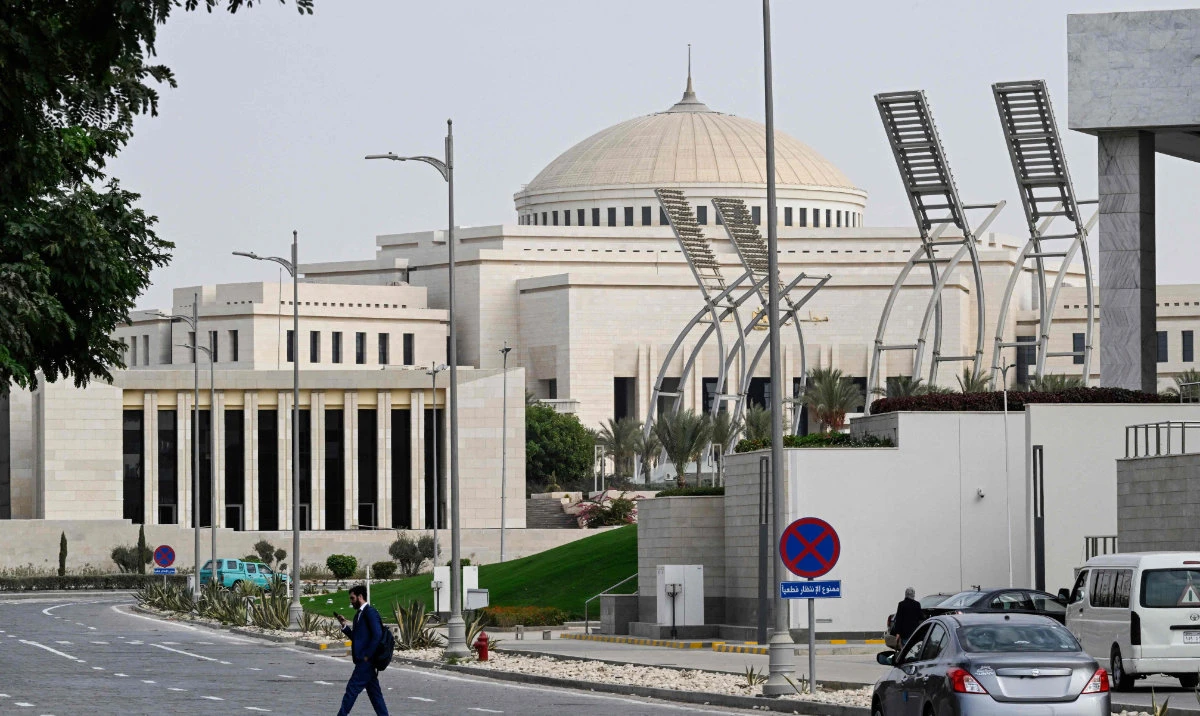
- Together, Riyadh and Cairo have an opportunity to shape a different future for a region that has endured far too much conflict
During Lebanon’s devastating civil war, the great Syrian poet Nizar Qabbani called upon Beirut to rise from the rubble, for the sake of the forests, the rivers, and humanity itself. Now, nearly half a century later, Cairo is hearing another call, not from a poet but history itself.
Egypt, the heir to a civilization stretching back thousands of years, is being called upon not merely to honor its extraordinary past, but to fulfill its historic role in a Middle East increasingly threatened by war, instability and armed groups seeking to dictate the future of its peoples.
Yet Egypt need not answer that call alone.
Saudi Arabia has already shouldered much of the burden of confronting the Middle East’s increasingly complex crises. Together, Riyadh and Cairo have an opportunity to shape a different future for a region that has endured far too much conflict.
For more than a decade, Riyadh has played a leading role in responding to regional instability while Cairo has devoted much of its attention to restoring domestic stability and addressing its economic and institutional challenges following the political upheaval of 2013.
The Egyptian parliament’s decision on Oct. 26, 2026, to authorize President Abdel Fattah El-Sisi to take the necessary defensive measures in support of the Kingdom, should Riyadh request assistance, marks a new chapter in Cairo’s engagement with some of the Arab world’s most sensitive and complex challenges, including the conflict in Yemen.
According to Ahmed El-Atifi, head of the parliamentary bloc of the Homeland Defenders Party, at least 571 out of 596 lawmakers supported the decision.
More importantly, it signals Egypt’s readiness to assume a more active role in addressing regional security challenges alongside Saudi Arabia.
While any Egyptian military involvement under this authorization would be defensive in nature, its broader significance lies in the prospect of strengthening collective efforts to deter regional threats, prevent further instability and create more favorable conditions for restoring legitimate state institutions in Yemen.
For years, Egypt has exercised much of its regional influence through diplomacy and political engagement, while economic pressures and domestic priorities have demanded considerable attention.
In this context, the latest decision suggests that Cairo may now be increasingly willing to reinforce its diplomatic commitments with hard power when circumstances require.
For both Saudi Arabia and Egypt, regional stability is not an abstract strategic objective. Both countries have a direct interest in preventing instability from disrupting trade, energy flows and critical maritime routes.
For Egypt, the consequences have already been substantial.
El-Sisi recently said that regional instability had cost Egypt approximately $20 billion in Suez Canal revenues in recent years. He also reaffirmed that safeguarding the security of Arab Gulf states remains a constant of Egyptian foreign policy.
For Saudi Arabia, instability along the same maritime corridor threatens trade routes, energy flows and critical infrastructure.
The Red Sea and Bab Al-Mandab Strait therefore illustrate how closely the strategic interests of Riyadh and Cairo are intertwined: disruption in one part of the region can impose economic and security costs on both countries and, ultimately, on the wider global economy.
This is why closer Saudi-Egyptian cooperation matters. Its significance extends beyond military coordination. It reflects a recognition that regional stability is a shared responsibility and that major Arab states have an important role in safeguarding their collective security.
From this perspective, Egypt’s decision carries significance far beyond Saudi Arabia and Yemen. It could signal a deeper phase of regional cooperation, one in which diplomacy is reinforced by credible defensive capabilities and a demonstrated readiness to act when necessary.
The objective should not be further confrontation, but the creation of conditions in which threats are deterred, sovereign states are protected and diplomatic efforts have a greater chance of success.
The Middle East is in urgent need of decisive action to contain conflict, prevent further destabilization and restore a measure of regional order.
The growing convergence of strategic interests between Riyadh and Cairo offers an opportunity to advance that goal, provided both countries translate their shared concerns into sustained cooperation.
Saudi Arabia answered history’s call years ago, whether in Bahrain, Yemen or Sudan, guided by its commitment to supporting legitimate governments and state institutions.
In doing so, the Kingdom has shouldered much of the burden of confronting the region’s crises and has worked to extinguish its fires before they spread. Egypt is now answering history’s call as well.
The significance of this moment lies not simply in military cooperation, but in Cairo’s readiness to assume a more active regional role alongside Riyadh.
Half a century ago, Nizar Qabbani called upon Beirut to rise. Today, history has called upon Egypt. And as Saudi Arabia continues to shoulder the burden of confronting regional crises, Cairo is answering that call alongside Riyadh. Egypt is back.
• Nasser bin Hamed Al-Ahmad is a political researcher and writer with more than eight years’ experience in political media. He writes on politics, leadership, institutions and social change, with a particular focus on the MENA region and the US.
X: @nasseralahmad3