One of Europe’s most beautiful cities, Brussels is Belgium’s center for the modern clashing with the beautiful old and the results are magnificent. Brussels has always been a gem in Europe’s map for prosperity, a quiet and quaint city yet filled with attractions for food lovers, art fanatics, comics admirers and architecture devotees. It’s a city that applies to every taste out there. No European tour would be complete without passing by this beautiful city and making the most of it. It’s Belgium’s capital city and the European Union’s de facto capital as well, an epicenter for international politics since after WWII hosting many important international organizations such as NATO, the European Parliament and other international corporations.
Brussels is a melting pot for cultures from the Northern European countries with the Southern, as well as many international cultures, which might seem incoherent yet somehow form a unity that makes the city what it is today.
At first sight of the city, visitors must not be caught off guard by the two language posts and signs everywhere. Belgium is a bilingual country, speaking both French and Flemish Dutch. Street signs, crossways and instruction bulletins in underground stations, for example, all provide bilingual language services. Being a hub for international organizations and where many foreigners have resided and are living in Brussels, English is widely understood and welcomed but French is definitely the preferred spoken language. One of the city’s greatest aspects is its carbon footprint advocacy; many of its attractions are close to each other and can be accessed by foot. But what makes it even better is there are locations where cars and vehicles aren’t allowed and pedestrians are easily fond of them, which gives a calm sense to the tourist and allows them to be entertained without the hustle of vehicles nearby. Bikes are also available to all, with a mere fee of 0.50€ an hour or 7€ a week, tourists can spare the wait for buses or trams and explore the city full on. The transportation system in the city is one of the finest, with metro lines, buses and trams with many stops, exploring the city is very easily done.
Belgians have opted for modernization for a while now, but they have the highest care for the environment compared to other EU countries. Over 50 percent of the city is park land and protected green space despite the overwhelming flow of migrants into the city. Many initiatives have taken place in Brussels to keep it “Green” and healthy. The residents all agree that they are better off with less greenhouse emissions and more of the green surrounding them to accommodate to their quaint lifestyles.
One of Brussels’ main attractions is La Grand Palace-Grote Markt, with its ornate elaborate and gothic styled houses; it’s one of the best locations to start touring the city. The square itself is full with cafés and restaurants with terraces to enjoy in the warmer spring and summer months. The area is busy all year round with events and specifically a lovely flower market named “flower carpet” starting in the spring and also a Christmas display in the winter months. Built in the 13th Century as a merchants market, it has then transformed to house Belgium’s hospitable establishments. One of the first things you would notice upon entering the Grand Palace is the city’s town hall, Hotel de Ville, also in gothic architecture; the building is well kept and is one of the most photogenic areas of the classic Brussels. Tours of the interior are available and hosts many medieval art pieces. The square is enclosed by old gothic like building on all four sides, a rare sight nowadays in modern times.
A little further out of the La Grand Palace area, on the corner of Rue de L’Etuve is Brussels’ famous statue of a little boy (excuse the language) peeing in a fountain named Mannekin Pis, an irreverent description of Belgian humor, amusing tourists since 1619. The little bronze statue has over 700 costumes, even an authentic Elvis jumpsuit. The Belgians are full of intriguing contrasts and contradictions; their capital has over 60 museums from Art Nouveau architecture to ancient art and even a comic museum. Some of the best museums of the world are in Brussels, such as The Center of Fine Arts which is currently hosting the famous Frida Khalo exhibition as well as a large number of Flemish painters. There are four museums connected to the center, the Museum of Ancient Art and the Museum of Modern Art are both in the main building and are very much worth the visit. The Natural Sciences Museum houses some of the largest showpieces and the best there is to offer. The museum displays the diversity of the animal world, both live and extinct, and takes you around different world all under one roof. Children will have a great time roaming around the corridors of the museum as well get a learning experience.
Some other museums that are very interesting and amusing to visit would be the likes of the Comic Strip Museum, astonishingly something Belgians are very well known for, exhibiting everything there is to know about comics. The likes of our beloved blue Smurfs and who can forget Tintin were all creations of Belgian writers. The works of many authors have put Belgium on the map of the comic strip world thus leading to have Belgium named “the Kingdom of Comic Strip”. You will find many walls in Brussels to be covered with comic strips and graffiti, sides of buildings, alleyways made special for artists and one can find comic strip walk tours that take you all around the designated areas where artists have marked their works. Mini Europe is a wonderful park, the only park that takes you on a tour of Europe’s landmarks in a matter of minutes. Ever find yourself fascinated to see the whole continent but aren’t able to do so? The Mini-Europe Park will allow you to do so. With 350 models and sites all created by the finest craftsmen, it’s a very unique journey to take.
Just across the Mini-Europe park is the Atomium, an unmistakable symbol of Brussels, an achievement to Belgium’s architecture world. The Atomium is an enlarged elementary iron crystal 165 billion times, built for the 1958 World Exhibition and is a great site to visit and understand the different aspects the exhibition stood for.
Palais Royal, or The Royal Palace, is the official home of the Belgian king and is open to tourists during the summer months and The Royal Greenhouse in Laeken is open every spring. The greenhouse has a vast collection of plants and flowers, most are in full bloom by the time it is opened to the general public most dating back to the late 1800s’ during the reign of King Leopold II.
Brussels has a large dining scene and their standard of cooking is high and very eventful. Belgians have a highly developed taste for fine food. Most important piece of advice, ask a true resident of Brussels and you’ll find their recommendation to be top notch and well worth it since there are those who have fallen for tourist traps. Some of the top restaurants in Brussels would be Comme Chez Soi, La Maison du Cygne, Odette en Ville, La Truffe Noire and BonBon just to name a few. The restaurants pride themselves in well-prepared Belgian, French and Flemish dishes as well as international of course, immaculately served and beautifully served. The city holds many restaurants and cafés that please each taste and pockets. To narrow it down, heading to Place du Grand Sablon is a good choice to start. One of the most elegant squares in Brussels, it’s lined with antique shops, cafés and luxury restaurants that line the side streets with chairs and tables for outdoor dining and provide a charming atmosphere to enjoy. The façade itself is old and rustic with beautiful houses and small shops that go back to the 16th century and are magnificently well preserved.
One must pass by the St. Géry canal and sample how the Belgians serve their seafood in one of the many restaurants.
Waffles are the visitors' favorite past time, you can never turn a corner and not find a waffle stand serving fresh made waffles topped with melted chocolate or whatever topping of choosing. Don’t forget to try their frites (or fries). Street vendors are spread around all over the city, a much needed snack in between visiting the sites.
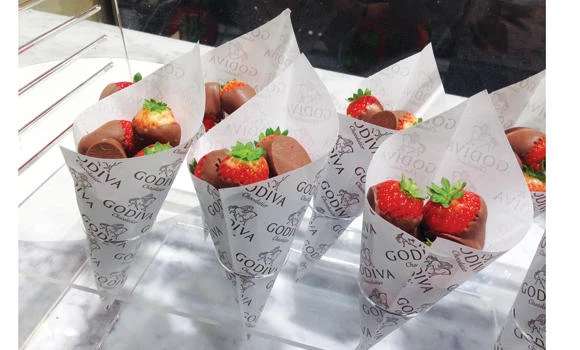
No visit is ever complete without indulging in one of Belgium’s most tasty traits, this needs no introduction; it’s chocolate, chocolate and more chocolate. Not only is Brussels the capital of Europe, it’s also the capital of all things chocolate. The chocolate industry is always up to date and chocolatiers are finding ways to hold on to the country’s chocolate crown and break away from traditional pralines (which was invented in Belgium 100 years ago). Two of the biggest chocolate companies reside in Brussels, Godiva and Leonidas and there are scores of chocolate makers to explore. Tourists can find a mix of conservative (old school) types of chocolates and avant-garde in wonderful creations. A well-known chocolate bar can be found off the Grand Sablon named Alex & Alex, the ambient of the location is secluded and cozy with a vast array of bonbons and different types of ganache and velvety high quality chocolates. Other great chocolatiers would be Laurent Gerbaud Chocolatier, Le St. Aulye, Mary, Pierre Marcolini and Neuhaus with their signature dark chocolate truffle filled with buttercream aside a spicy Belgian cookie to go with their coffee.
Brussels is a dream city unlike its other neighboring European counterparts; it’s a great gateway into history turned modern yet still holding on to originality. The best seasons for visiting this magnificent city would be both spring and summer to enjoy the city’s grounds. Not to be fooled, an umbrella would go a long way so be advised. So brush up on your French and Flemish Dutch and enjoy the stunning wonder that is Brussels.
Email: [email protected]