Buenos Aires, Argentina is one of the largest cities in the world and one of the most vibrant cities with such a fast pace rhythm, electric architecture, ethnic diversity and urban design that make tourists flock to this city all year long. This vast city is a mix of the old and new, one minute you feel like you’re in a European city and at times you feel the eccentric colorful city life of a Latin America. The capital of Argentina, often named the Paris of South America, is the top visited city in all of Latin America. Offering a plethora of museums, an incredible nightlife, historic architecture, and a bustling and developing port area, Buenos Aires is above all famous for its tango and unique porteño culture. Porteño is Spanish for the people of the port. Europeans immigrated to the city in the early 1900’s along with Arabs, Armenian and many more ethnicities creating a mixture of cultures difficult to define that also played a major role in the development of the country. Argentina is famously known for the ever so powerful Evita Peron and soccer superstar Diego Maradona, along with an abundance of famous artists, writers, actors and activists including the infamous Che Guevara, yes Che Guevara was originally from Argentina. This amazing country is such a mix of cultures both foreign and Latin American creating a rich hub for tourists to enjoy.
To start off, always plan ahead of time. Buenos Aires is such a large cosmopolitan city; it’s easy to get lost in its charm. You need to spend at least a week. This is a very civilized city, with interesting architecture, great museums, restaurants (particularly mouthwatering steaks and Italian food as if it were straight from the motherland), tango shows, and several interesting day trip options. The best option is to opt for a tour guide that would provide extensive information as well as provide all the necessary transportation to move around the city of 13 million, visiting the different districts, parks, museums, cafes and restaurants. You can plan day tours outside the city limits that can save up much of your time, or if you’re more of an adventurer get a map and walk, walk, walk. The public transportation in Buenos Aires is very particular in their timing and information is always given when asked. The best time to visit the city would be from December until March, summertime in the southern hemisphere, summer in the middle of winter for most, intriguing.
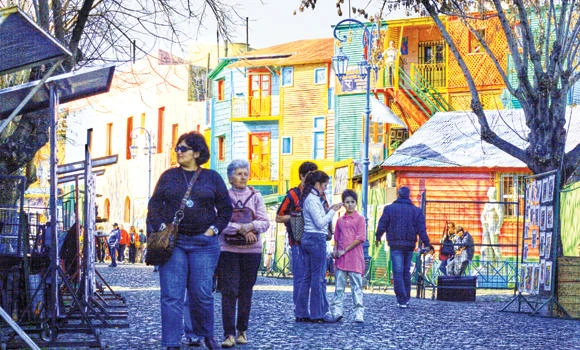
Like most large urban areas, each community provides its own unique taste of what BA really offers. First stop are the neighborhoods of San Telmo and La Boca, two of the oldest neighborhoods of the city, dating back to 500 years. The colonial buildings are painted in lively colors, cobble stone streets and their local open air flea market selling antiques, art, clothes, jewelry and exotic artifacts and tidbits. Walking toward the main square of the area would be the Feria de San Telmo, visitors are welcomed by lots of music and visitors can catch a glimpse of a street tango dance, a rather common thing found around the streets of BA. The streets are lined with local food stands as well as some international but most probably Latin American treats. Every visitor must try it, it’s nothing like how it is in restaurants abroad. Next would be La Boca, located closer to the port area of BA, the area looks like a little Italy due to the large number of Italian immigrants who settled in the area years ago. The area is filled with cafes and restaurants with tango dancers and music here and there. Many of the colorful buildings’ balconies along the line of the Caminito (or what is known as “little road”) have weird, funny and whimsical caricature style statues of everyday residents.
Close to La Boca district lies the famous Puente de la Mujer, Spanish for “women’s bridge”. It is a rotating footbridge at Puerto Madero. The bridge was opened in 2001 and named that way because the designer found the streets near the area are mainly named after women. The beautiful bridge is in a commercial district and it’s asymmetrical design is unusual for its purpose. It rotates 90 degrees to allow water traffic to pass below and is designed to only allow pedestrians. The area of Puerto Madero is one of Buenos Aires’ classiest and trend setting architectural barrios (districts) of the city. It has old warehouses transformed into beautiful lofts overlooking the canal, high rise residential towers, museums, art galleries, yachts and boats docked in the marina, elegant houses, 5-star hotels and an amazing array of cafes and restaurants mostly overlooking the waterfront. It’s a great area to stroll about day or night.
One of BA’s best known charms is their steaks and meat. Parrilla is the name for fire grill steak houses, the city is swarmed with them and almost all serve an abundance of different meats, cuts and steaks all cooked to perfection. BA is famous for these establishments and residents are known to be large consumers of meat, it’s simply delicious! The flame kissed cuts brazing in the open air spreading the scrumptious smell around the area calls for visitors to pass by, sit and devour amazing meats with an array of sauces and chimichurri, a plate of finely chopped parsley, minced garlic, olive oil, oregano and white vinegar. Don’t be surprised to find these parrillas with open spit fires surrounded by lamb cuts, beef, chicken or even whole carcasses cooking slowly by the embers, it’s Argentina and Argentinians love their meat. In some restaurants, the meats ordered are presented on its own tray of coals. This meat fest isn’t for the light hearted but it’s a great gastronomic experience.
While visiting BA, one must make a route stop at La Recoleta Cemetery; the ornate monuments of the maze of mausoleums turn the area into a city in the midst of one. The beautifully manicured streets with cobblestones underfoot and lamps light your way through the cemetery as you pass by different buildings with porches, windows and doors creating an image of how the deceased once lived. The cemetery is home to the city’s rich, famous and powerful including presidents, artists, business tycoons and even one of Napoleon’s grandchildren, but the most famous resident would be Evita Peron, the most famous first lady of the country and loved by all until this day.
Everyone who knows their soccer knows that the Argentinian team is one of the strongest teams on the planet; Diego Maradona helped raise the team to its best potential. Many amazing players have since appeared in the soccer scene. Latin America is widely known for their love for the game. Once in Buenos Aires, it’s a great opportunity to attend a match but visitors should always plan ahead. Argentine football is full of local rivalries and historical grudge matches which will surely leave any viewer satisfied; it’s well worth an attendance.
Although Buenos Aires is famously known for its parrillas, cafes, nightlife, tango and soccer frenzy, the city has one of the world’s top thriving art scenes with numerous museums and galleries spread about in the city. The barrio of Palermo is home to the most popular and most visited museums and galleries. The Mueseo de Arete Latino Americano de Bueno Aires (Latin American Art Museum of Buenos Aires) or MALBA for short, holds many famous exhibitions of the 20th century, many of which include local artists as well as international exhibitions. The Mueso Evita (Evita Museum) is a must-visit museum that tells the story and the life of the most famous First Lady of the Argentine, Evita Peron with more than 2,500 objects belonging to the late famous figure. Another great museum to stroll through would be the Museo Nacional de Bella Artes (National Museum of Fine Arts) featuring many works from the 19th century from Rembrandt to Van Gogh and many other greats. With such a rich history, it’s no bore to roam around and explore the progression of art in Argentina. Visitors can also catch a glimpse of the executive mansion and office of the President of Argentina at the Casa Rosada (Pink House), properly named because of its “baby pink” characteristic. Just off the Plaza de Mayo, the building houses a museum telling the history of all the previous predecessors of the country.
Argentina is rich, colorful, powerful and full of life, Buenos Aires is an amazing first stop to start discovering the country. Although it’s one of the farthest countries to fly to, it’s well worth the try. Buenos Aires, dubbed the Paris of the South, is not an understatement. Strolling through the city takes you to different places, experiencing different fractions of society, at times even different centuries with its mix of classical old architecture and new modern design buildings. It’s truly a majestic place.
—
Email: [email protected]
Majestic Buenos Aires — the Paris of the South