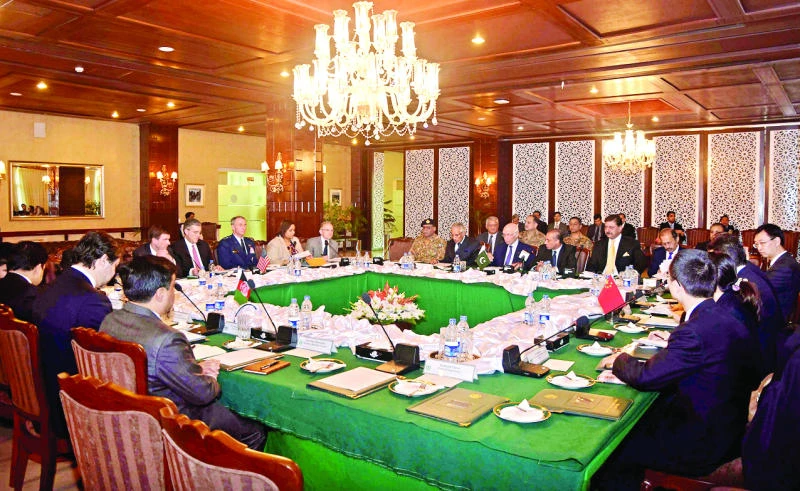
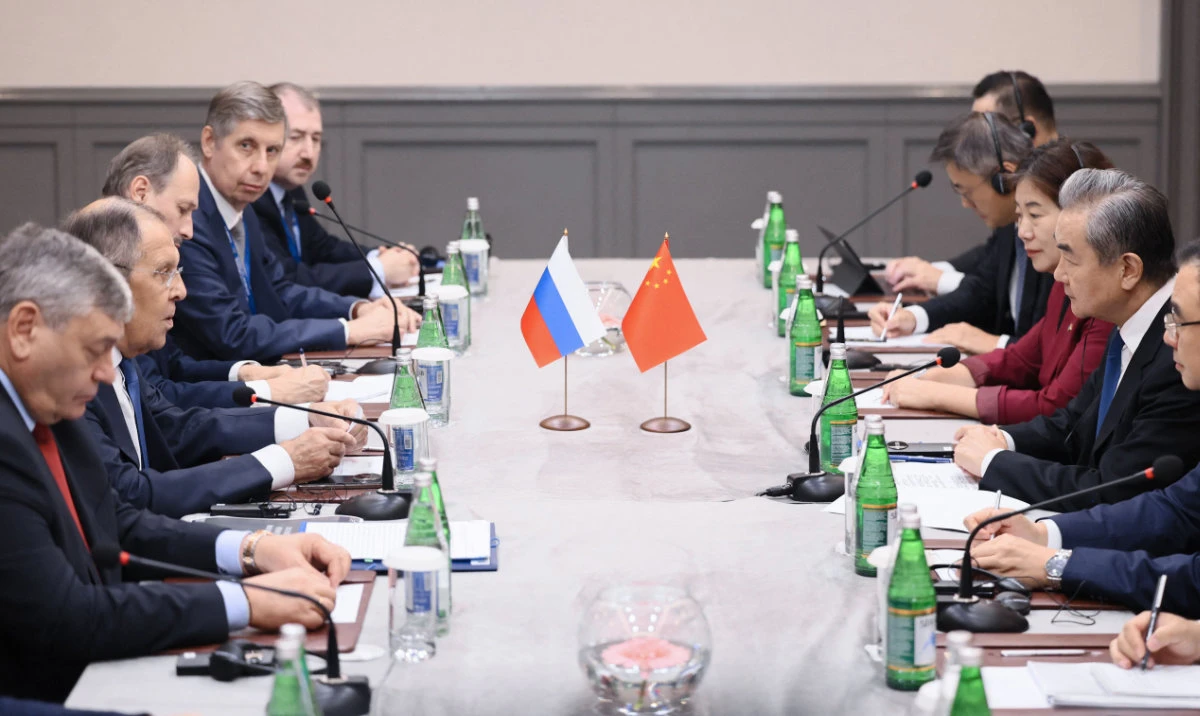
ISLAMABAD: A key gathering was underway Monday in Islamabad with four countries — Afghanistan, Pakistan, China and the United States — hoping to lay the road map to peace for the war-shattered Afghan nation.
The meeting comes as Afghanistan’s battlefield losses are mounting and some parts of the country are under constant threat from Taliban gunmen. Taliban representatives have not been invited to the talks, vowing to talk only to the US and not to the government in Kabul.
As the gathering got under way, host Pakistan — seen as key to bringing the warring Taliban factions to the table — cautioned of the difficulties ahead.
Sartaj Aziz, adviser to the Pakistani prime minister on foreign affairs, warned against prematurely deciding which Taliban factions are ready to talk, urging instead “confidence building” measures to get even the recalcitrant Taliban to the negotiating table.
But analysts and participants say much of the hope for progress toward peace rests with Pakistan, which is accused of harboring some of the fiercest factions of the Taliban, including the Haqqani group, a US-declared terrorist organization. Pakistan says its influence over the Taliban is overrated.
“Even at the best of times they (Taliban) didn’t listen to us,” Aziz told The Associated Press earlier. “Look at Bamiyan,” he said, referring to the Taliban’s destruction in the summer of 2001 of some of the world’s most precious statues of Buddha. The Taliban blew up the statues, ignoring the roars of dissent, including from Pakistan.
The Taliban have stepped up their insurgency since the withdrawal of NATO-led combat troops from Afghanistan a year ago, testing government forces that are forced to spread their resources across the country.
At the start of Monday’s conference, Aziz urged that participants avoid the media and work toward finding ways to get all the Taliban to talk peace. He said the Islamabad gathering needs to define the “overall direction of the reconciliation process” and goals that would create a “conducive environment for holding direct talks between the Afghan government and Taliban groups.”
After Aziz’s televised remarks, the meeting proceeded behind closed doors into afternoon hours.
Meanwhile, a breakaway Taliban group said Monday it was ready for talks. The faction, which emerged following the revelation last year that the Taliban leader and founder Mullah Omar had died two years ago, is believed to be relatively small and its absence from the battlefield is unlikely to be a game changer.
In Afghanistan, the Taliban have recently been on the offensive in southern Helmand province bordering Pakistan, threatening key towns, including the capital of Lashkar Gah. Most of the world’s opium is produced in Helmand, which along with other contraband helps fund the insurgency.
In the province’s Sangin district, the Taliban besieging the local army base for days before reinforcements, backed by US air strikes and British military advisers, were sent in to repel the attackers.
As the prospect of a peace dialogue grows, the Taliban can be expected to step up their fight in order to ensure they join any peace dialogue from a position of strength.
4-nation conference seeks road map to Afghan peace