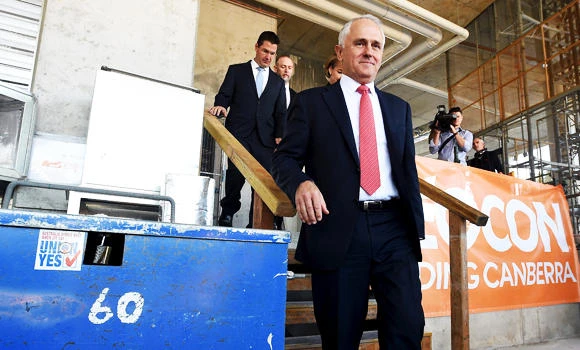
SYDNEY: Australian Prime Minister Malcolm Turnbull on Tuesday said the country would probably go to the polls on July 2, after the budget is delivered next month, paving the way for an unusually long election campaign.
Turnbull announced the measure a day after the Senate blocked his government’s proposal to reinstate a building industry regulator.
The conservative leader had last month threatened to hold early general elections unless the Senate agreed to pass deadlocked legislation to overhaul unions.
The bill was widely expected to fail after opposition lawmakers depicted the proposed watchdog as an attack on unions. But Turnbull pursued it nonetheless as he had sought a reason to call an election.
The country has repeatedly changed prime ministers since 2010, with Turnbull wresting power from his Liberal Party colleague Tony Abbott in September in a bid to revive flagging popularity.
If Turnbull loses on July 2, Labor opposition leader Bill Shorten will be the country’s sixth leader since 2010.
Sticking to a timetable that he flagged last month, Turnbull told reporters his conservative government will function as normal until May 3, when it will deliver its budget.
“My intention is after the budget, an appropriate time after the budget has been delivered, I will be asking the governor-general to dissolve both houses of the parliament for an election, which I expect to be held on the second of July,” he told reporters in Canberra.
Turnbull stopped short of confirming the date of the election, but said July 2 would be “a very good assumption.”
“But I just want to be very clear that we are governing, we have a lot of decisions to make, not least of which is the budget, the most important economic policy statement of the year,” he said.
Turnbull, a millionaire former journalist, lawyer and investment banker, took over from Abbott promising a new style of government but has slipped in the polls in recent months as tax and other reforms have failed to materialize.
Australia has had a revolving-door of prime ministers in recent years. After a decade of rule under conservative leader John Howard, Labor leader Kevin Rudd won elections in 2007.
He was ousted by Julia Gillard the country’s first female prime minister, in 2010, before being restored to power in 2013 amid bitter party infighting.
Just a few months later, Rudd lost elections to Abbott, who was then ousted by Turnbull last year.
Under normal conditions, Australian elections are held every three years for the House of Representatives and half of the Senate.
A double dissolution election can be called when key government legislation is blocked and sees the House and Representatives and the entire Senate dissolved.
Australia PM sets up July 2 election