LIMA: Talks on a pact to curb climate change entered their final day on Friday, seeking an end to deadlock among rich and poor countries, amid appeals to avoid a weak compromise.
Progress in the Dec. 1-12 talks has been hampered by a flareup in a years-old dispute over sharing responsibility for tackling the climate problem.
Efforts to overcome the row went into the night, setting the annual UN parlay on course for a familiar climax of haggling and frayed nerves.
Campaign groups warned that any face-saving fudge would be catastrophic for a pact due to be completed in Paris in December 2015.
“Heading into the final day of negotiations is like reading a choose-your-own adventure novel,” Jan Kowalzig, policy advisor for Oxfam, told AFP.
“The choices made today will either put us on a barely workable path leading into Paris or doom us to a dangerous future.”
Countries disagree on how a long-standing principle in UN talks called “differentiation” will be applied in national pledges to address climate change. The pledges, scheduled to be put on the table next year, would be the core of the most ambitious environment accord in history.
The pact would take effect from 2020, screwing down emissions of greenhouse gases in order to keep global warming within two degrees Celsius (3.6 degrees Fahrenheit) over pre-industrial levels.
Developing nations in Lima have defended a long-standing principle that Western countries should bear a bigger burden for carbon cuts, having started decades earlier to pollute their way to prosperity.
But rich countries point the finger at developing giants like China and India furiously burning coal to power their rapid growth.
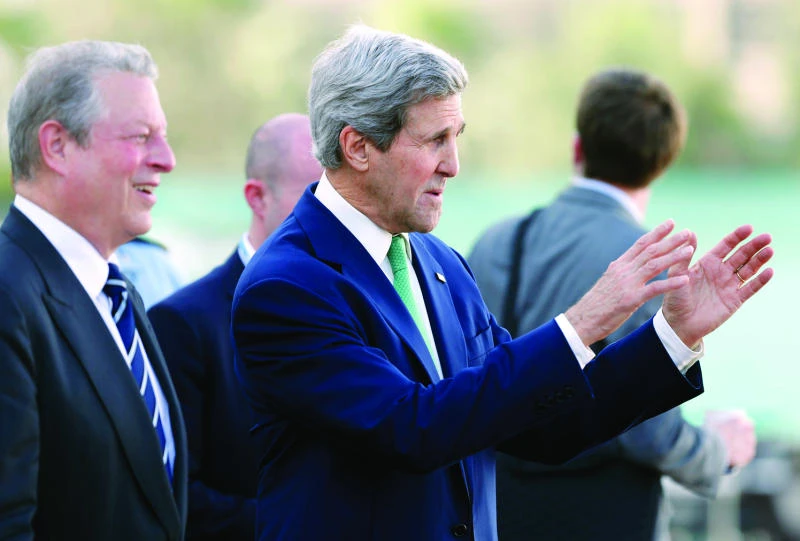
On Thursday, US Secretary of State John Kerry urged developing nations to realize they too would have to roll back pollution from fossil fuels, even if they felt it was unfair.
“I know the discussions can be tense and decisions are difficult, and I know how angry some people are about the predicament they’ve been put in by big nations that have benefited from industrialization for a long period of time,” Kerry said.
But, “we have to remember that today more than half of global emissions — more than half — are coming from developing nations. So it is imperative that they act, too.”
Bid to break gridlock on final day of climate talks