BEIJING: China and Indonesia demanded explanations from Australia Friday over reports that Canberra’s missions were involved in a vast US-led surveillance network, as the row souring US-Europe relations spread in Asia.
US Secretary of State John Kerry admitted US spying had sometimes gone too far as a dispute erupted in the region following a story in the Sydney Morning Herald.
The newspaper reported a top-secret map leaked by fugitive intelligence analyst Edward Snowden showed 90 US surveillance facilities at diplomatic missions worldwide, amplifying an earlier story by German magazine Der Spiegel.
The centers in China included the US embassy in Beijing and US consulates in the commercial hub Shanghai and Chengdu, the capital of the southwestern province of Sichuan, the SMH said.
The SMH reports focused on secret US intelligence facilities in Asia and also said Australian diplomatic posts were being used to monitor phone calls and collect data as part of the American surveillance network.
“We require the Australian side to make a clarification,” Hua Chunying, spokeswoman of China’s Ministry of Foreign Affairs, told reporters at a regular briefing.
“We also urge the diplomatic missions and personnel in China to strictly abide by international treaties including the Vienna Convention,” she said.
Her comments came a day after she said China required the United States to “make a clarification and give an explanation,” adding foreign diplomatic missions and personnel must not engage in any activity that may “jeopardize China’s security and interests.”
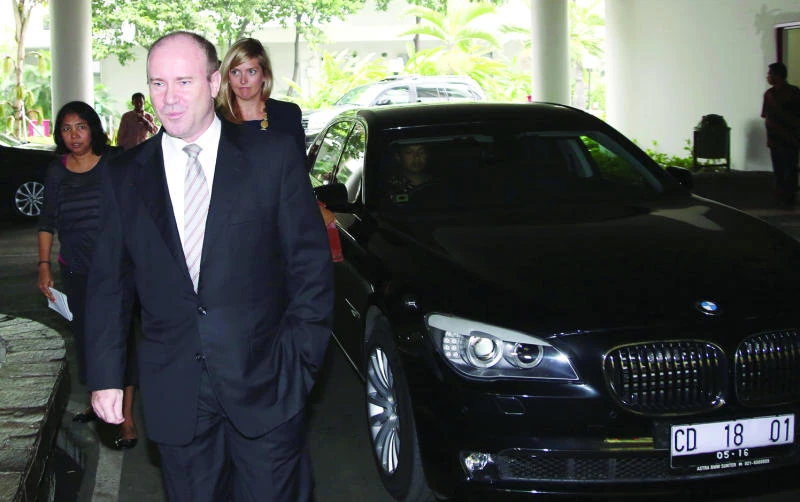
Indonesia — where the US and Australian embassies in Jakarta were both identified as surveillance facilities — summoned Australian ambassador Greg Moriarty to the foreign ministry on Friday for a 20-minute meeting on the accusations. Afterwards Moriarty told a scrum of reporters: “I just spoke to the secretary general, and from my perspective, it was a good meeting and now I have to go and report directly to my government.”
Earlier this week Jakarta summoned the US ambassador over the issue.
Indonesian Foreign Minister Marty Natalegawa described the reported spying activities as “just not cricket.” Natalegawa, speaking Friday after talks with his Australian counterpart Julie Bishop in Perth, said his government was “obviously deeply concerned.”
“Most of all, it’s about trust,” he said, adding: “I’m not sure what’s the right term in Australian terminology, I guess it’s not cricket to do this kind of thing.” Bishop said that Natalegawa had “raised his concerns, I took them on board and I take them seriously, but the Australian government does not and will not comment on intelligence matters.”
China, Indonesia pile pressure on Australia as spying row escalates