GENEVA: Experimental vaccines to treat Ebola could be ready for use in African countries badly hit by the deadly virus early next year, the World Health Organization said Friday.
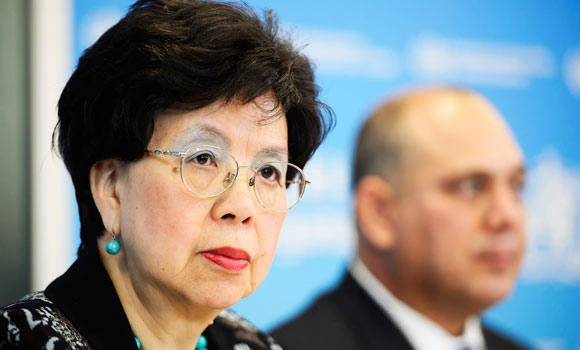
WHO is focusing on two vaccines, one made by British company GlaxoSmithKline (GSK), and the other by US group NewLink Genetics, and is working with both companies to accelerate clinical trials, WHO assistant director general Marie-Paule Kieny told reporters in Geneva.
Some clinical trials of the GSK vaccine have begun in the US and Britain, and other trials are expected to begin in Mali next week.
Trials of the NewLink vaccine are also set to start “imminently” in the US, and others are planned in other countries, including Germany.
“If everything goes well, we may be able to begin using some of these vaccines in some of the affected countries at the very beginning of next year,” Kieny said.
Currently, there is no licenced treatment or vaccine against the virus that has killed nearly 3,000 people in West Africa.
The experimental drugs have already been given to a few infected health workers, but stocks are extremely limited and clinical tests to evaluate their effectiveness are not complete.
“This is not a vaccine, this is a candidate vaccine,” Kieny stressed, pointing to the need for great caution in rolling out the vaccines more broadly.
The UN’s health agency has endorsed rushing through experimental treatments and vaccines.
The agency has already said that, if found to be safe, some doses should be available for use to healthcare workers by November and wider use could be possible early next year.
“Before going straight to very vulnerable people in affected countries, we need to know at least whether this is safe in a few hundred volunteers,” and whether it is effective, Kieny said.
The Canadian government has already donated 800 vials of the NewLink vaccine to WHO, and Kieny said a few thousand more doses would likely be available in coming months. Around 10,000 doses of the GSK vaccine should also be available by early 2015, she said.
The two prototype vaccines “have given very promising results in monkeys, but monkeys are not humans,” she said, stressing that people who receive them initially “should not consider themselves protected against Ebola.”
Experimental Ebola vaccines to be ready for Africa by 2015