GENEVA: Independent health advisers to the World Health Organization (WHO) have assessed that there should be no general ban on travel or trade with countries reeling from an Ebola epidemic in West Africa, the UN agency said on Monday.
Some airlines have stopped flights to affected areas and WHO and other agencies have said this has hampered aid efforts and the ability of experts to reach victims of the world’s worst ever outbreak of the hemorrhagic fever.
In a statement issued after the Emergency Committee held its second meeting last week, the WHO said Ebola had now killed at least 2,793 people in five countries and remains a “public health emergency of international concern.”
“Flight cancellations and other travel restrictions continue to isolate affected countries, resulting in detrimental economic consequences, and hinder relief and response efforts risking further international spread,” the statement said.
“The Committee strongly reiterated that there should be no general ban on international travel or trade...”
The experts urged authorities in the affected countries — Guinea, Liberia, Nigeria, Senegal and Sierra Leone — to work with the aviation and maritime sectors to resolve differences and “develop a coordinated response” to transport issues.
Quarantines may be deemed necessary in areas of intense and widespread transmission of the deadly Ebola virus, the committee statement went on.
“States should ensure that they are proportionate and evidence-based and that accurate information, essential services and commodities, including food and water, are provided to the affected populations.”
WHO advisers earlier recommended the screening of travelers departing Ebola-affected countries from airports and ports.
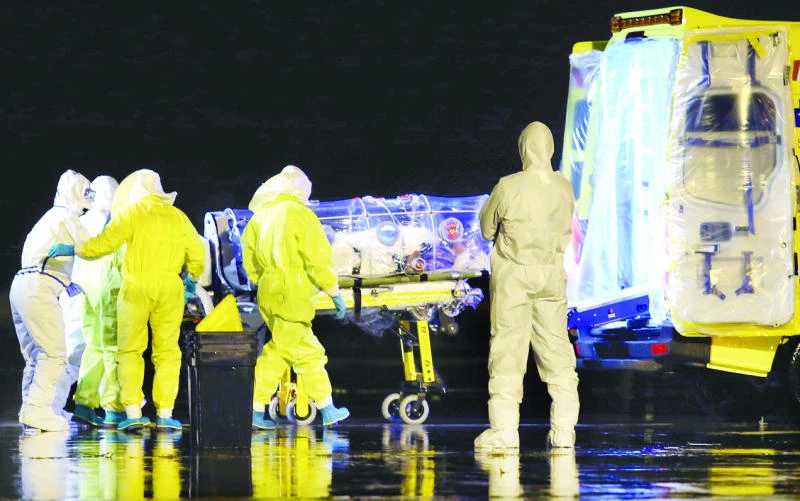
In Spain, doctors treating a Spanish priest who was repatriated from West Africa on Monday after being diagnosed with the Ebola virus said there were no samples of experimental drug ZMapp available in the world right now, and they were considering alternative treatments.
The priest, Manuel Garcia Viejo, 69, was in serious condition and was suffering from dehydration, with kidney and liver complications, said Javier Rodriguez, chief health officer for the Madrid region.
Experts oppose travel, trade bans on Ebola-hit countries