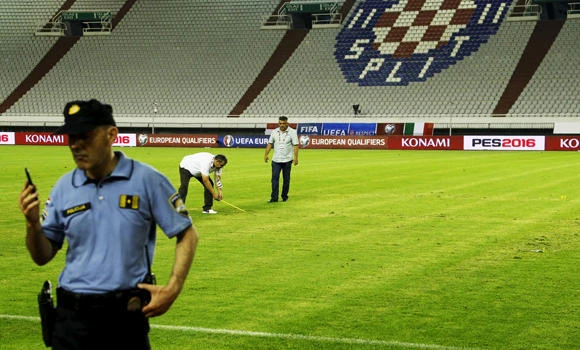
ZAGREB: It was one of the biggest nights in Croatia’s sporting calendar: A European Championship soccer qualifying match with Italy. Seconds after kick-off in a game beamed around the world, a gigantic swastika materialized on the pitch under the shocked gaze of European soccer officials.
The swastika, sprayed by an unknown vandal with a chemical that became visible only when floodlights went on to start the game, has become the most potent symbol of a rise in ultra-nationalist sentiment that appears to be bleeding into the mainstream population in the EU’s newest member state. But it’s not the only one. In the mixed ethnic towns of eastern Croatia, road signs in the Serbian Cyrillic alphabet have been destroyed and Serbian Orthodox churches have been vandalized with a “U’’ symbol representing the Nazi-linked World War II Ustasha regime. On weekends, Ustasha chants echo at sports venues and rock concerts.
The appearance of such symbols is perhaps unsurprising for a country that during World War II which sent tens of thousands of Serbs, Jews and Gypsies to death camps. But the Balkan state’s current leaders have called for change after the global outcry prompted by the swastika on the field.
“This act has inflicted immeasurable damage on the reputation of Croatian citizens and their homeland all over the world,” said Croatia’s new conservative president, Kolinda Grabar-Kitarovic.
Far-right swells in Croatia as EU disappointment spreads