BRUSSELS: France and Britain on Wednesday secured top positions in incoming European Commission President Jean Claude-Juncker’s new team, which must tackle a stagnant economy, rising euroscepticism and the Ukraine crisis on its borders.
Former French Finance Minister Pierre Moscovici was named as the commissioner for economic affairs, the most coveted job in the new regime which will run Brussels for the next five years.
Britain, whose place in the EU is under threat from a surge in eurosceptism at home, scored a coup by winning the financial services post for its nominee Jonathan Hill, the ex-head of Britain’s House of Lords.
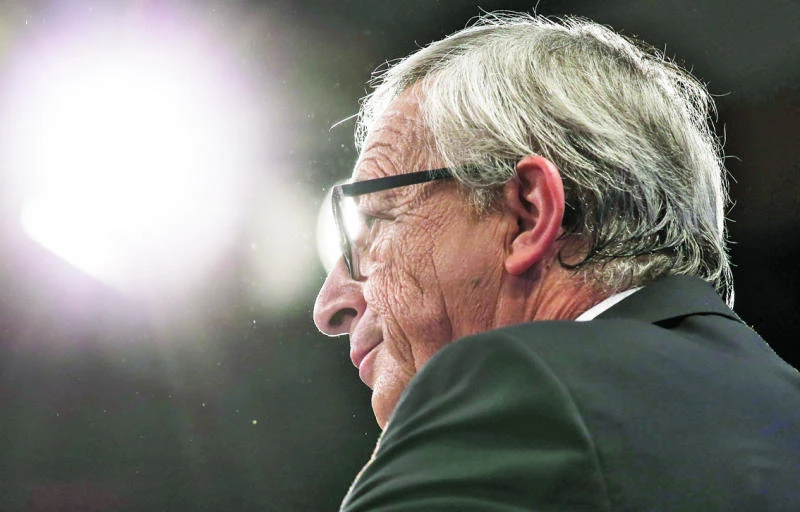
“I am convinced it will be a winning team,” Juncker told a press conference.
The former Luxembourg prime minister also appointed some of his 27-member line-up to a team of so-called “super commissioners” to oversee huge areas of policy seen as most crucial for the EU, particularly boosting growth and jobs.
The new team will take office in November.
The announcement followed months of behind-the-scenes battles in Brussels to win top jobs and fevered speculation about which countries had triumphed.
Moscovici overcame reservations from Germany about France’s ability to meet key EU budget targets.
Hill’s post is meanwhile a big win for Britain, whose financial services industry in the City of London is a key sector of the British economy.
Britain is set to hold a referendum in 2017 on its membership of the European Union.
Juncker’s new line-up, which includes four former prime ministers and several former finance ministers, will set the path for a bloc that covers more than half a billion people and is effectively the world’s largest economy.
The European Commission is arguably the most powerful institution in Brussels as it drafts EU legislation, polices national budgets and anti-trust regulations, and negotiates trade treaties.
Juncker has vowed that his Commission will be less bureaucratic and will work to revitalise the EU’s sagging economy.
But the EU’s new masters face huge challenges.
After making it through the eurozone crisis without the currency collapsing, the European economy now appears to be stalling and there are fears it could face a decade of stagnation and deflation.
Unemployment is also a major concern, particularly among the young. Countries such as Spain, Greece and Italy face exceptionally high rates of joblessness while France just recorded a new record high level.
The commission must also rebuild confidence in Brussels itself after the unprecedented rise of eurosceptic parties in European Parliament elections in May, in a clear message that voters are fed up with the EU.
The crisis in Ukraine meanwhile poses the biggest foreign policy challenge to the EU, which is struggling to stay united over its latest round of sanctions against Russia.
The powerful post of EU diplomatic chief went to Italian Foreign Minister Federica Mogherini at the end of August.
Poland’s Donald Tusk was named at the same time to the one other job which rivals Juncker’s in importance in Brussels, president of the European Council, which groups the leaders of the EU nations.
Juncker also cleared a major hurdle by securing the nine women members that the European Parliament had demanded in order to give its approval to the new commission.
France, Britain win key jobs in new EU team