BARUAN: India officially abandoned targets for its mass sterilization program in the 1990s, accepting they had put undue pressure on people to undergo surgery and failed to curb population growth sufficiently.
Twenty years on and targets remain in all but name, say doctors, health care workers and family planning experts, meaning that, although below peak numbers, more than four million people underwent surgery in 2013-14.
In recent years, the vast majority have been women.
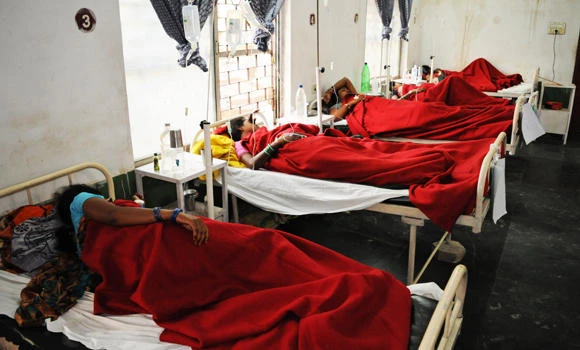
The risks the campaign poses were highlighted this month when more than a dozen women died after having a tubectomy at two sterilization “camps” in the state of Chhattisgarh.
Ongoing investigations point to contaminated drugs given to the women as a possible cause of death, but a dirty operating room and operations performed in a matter of minutes raised new questions about the program’s efficacy and safety.
“Targets may have been removed, but the target mindset remains,” said Poonam Muttreja, executive director of the Population Foundation of India NGO.
Wary of a ballooning population, India launched a family planning program to slow population growth in the 1950s.
As the campaign went into overdrive, some seven million men had vasectomies between April 1976 and January 1977, according to the Center for Health and Social Justice in New Delhi. Today, tubectomies on women are by far the most common form of birth control in India, and India’s fertility rate, or the average number of children a woman has in her lifetime, has fallen from 3.6 in 1991 to 2.4 in 2012.
But it has failed to reach the desired “replacement” level of 2.1, and India, with a population of around 1.2 billion, is set to overtake China as the world’s largest nation by around 2028, according to the United Nations.
At a recent sterilization “camp” in the eastern state of Odisha, operations went on apace, seemingly impervious to negative publicity after the deaths next door in Chhattisgarh.
A doctor and five assistants from a nearby hospital worked flat out, performing 13 tubectomies in about an hour at the facility in Baruan village. After her surgery, 35-year-old patient Renubala Ojha was guided outside by a health worker who settled her onto a dirty rug to recover. Nearby, empty water bottles, used tobacco pouches and piles of cow dung littered the ground.
Indian mass sterilization targets remain in all but name, say critics