LONDON: The Islamic State group in Syria and Iraq are planning “mass casualty attacks” on Western targets, the head of British spy agency MI5 has warned, saying the deadly shooting in Paris was only a reminder of an ongoing threat.
Security Service chief Andrew Parker was referring in particular to a group of fighters known as Khorasan, sources said, who have been targeted by US warplanes in strikes in northwest Syria.
He warned that intelligence agencies needed more powers, in particular to intercept communications, but added: “Although we and our partners try our utmost, we know that we cannot hope to stop everything.”
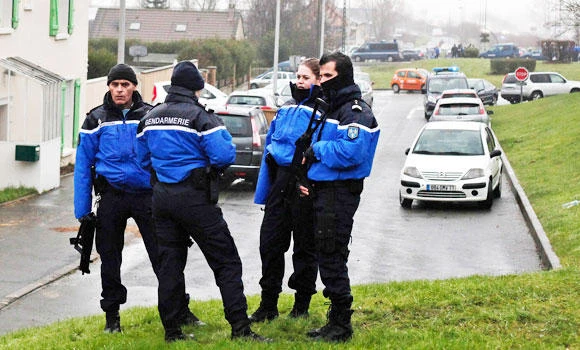
Parker, who has led Britain’s domestic intelligence agency since 2013, was speaking late Thursday, a day after gunmen stormed the offices of French satirical magazine Charlie Hebdo in Paris and killed 12 people.
He said it was too early to judge the details or the origin of the attack, but it was a “terrible reminder of the intentions of those who wish us harm.”
Speaking of the broader threats, he said the number of “crude but potentially deadly plots” had increased, citing last year’s attacks in Canada and Australia, and were particularly hard to detect.
Meanwhile the “complex and ambitious plots” carried out by Al-Qaeda in the past still existed, he told the Royal United Services Institute (RUSI) defense and security think-tank in London.
These included “attempts to cause large scale loss of life, often by attacking transport systems or iconic targets.”
The Islamic State group in Syria and Iraq is a well-known threat, targeting Britain and seeking to radicalize Britons, with Parker saying an estimated 600 have gone there to fight.
But the MI5 chief added: “We know, for example, that a group of core Al-Qaeda terrorists in Syria is planning mass casualty attacks against the West.” He is understood to be referring to the Khorasan group, which had been an obscure cell until US intelligence officials called attention to it in September.
US officials say the group includes Al-Qaeda operatives from Afghanistan and Pakistan who made their way to Syria, although experts caution they are not a distinct group but are part of Al-Nusra Front, Al-Qaeda’s Syrian branch.
Raffaello Pantucci, an expert in international security at RUSI, said Parker was making clear in his speech that despite the apparent changing nature of recent attacks, the old threats do not go away.
“So while we have seen a surge in this kind of lone actor-type thing, we’ve also still got a lot of people trying to plan big attacks,” he told AFP.
“The fact that we haven’t had a successful one does not mean that people aren’t plotting to do that.”
‘IS planning attacks on western targets’