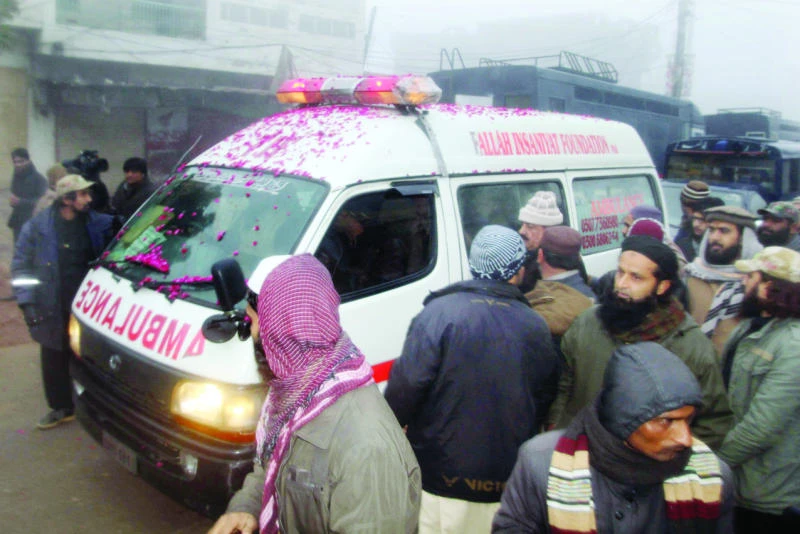
MULTAN: Pakistan hanged two members of an outlawed Jhangvi group on Wednesday, the latest in a string of executions after the government lifted a moratorium on the death penalty following a militant attack on a school in which 153 people were killed.
Pakistan has pledged to step up its campaign against militants following the attack, reinstating the death penalty, announcing the establishment of military courts and expanding operations against remote Taleban hideouts on the Afghan border.
Critics have, however, accused the authorities of not cracking down equally on all militants, only targeting those who fight against the state and sparing others with a narrower sectarian agenda or who are focused on fighting outside Pakistan.
The two convicts executed on Wednesday, however, belonged to the banned Sipah-e-Sahaba, suggesting that the government is widening its campaign.
“The two terrorists, Ahmed Ali and Ghulam Shabbir, were executed early this morning. Both were involved in murder cases and both belonged to Sipah-e-Sahaba,” said Saeed Ullah Gondal, an official at the central jail in the city of Multan.
He said Ali had been in jail for killing three people in a religious dispute in 1998, while Shabbir had been convicted of killing a police officer and his driver in the same year.
Officials have said more convicts would be executed, although many in Pakistan have been critical of the campaign, saying the executions are intended to divert attention from the failure to satisfy public demands to find those behind the Dec. 16 attack on the school.
Human rights groups say they believe Pakistan has about 8,000 prisoners on death row with more than 500 of them sentenced for terrorist offences.
Islamabad hangs 2 militants from outlawed Jhangvi group