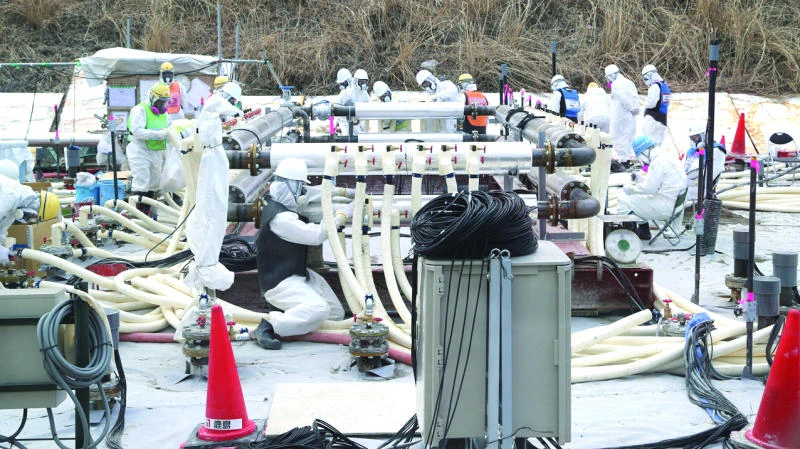
TOKYO: Japanese regulators on Wednesday approved the use of a giant refrigeration system to create an unprecedented underground frozen barrier around buildings at the wrecked Fukushima nuclear plant in an attempt to contain leaking radioactive water.
The Nuclear Regulation Authority said the structure, which was completed last month, can now be activated.
The plant’s operator, Tokyo Electric Power Co., said it plans to turn on the ice wall on Thursday, starting with the portion near the sea to minimize the risk of contaminated water escaping into the Pacific Ocean. The system will be started up in phases to allow close monitoring and adjustment.
Nearly 800,000 tons of radioactive water that is already stored in 1,000 industrial tanks at the plant has been hampering the decontamination and decommissioning of the nuclear facility, which was damaged by a massive earthquake and tsunami in 2011.
The success of the ice wall is believed to be key to resolving the plant’s water woes.
The project, proposed by construction giant Kajima Corp., is more than a year behind schedule because of technical uncertainties. Some experts are still skeptical of the technology and question whether it’s worth the huge cost.
The 35 billion yen ($312 million) government-funded project consists of refrigeration pipes dug 30 meters (100 feet) underground that are designed to freeze the soil around them. They are supposed to form a 1.5-kilometer (0.9-mile) wall around the reactor and turbine buildings to contain radioactive water and keep out groundwater.
At a meeting Wednesday of the nuclear agency, Chairman Shunichi Tanaka cautioned against high expectations because the success of the project depends in part on nature.
Japan regulators OK ice wall at Fukushima plant