NAIROBI: Kenya’s interior minister and police chief were removed from their posts on Tuesday, hours after Somalia’s Shabab rebels carried out a fresh massacre in the northeast of the country.
In a televised address to the nation, President Uhuru Kenyatta also vowed his security forces will “intensify the war on terrorism” after a spate of killings in the country by the Al-Qaeda-affiliated insurgents.
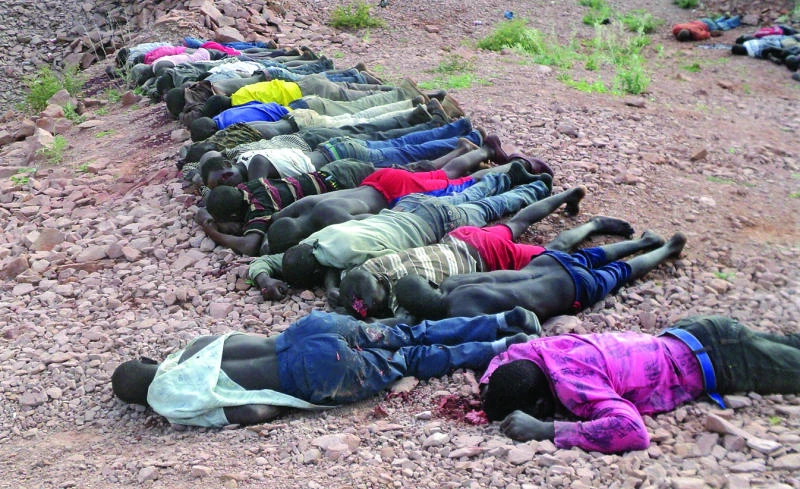
A group of Shabab rebels stormed into a quarry near the border town of Mandera shortly after midnight, and police and officials said they weeded out non-Muslims and shot them in the head, while some of the victims were also beheaded.
The Shabab said in a statement that their latest cross-border attack was fresh retaliation for Kenya’s 2011 invasion and continued presence in Somalia, as well as its treatment of Muslims in the troubled port city of Mombasa.
The attack came just over a week after the rebels executed 28 people who were grabbed from a bus traveling from Mandera, a border town located on the frontier between Kenya, Somalia and Ethiopia, and the group vowed to conduct more “uncompromising, relentless and ruthless” attacks.
Kenyatta, however, vowed Kenyan troops would stay put in Somalia, where they are now part of an African Union forces battling the Shabab and supporting the war-torn country’s internationally-backed government.
“This is a war and a war that we must win, we must win it together,” he said, calling the Shabab “deranged animals” who had killed more than 800 people in attacks inside Kenya, including 500 civilians and 300 security officers.
“We will not flinch or relent in the war against terrorism in our country and our region. We shall continue to inflict painful casualties on these terrorists until we secure our country and region. Our stability and prosperity depends on a secure neighborhood.”
The Kenyan government has been under fire since last year’s attack by the Shabab against the Westgate shopping mall in Nairobi, in which at least 67 people were killed in a siege involving just four gunmen and which lasted four days.
Worries over internal security mounted when Shabab rebels massacred 100 people in a string of Shabab raids against villages in the Lamu region on the Kenyan coast in June and July.
The sacked Interior Minister, Joseph Ole Lenku, has become a figure of public ridicule for his statements on the security situation, while national police chief David Kimaiyo has been accused of repeated lapses — contributing to dwindling public confidence in the country’s security apparatus.
According to Kenyan media, intelligence officials had alerted police to the presence of a group of Shabab fighters in the northeast before last month’s bus attack, but police had failed to react and were so slow in responding to distress calls after the murders that the assailants had plenty of time to escape.
Kenya security chiefs ousted after new Shabab massacre