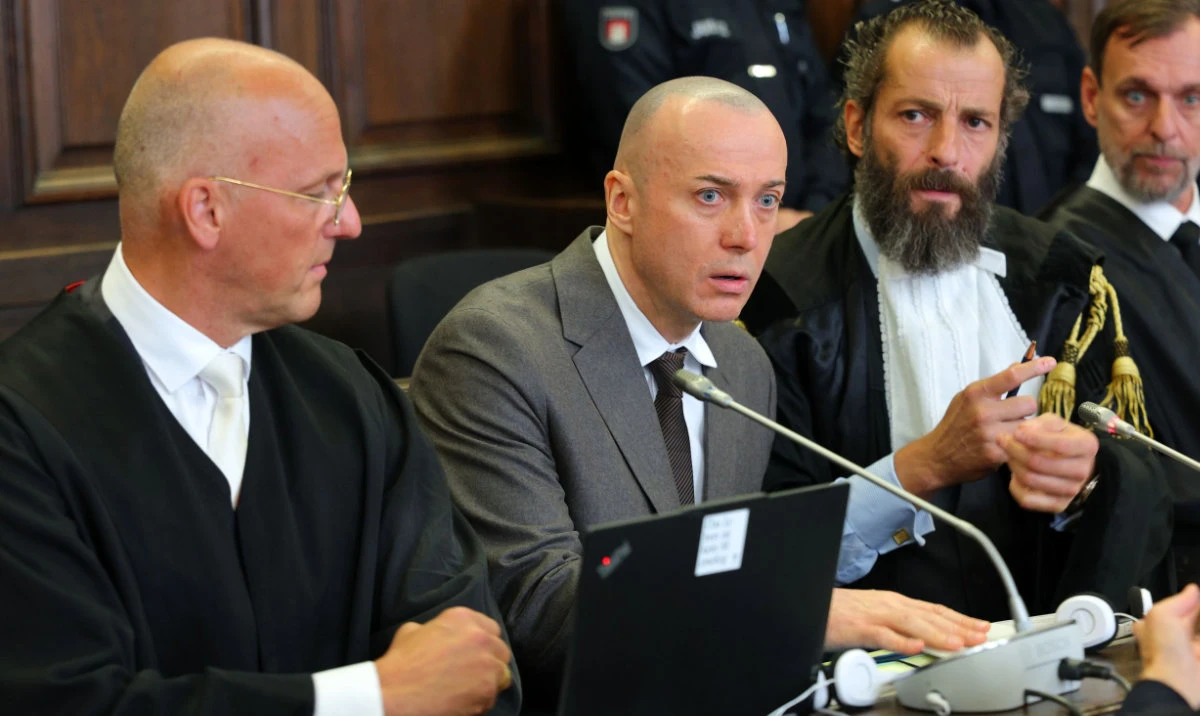
THE HAGUE: A UN war crimes court cleared yesterday Kosovo’s ex-prime minister Ramush Haradinaj of murder and torture during the 1990s war of independence, enraging Belgrade with the second such acquittal in two weeks.
“The chamber finds you not guilty on all counts in the indictment,” Judge Bakone Justice Moloto said, ordering Haradinaj and two former guerrilla comrades released immediately after their retrial, held because of alleged witness intimidation in the first proceedings.
Fireworks exploded around Kosovo’s capital Pristina and the court’s public gallery erupted in cries of joy as the acquittals were announced.
Haradinaj, 44 and Idriz Balaj, 41, were being retried on six war crime charges at the International Criminal Tribunal for the former Yugoslavia (ICTY) for allegedly murdering and torturing Serbs and non-Albanians during the 1998-99 conflict, after initially being acquitted.
The third accused, La—s of late Serbian strongman Slobodan Milosevic.
Serbia angrily accused the tribunal in The Hague of bias against Serbs after the verdict, which came two weeks after it acquitted Croatian General Ante Gotovina of war crimes against Serbs.
“The tribunal, apparently created outside international law, was set up to try the Serbian people,” President Tomislav Nikolic said. “Nobody will be convicted for the terrible crimes against Kosovo Serbs.”
Nikolic warned that EU-sponsored talks between Pristina and Belgrade — which still regards Kosovo as part of Serbia after its unilateral declaration of independence in 2008 — could be jeopardized.
Balkans specialist Marianne Ducasse-Rogier from the Clingendael Institute in The Hague said the timing of the acquittals could be seen as “unfortunate”.
“It gives Serbia the impression that the ICTY is biased and has only condemned Serb people,” she told AFP. “It is true that the ICTY has condemned more Serbs, but it’s maybe just because they committed more crimes”
Bosnian Serb wartime political and army chiefs Radovan Karadzic and Ratko Mladic are still on trial at the ITCY, which has sentenced six top former Serbian military and police officials for war crimes during the Kosovo conflict.
But no high-ranking official from any other ethnic community has been sentenced for crimes against Serbs during the Balkans wars.
Several hundred people braved the rain to watch the verdict on a giant screen in a central square in Pristina, where Haradinaj is considered a hero by Kosovo’s ethnic Albanian majority.
“Justice has won, Kosovo has won,” said Haradinaj supporter Jahja Lluka as tears of joy streamed down his face.
The most senior KLA commanders to be tried, Haradinaj as well as Balaj, his lieutenant and commander of the feared “Black Eagles” unit, were first acquitted in April 2008 on 37 counts of war crimes and crimes against humanity.
Brahimaj was convicted of torture and sentenced to six years in jail.
In the retrial, prosecutors accused the three men of murdering and torturing Serbs and suspected collaborators against the KLA and had demanded sentences of at least 20 years.
But judges found that the accused had not taken part in a “joint criminal enterprise” to cleanse the area of ethnic Serbs, and that some witness testimony was unreliable.
Moloto said one witness may not have been in the Jablanica detention camp, where suspects’ arms were allegedly broken and eyes gouged out, and “may have told what he heard from others.”
“There is no credible evidence that Haradinaj was even aware of the crimes committed at Jablanica,” he said.
But John Dalhuisen of Amnesty International said that if the three senior KLA members were not guilty, “who then committed those crimes?”
“The abductions of members of minority communities, and of Albanians considered to be traitors to the KLA, are war crimes and, sometimes, crimes against humanity,” he said, accusing the Kosovo authorities of “a total lack of political will to support the investigation and prosecution of such abductions.”
Arab News