CAPE TOWN: South African President Jacob Zuma has acknowledged that the recent attacks on foreign nationals was not a first time occurrence but reassured organizations representing them that majority of South Africans were not xenophobic.
Zuma met with more than 50 representatives from various organizations representing foreign nationals in South Africa at the Sefako Mapogo Makgatho Presidential Guesthouse in Pretoria.
Zuma vowed to tackle anti-migrant sentiment and to address deep-rooted problems behind the attacks.
Zuma said he had called the meeting with the migrants’ representatives as part of his government’s effort to find “collective solutions so that these attacks do not happen again.”
“We have to ensure that permanent solutions are found, so that all our people can continue to live side by side together like we have done for years,” said Zuma.
Meanwhile, sources said South Africa’s Parliament will be suspended next week to enable lawmakers to return to their constituencies to spread the anti-xenophobia message, in the wake of the violence. The violence has left at least seven dead and driven thousands from their homes.
“We can’t carry on at Parliament like it is business as usual,” National Assembly speaker Baleka Mbete said, adding that lawmakers were being released to take part in “appropriate” activities. A statement issued by the Parliament stressed the need for tolerance.
“Parliament adds its voice to the all-round condemnation of violence against foreign nationals, racism and forms of intolerance in our country,” it said.
“The dignity and respect we should give to all people was shown to us many times over by particularly the people of Africa during our own struggle for non-racialism, non-sexism, freedom and human rights,” it added.
On Friday, President Jacob Zuma — who has also condemned the violence — met over 50 leaders of organizations representing foreign nationals living in South Africa in what the presidency described as “very cordial” talks.
More than 20 years after the end of apartheid, however, high unemployment and a lack of opportunities for young blacks have made impoverished and crowded townships a powder-keg of frustration.
Immigrants have found themselves being blamed for taking jobs from locals, and for high crime rates.
The meeting with migrants’ leaders was also told that a total of 132 people had been convicted for the 2008 wave of xenophobic attacks that claimed 62 lives and that a total of 140 years jail sentences had been handed down for those crimes.
This is contrary to widespread reports that only one person had been convicted over those attacks.
“These cases are a clear demonstration that government is committed to bringing perpetrators of attacks on foreign nationals to book,” said the presidency in a statement.
Soldiers were deployed in Johannesburg this week to aid police in raids on hostels housing South African men who are accused of targeting migrants from Zimbabwe, Malawi, Mozambique and other African countries.
The violence has brought condemnation from the governments of those countries, which have bused home thousands of their nationals who fled the attacks.
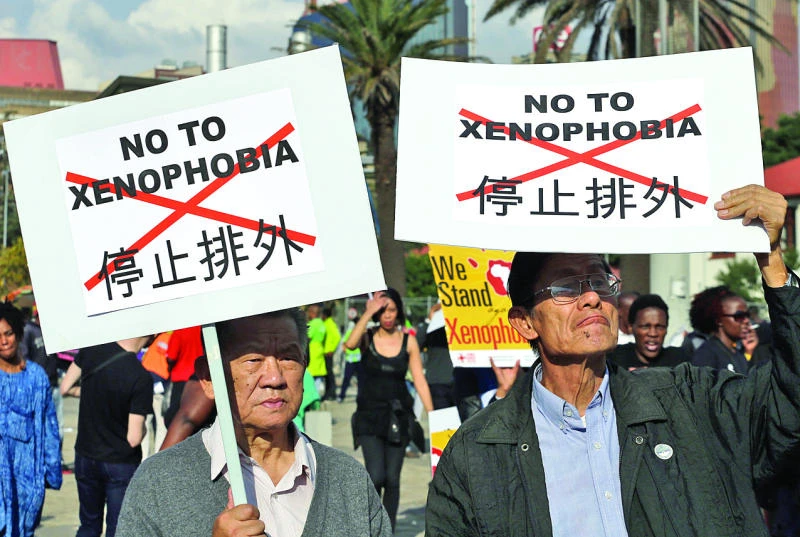
The unrest has also been widely condemned in South Africa itself, with large turnouts at anti-xenophobia rallies in cities across the country.
Majority of S. Africans ‘not xenophobic’