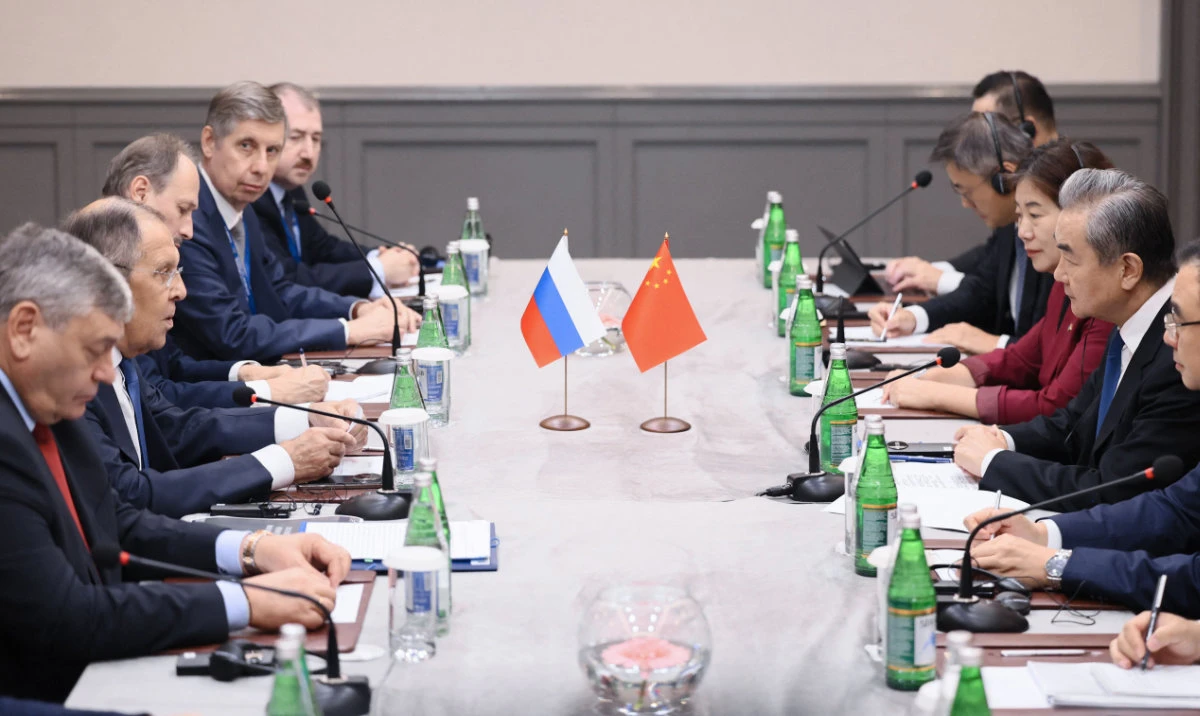
ADDIS ABABA: South Sudan’s warring parties gathered in Ethiopia Thursday for peace talks hoped to end nearly three weeks of conflict that has left thousands dead in the world’s newest nation.
As government and rebel negotiating teams gathered at a luxury hotel in Ethiopia’s capital Addis Ababa, aid workers warned of a worsening crisis for civilians affected by the still ongoing conflict in S. Sudan.
“We are ready for talks,” a member of the rebel delegation told AFP, adding that they remained unclear exactly when meetings would start and in what format.
It was not clear if all members of the two delegations had arrived, suggesting that full face-to-face talks might not take place on Thursday.
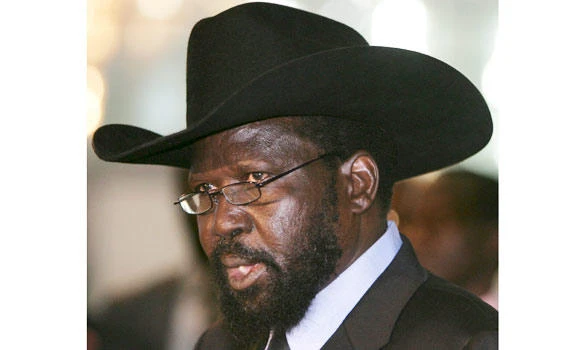
Thousands of people are feared to have been killed in the fighting, pitching army units loyal to President Salva Kiir against a loose alliance of ethnic militia forces and mutinous army commanders nominally headed by ex-vice president Riek Machar.
Fighting erupted on December 15 when Kiir accused Machar of attempting a coup.
Machar has denied this, in turn accusing the president of conducting a violent purge of his opponents, and the fighting has spread across the country, with the rebels seizing several areas in the oil-rich north.
The decision by the two sides to send delegations for initial cease-fire talks has been widely welcomed.
UN special envoy Hilde Johnson said in Juba it was “positive that they are sending delegations,” underscoring the dire need for “reconciliation and healing” after the violence.
“We have seen terrible acts of violence in the past two weeks... and as we know, if there is no one held accountable, there is a major risk that the violence can continue,” she added.
Over 200,000 Sudanese refugees who had fled the fighting face a grim situation, with many aid workers who had been supporting them evacuated.
On Tuesday rebels recaptured Bor, the capital of Jonglei state just 200 kilometers north of the capital Juba that has changed hands three times since the fighting erupted.
Civilians in the town now face “an increasingly dire situation: water, food and medicines are running out, sanitary conditions are worsening,” UN humanitarian chief in the country Toby Lanzer said.
Close to 200,000 civilians have been forced to flee their homes, many seeking refuge with badly overstretched UN peacekeepers.
The conflict has also been marked by an upsurge of ethnic violence pitting members of Kiir’s Dinka tribe against Machar’s Nuer community, and the UN Mission in S. Sudan (UNMISS) said that “atrocities are continuing to occur” across the country.
UNMISS reported “extra-judicial killings of civilians and captured soldiers” and the “discovery of large numbers of bodies” in Juba, Bor and Malakal, the main town in oil-producing Upper Nile state.
On Tuesday, Machar told AFP via satellite phone that he was not yet ready to agree to an immediate cease-fire nor hold face-to-face talks with Kiir, and that his forces were marching on the capital Juba.
“There is no cessation of hostilities yet,” Machar said. “That is what the delegation going to Addis Ababa is going to discuss and to negotiate.”
Kiir has described the war as “senseless,” but has ruled out power sharing with the rebels. The president has also rejected rebel demands that a number of their loyalists, arrested shortly after the violence started, be released.
“If you want power, you don’t rebel so that you are awarded with the power,” Kiir said in an interview broadcast on the BBC.
S. Sudan won independence from Sudan in 2011 after decades of civil war.
Facts
Population and Geography
The landlocked country in northeastern Africa is populated by 10.8 million people scattered over an area about the size of France. It shares borders with volatile countries such as the Central African Republic and the Democratic Republic of Congo.
Ethnic Groups
There are more than 200 ethnic groups. Among the largest groups are the Dinka, Nuer and Shilluk. President Salva Kiir is from the biggest tribe, the Dinka.
Domestic Politics
Political rivalry between Kiir and former deputy Machar, a Nuer, goes back decades. In July, Kiir fired Machar and dissolved the Cabinet. Opposition parties are only a tiny minority in a Parliament controlled by the Sudan People’s Liberation Movement (SPLM).
Security Troubles
South Sudan is awash with weapons and armed groups, some historically allied to Juba and others former proxies for the government of Sudan.
Oil Dependent Economy
Despite its oil wealth, which accounted for about 80 percent of 2012 gross domestic product (GDP), South Sudan is one of the continent’s least developed countries. Potentially exploitable resources include timber, iron ore, copper, zinc, tungsten, silver and gold.
Tensions with Sudan
In addition to oil revenue sharing, border-related disputes have poisoned relations between Juba and Khartoum. One row concerns the border enclave of Abyei, which is claimed by both sides.
Military: South Sudan rebels set eyes on capital