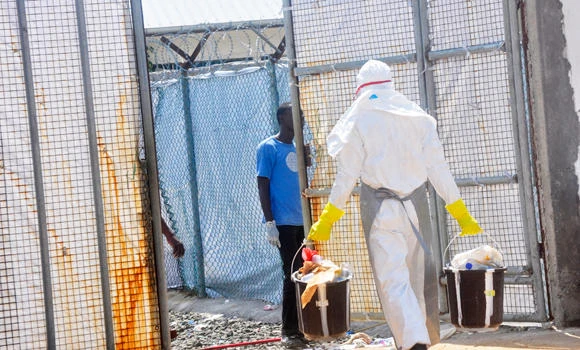
MONROVIA: Global aid agency Doctors Without Borders urged caution Thursday over claims of a slowdown in infections in Ebola-hit Liberia, saying the apparent drop could be due to poor management of the sick. The warning follows an announcement by the World Health Organization (WHO) that data from a range of sources including funeral directors and treatment centers indicated lower admission rates and burials.
But the medical charity, known by its French initials MSF, warned that “mandatory cremation of dead bodies and a poor ambulance and referral system could also be reasons for this decrease.”
“It is too soon to draw conclusions on the reduction of Ebola cases in Monrovia,” Fasil Tezera, MSF head of mission in Liberia, said. “While the number of admissions in MSF’s 250-bed Monrovia Ebola center have dropped to around 80, we do not have a full picture of the extent of the outbreak and estimates might not be reliable.”
An MSF spokeswoman in Dakar told AFP many people in the capital were calling the Ebola hotline to report that they were sick but were not being picked up because of a lack of ambulances and were going missing from the statistics.
“The present epidemic is unpredictable: We have seen a lull in cases in one area only to see the numbers spike again later,” Tezera added.
WHO assistant director-general Bruce Aylward told reporters in Geneva on Wednesday that while labs were also seeing a “plateauing or slight decline” in the number of confirmed cases, the crisis was far from over.
He added that he was “terrified that the information will be misinterpreted and that people will begin to think Ebola is under control.”
The Ebola outbreak that has been ravaging west Africa has claimed 4,922 lives, according to the latest update from the WHO. The vast majority of deaths were in Liberia, Guinea and Sierra Leone.
Aylward said that the number of Ebola cases registered worldwide had soared to 13,703 — up from around 10,000 reported by the WHO on Saturday — but he stressed the increase was mainly due to previously unreported cases being added to the statistics.
His cautious optimism on Liberia came a day after the Red Cross offered hope that progress was being made in the battle against the killer virus, noting a sharp drop in the burials it was being called on to carry out. Health authorities in Liberia welcomed the apparent slowdown but echoed the call for caution issued by the WHO and MSF.
Deputy health minister Tolbert Nyensuah said that even if it managed to achieve no new cases, Liberia would not be able to consider itself Ebola-free until neighbors Guinea and Sierra Leone had eradicated the virus.
MSF warns Liberia’s Ebola ‘progress’ may be illusory