YANGON: Myanmar troops fighting ethnic rebels near the Chinese border have recovered the bodies of 13 insurgents and captured eight others following heavy government losses this week, state media reported Sunday.
Myanmar’s military has for several days carried out airstrikes and ground assaults on rebel positions in retaliation for an attack last week on a key army headquarters in the Kokang region.
The clashes are some of the fiercest in the country in two years and threaten to derAil efforts of a nominally civilian government to sign a nationwide cease-fire with more than a dozen rebel groups that have been fighting for self-rule for decades.
According to Myanma Ahlin daily on Sunday, troops found 13 bodies, captured eight seriously wounded rebels and seized 98 weapons. As many as 47 soldiers were killed and more than 70 wounded earlier this week in fighting that involved airstrikes on rebel positions near Laukkai, capital of the self-administered Kokang zone. The region is about 800 km northeast of the country’s biggest city, Yangon.
Kokang rebels used to be part of the now-defunct Burmese Communist Party until a cease-fire was signed with the then-military government in 1989. Officials blame the renewed fighting on a renegade faction led by Phone Kya Shin, which attempted to seize Laukkai.
Myanmar Army Chief Senior Gen. Min Aung Hlaing accused other ethnic armed groups of supporting the Kokang rebels, though he did not name them.
Fighting in resource-rich Kachin, which erupted in 2011 when a 17-year cease-fire crumbled, is seen as a significant barrier to reaching an agreement. It has seen some 100,000 people forced into displacement camps.
The rebel group’s general secretary Htun Myat Lin also told The Associated Press by phone on Saturday that they were supported by other insurgents, including Kachin, Shan and Arakan groups, a claim denied by a Kachin spokesman.
Myanmar only recently emerged from a half-century of brutal military rule. Since assuming power in 2011, the government of President Thein Sein has been trying to strike peace agreements with rebels in resource-rich border regions.
Though preliminary pacts have been reached with most of the ethnic groups, clashes occasionally occur with Kachin, Shan and others. In addition to control over jade, timber and other natural resources in areas under their control, they want assurances that they will have some say over future troop movements.
On Saturday morning government troops clashed with Kokang “renegade groups” who had “infiltrated” Laukkai, state-run the Global New Light of Myanmar reported.
After fighting ended in the evening the military seized nearly 100 “small weapons... and 13 bodies of the armed group,” the report said, adding a further eight seriously wounded rebels were detained.
Authorities said unrest flared in Kokang, Shan State, on Feb. 9 shattering nearly six years of relative calm, in a serious blow to the quasi-civilian regime as it looks to forge a historic nationwide ceasefire to end the country’s myriad ethnic minority conflicts.
Clear accounts of a week of conflict in the mountainous, remote Kokang area bordering China are hard to ascertain.
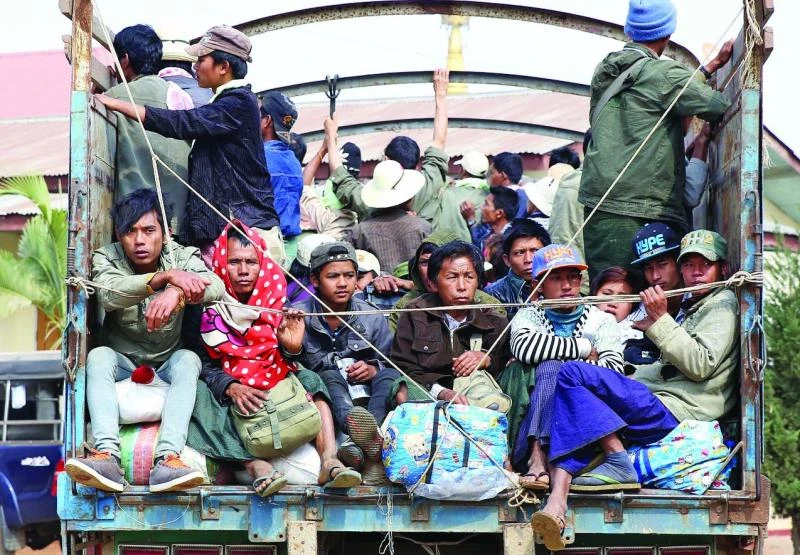
An unknown number of people have fled the Kokang unrest, with those of ethnic Chinese origin crossing the border into China, while some have made their way to the northern Shan city of Lashio.
Between 300-400 Burmese refugees from the fighting were expected later Sunday in Lashio, an unnamed official at the Information Ministry told AFP, joining around 500 who have arrived since Friday.
Myanmar Army kills 13 ethnic rebels in firefight