YANGON: Washington’s decision to ease a ban on imports from Myanmar won praise yesterday in the emerging Southeast Asian democracy, with a government official giving credit to both the country’s reformist president and opposition leader Aung San Suu Kyi.
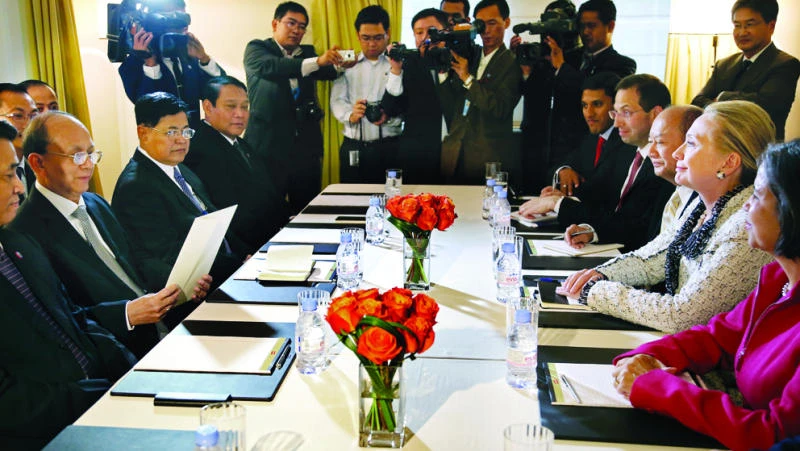
US Secretary of State Hillary Rodham Clinton announced Wednesday that the Obama administration will ease import restrictions implemented against Myanmar’s previous repressive military regime. She met Wednesday with President Thein Sein on the sidelines of the UN General Assembly in New York.
“The president has consistently called for the lifting of US sanctions and ... Aung San Suu Kyi has also called for lifting sanctions in her speeches,” Maj. Zaw Htay, director of the president’s office, told The Associated Press. “This is a very positive move and also a valuable outcome of the president’s US trip.”
In August, Congress renewed sanctions legislation against Myanmar, but the law also allows President Barack Obama to waive its provisions. Wednesday’s announcement begins that process, though easing the ban also requires the issuance of a Treasury license.
The import ban on Myanmar had been a key plank of American economic sanctions, which have been gradually lifted since the beginning of this year in response to political and economic reforms initiated by Thein Sein since he became president last year.
Washington has taken a go-slow approach to guard against anti-democratic backsliding by Myanmar’s government, but is also under pressure to allow US companies to compete on an even basis with competitors from Europe and Asia, which have been quicker to drop restrictions.
Zaw Htay said that while Myanmar-US diplomatic relations have been normalized — Washington restored relations at the ambassadorial level earlier this year after a break of more than two decades — more relaxation is needed to normalize their trade and business relationship.
“We have been calling for the lifting of the US ban since 2003 and now we are happy that the decision has been made to lift it,” Aung Win, a businessman said. He said many garment factories had to be shut down and thousands of people were made jobless as a result of the ban.
Myanmar praises US decision to ease ban on imports