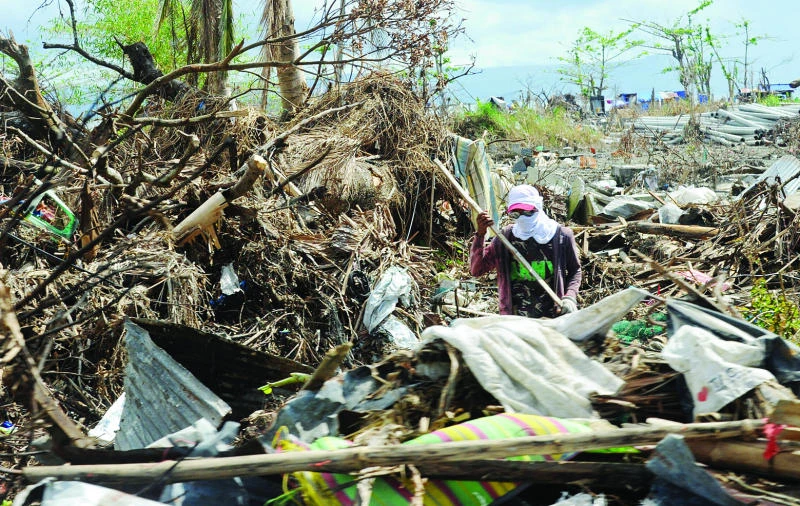
TACLOBAN, Philippines: A month after one of the strongest typhoons ever recorded hit the Philippines, masses of survivors are living amid rubble in rebuilt shanty homes and experts say reconstructing destroyed communities will take years.
The sight of people sleeping and cooking in wasteland towns highlights the overwhelming problems as an initial, frenzied emergency relief effort transforms into one focused on long-term rehabilitation.
“A lot of people have received emergency assistance, but this is just the beginning,” Matthew Cochrane, a spokesman for the United Nations Office for the Coordination of Humanitarian Affairs in the worst-hit city of Tacloban, said.
The Philippines endures more than 20 major storms a year but Super Typhoon Haiyan was the most destructive on record, with at least 5,796 people killed and another 1,779 missing, according to government data. Haiyan also made history as having the strongest winds ever recorded to make landfall, striking the eastern island of Samar with gusts of 315 km (195 miles) an hour.
But surprise storm surges proved to be more devastating than the winds, sending walls of water up to two story’s high through dozens of mostly poor coastal communities on Samar and neighboring Leyte island.
More than a million homes were damaged or destroyed, while water rushed through schools and other supposedly safe coastal buildings used as evac uation centers, killing many people sheltering there.
Cochrane said one of the top priorities, exactly one month after Haiyan struck on November 8, was building new homes and communities for roughly 500,000 families.
But with the process expected to take up to five years and cost billions of dollars, many people have already left evacuation centers and started the rebuilding themselves, often using salvaged material.
In Tacloban, 81-year-old Gnerio Trinidad sat at the weekend inside her tiny wooden home that was rebuilt on stilts above a putrid swamp of debris, as her neighbors threw broken furniture and shattered coconut trees onto a fire.
“I’m afraid that another typhoon will come, but there’s nowhere else to go... if the government gives us another place to live, we will move,” Trinidad said as her three grandchildren played in the house.
One month after super typhoon, Philippines faces huge challenges