- Newspapers in Pakistan printed editions with black borders on Thursday
- Politicians, including Prime Minister Imran Khan, replaced their social media pictures with black squares
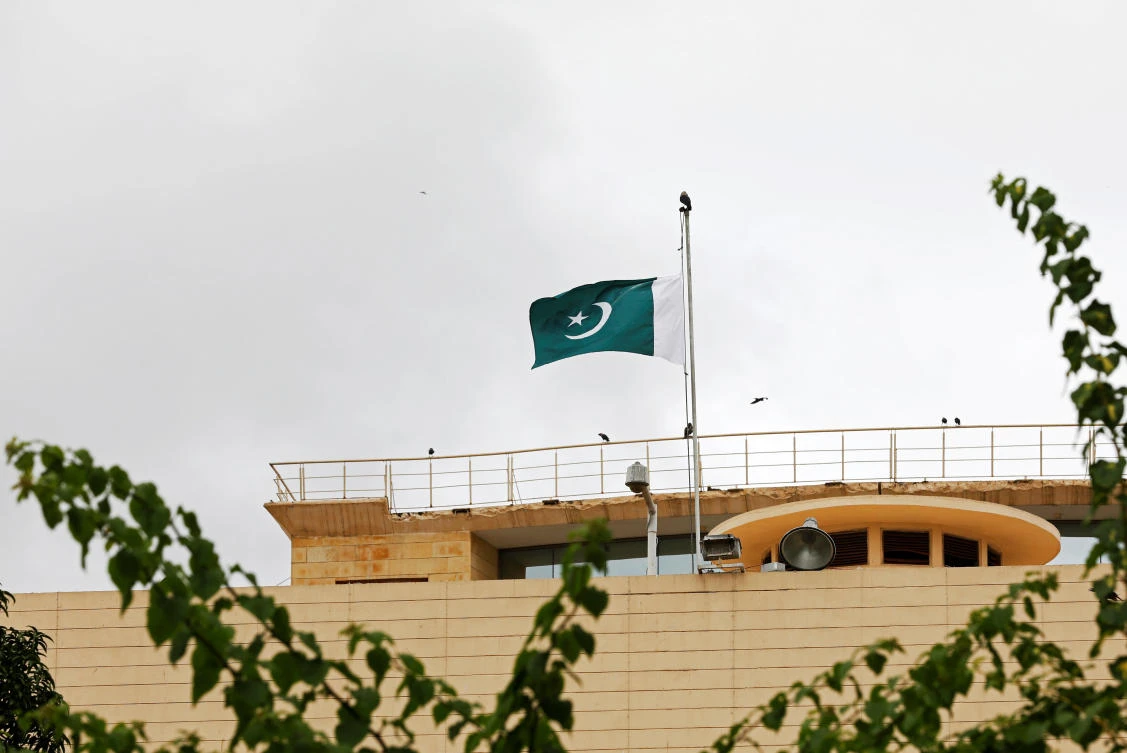
ISLAMABAD: Pakistan observed a ‘Black Day’ on Thursday to coincide with India’s Independence Day celebrations, in protest at New Delhi’s decision to revoke special status for its portion of the contested Kashmir region.
India’s decision this month, along with a communications blackout and curbs on the movement of those in Indian-administered Kashmir, caused fury in Pakistan, which cut trade and transport links and expelled India’s envoy in retaliation.
Newspapers in Pakistan printed editions with black borders on Thursday and politicians, including Prime Minister Imran Khan, replaced their social media pictures with black squares.
Protests are being held across the country, including Azad Kashmir, the wedge of territory in the west of the region that Pakistan controls.
Holding black flags and chanting slogans against India, about 3,000 Pakistanis rallied about a mile (2 kilometers) from the Indian embassy in Islamabad, urging the world community to take notice of human rights abuses in the disputed Muslim-majority Himalayan region.
Thursday's rally was organized by Pakistan's ruling Tehreek-e-Insaf party and was also attended by Kashmiri people living in Pakistan.
Later, a delegation from the demonstrators went to the Indian embassy to convey a protest over changes made by the Indian government to Kashmir's special status and demanded the lifting of a curfew and other curbs on people living in Indian-administered Kashmir.
The move comes amid growing frustration in Islamabad at the lack of international response over the Kashmir dispute.
Pakistan was isolated diplomatically and faced “a world in denial” over the situation in Kashmir, Dawn, the country’s most influential English language newspaper, said in an editorial.
The 15-member United Nations Security Council could discuss the dispute as soon as Thursday, but Pakistan says it only has guaranteed support from China, which also claims part of India’s Jammu and Kashmir state.
Permanent security council member Russia said on Wednesday it supported India’s stance that the dispute should be resolved through bilateral means, while the United States has called India’s decision an internal matter for New Delhi.
In his Independence Day speech in the Indian capital, Prime Minister Narendra Modi highlighted the decision to remove the special rights of the Muslim-majority region among the bold moves of his second term, following an election victory in May.
“Today every Indian can proudly say ‘One Nation, One Constitution’,” Modi, speaking from the ramparts of the historic Red Fort, said of the decision.