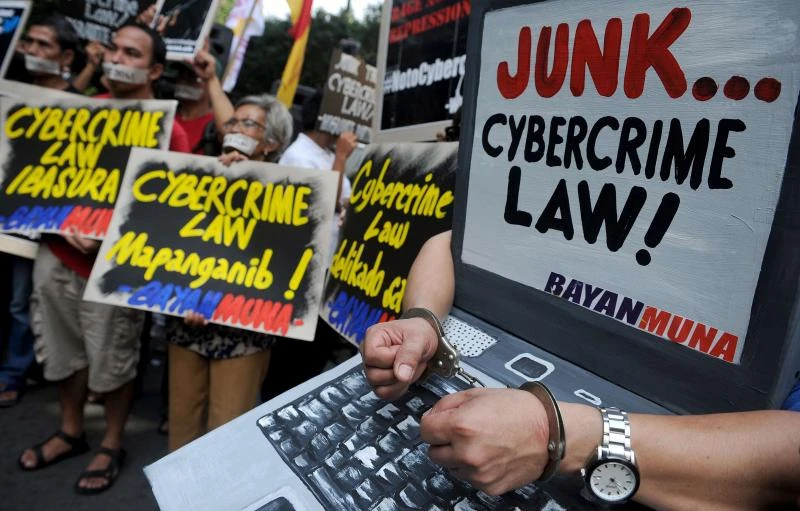
MANILA: The Philippine Supreme Court suspended yesterday a controversial cybercrime law, amid huge online protests over fears it would impose severe curbs on Internet freedoms.
The court declared in a brief written notice that the law would be suspended for four months while the tribunal studies the arguments for and against it.
“The court resolved... to issue a temporary restraining order, effective immediately and for a period of 120 days, enjoining the respondents from implementing and/or enforcing (the cybercrime act),” it added.
Such an order stops Philippine laws from taking effect until further orders from the court, while making no immediate judgment on their legality. The court said it will hear the case on Jan. 15 next year.
Justice Secretary Leila de Lima said the government will follow the court's order.
“The Supreme Court temporary restraining order is an exercise of the power of judicial review. We respect and will abide by it,” de Lima told reporters.
“Our advocacy for a safe cyberspace and interdiction of organized crime will continue,” she added.
The 15-member Supreme Court held a meeting behind closed doors yesterday to discuss petitions seeking to outlaw the cybercrime act.
Riot police deployed outside the court as about 100 of its opponents as well as supporters staged rival but peaceful protests.
The law, which went into force last week, seeks to stamp out non-controversial cybercrimes such as fraud, identity theft, spamming and pornography. However one provision which metes out heavy jail terms for online libel, tougher than for defamation in the traditional media, has caused an uproar. Equally controversial is a provision that allows the government to shut down websites and monitor online activities, such as video conversations and instant messaging, without a court order.
Human rights groups, media organizations and net users have voiced their outrage at the law, with some saying it echoes the curbs on freedoms imposed by dictator Ferdinand Marcos in the 1970s.
Philippine social media has been alight with protests, while hackers have attacked government websites and petitions have been filed with the Supreme Court calling for it to overturn the law.
Philippine apex court blocks cybercrime law