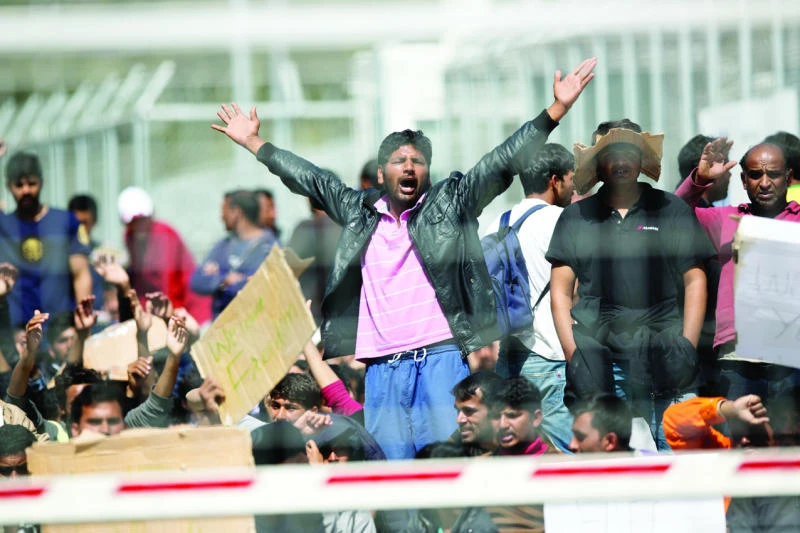
ATHENS: Pope Francis has expressed a wish to visit refugees in Greece, the Greek Orthodox Church said Tuesday, as the European Union grapples with a controversial accord to send migrants back to Turkey.
The papal trip would likely pile pressure on EU leaders already criticized for the deal, which aims to defuse Europe’s worst migration crisis since World War II by curbing the influx of people.
The Greek Orthodox Church said it had approved plans for a papal visit to Lesbos Island after the pope expressed a desire to “draw the attention of the international community to the need for an immediate cease-fire in the conflicts” in the Middle East.
The pontiff also wished to “shed light on the major humanitarian problem” of the migrant influx, the statement said, adding that Ecumenical Patriarch Bartholomew, the head of the Eastern Orthodox Church, had been invited on the same day.
The statement did not give a date for the trip but the religious news website Dogma said it could be April 15.
The pope has previously spoken out on the migrant crisis, using his recent Easter address to criticize the “rejection” of refugees.
More than a million people arrived in Europe in 2015, many of them from war-ravaged Syria.
News of the papal visit came as a last-minute rush of asylum applications stalled operations to return migrants from Greece to Turkey under the EU-Turkey deal signed in March, although officials said the forced returns would continue Wednesday.
The procedure has been slowed “by an increase in asylum requests” in the last few days by migrants on Chios and Lesbos, the Greek Aegean islands in the front line of the migratory wave, said Greek official Yiorgos Kyritsis.
Kyritsis, the spokesman for the Greek government panel coordinating the migration crisis, said no operations were planned for Tuesday, but a Turkish official said around 200 more migrants would be received on Wednesday in the Turkish harbor town of Dikili on the Aegean sea.
The source in the governor’s office of Izmir province on the Aegean coast did not give details on the logistics or the nationalities of the migrants who were to be returned.
All “irregular migrants” arriving in Greece since March 20 face being sent back, although the deal calls for each case to be examined individually.
Pope set to visit refugees in Greece as expulsions stalled