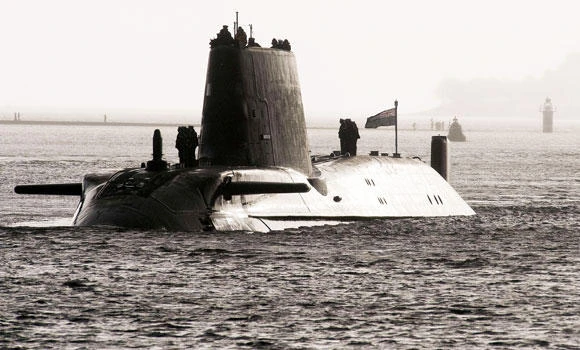
LONDON: Britain’s future as a nuclear-armed nation could be thrown into doubt if Scotland votes for independence on Sept. 18, experts say, raising serious questions about its future status in the international community.
The UK’s Trident nuclear submarines are currently based at Faslane naval base on a sea loch west of Glasgow surrounded by dramatic mountain scenery.
But the Scottish National Party (SNP), leaders of the pro-independence campaign which is gaining ground in opinion polls, wants them out of Scotland by 2020 if there is a “Yes” vote.
Some say the cost and complexity of a move could force Britain to re-open the debate about whether it needs a nuclear deterrent at all.
“The Americans like us being a nuclear power, it would cause problems with them. In the NATO alliance it would cause alarm.
Can you really remain a permanent member of the Security Council? I don’t know,” said Lord Alan West, head of Britain’s Royal Navy between 2002 and 2006 and an ex-security minister. His view is shared by figures including Scottish former NATO secretary general George Robertson.
“The forces of darkness will simply love it,” Robertson said in April during a speech in Washington. “It might mean the unilateral nuclear disarming of the remainder of the UK.”
The SNP, Scotland’s ruling party led by First Minister Alex Salmond, describes Trident as “an affront to basic decency with its indiscriminate and inhumane destructive power.”
Despite the possible upheaval, Britain’s government says it has not done any contingency planning for relocating the facilities at Faslane and nearby Coulport.
Scottish ‘independence’ worries Britain