MADRID: Spain faced an uphill struggle to form a stable government Monday following elections that saw the incumbent conservatives win the most seats but without an absolute majority, tailed by the Socialists and upstart, far-left Podemos.
For more than 30 years, the Popular Party (PP) and Socialists had alternated power but millions of Spaniards exasperated with austerity measures and repeated corruption scandals voted relative newcomers Podemos and center-right Ciudadanos into third and fourth place.
While it took the largest share of the vote, the PP lost its absolute majority in parliament and will now have to form an alliance with other parties to lead the country, attempt to rule as a minority government — or get booted out altogether.
The results of the most-closely fought elections in modern history create huge uncertainty for a country only just starting to recover from a devastating financial crisis, and the Spanish stock market slumped 2.5 percent at the start of trading.
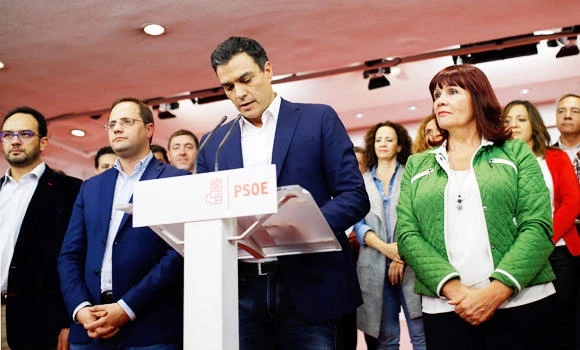
As the country awoke to a new political reality, reaction was subdued with the PP struggling to savor the bitter taste of its victory, the Socialists (PSOE) assessing the damage of their worst result in modern history and the two upstart parties reflecting on their strategy.
In a bid to soothe concerns, incumbent prime minister and PP leader Mariano Rajoy said early Monday he would strive to form a government, standing on top of a tall, blue podium in Madrid marked “Gracias” (“Thank you“) and speaking down to cheering supporters.
“Spain needs a government that has the support of parliament,” the 60-year old said.
The polls cap a year of electoral change in southern Europe after Syriza swept to power in Greece in January and a coalition of leftist parties in Portugal pooled their votes in parliament to unseat the conservative government after an inconclusive election in October.
Spain faces uphill struggle to form government after polls