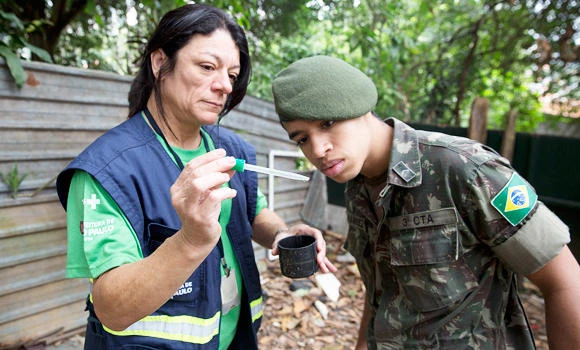
SAN SALVADOR: El Salvador urged women in the Central American nation to avoid getting pregnant until 2018 to avoid their children developing birth defects from the mosquito-borne Zika virus which has rampaged through the Americas.
The Zika virus is transmitted by the Aedes aegypti mosquito, which is also known to carry the dengue, yellow fever and Chikungunya viruses. Health experts are unsure why the virus, which was first detected in Africa in 1947 but unknown in the Americas until last year, is spreading so rapidly in Brazil and neighboring countries.
Although research is still underway, significant evidence in Brazil shows a link between Zika infections and rising cases of microcephaly, a neurological disorder in which infants are born with smaller craniums and brains.
“We’d like to suggest to all the women of fertile age that they take steps to plan their pregnancies, and avoid getting pregnant between this year and next,” said Deputy Health Minister Eduardo Espinoza.
He said the government decided to make the announcement because 5,397 cases of the Zika virus had been detected in El Salvador in 2015 and the first few days of this year.
Official figures show 96 pregnant women are suspected of having contracted the virus, but so far none have had babies born with microcephaly.
In Colombia, which has the second-highest Zika infection rate after Brazil, the government is also advising women to delay becoming pregnant, but only for six to eight months.
The Zika virus is transmitted by the Aedes aegypti mosquito, which is also known to carry the dengue, yellow fever and Chikungunya viruses. Health experts are unsure why the virus detected in Africa in 1947 but unknown in the Americas until last year is spreading so rapidly in Brazil and neighboring countries.
The US Centers for Disease Control and Prevention issued a travel advisory last week warning pregnant women to avoid 14 countries and territories in the Caribbean and Latin America affected by the virus.
Last week, US health authorities confirmed the birth of a baby with microcephaly in Hawaii to a mother who had been infected with the Zika virus while visiting Brazil last year.
In Colombia, which has the second highest Zika infection rate after Brazil, the government is advising women to delay becoming pregnant for six to eight months to avoid the risk.
Stop pregnancies to avoid zika virus, women urged