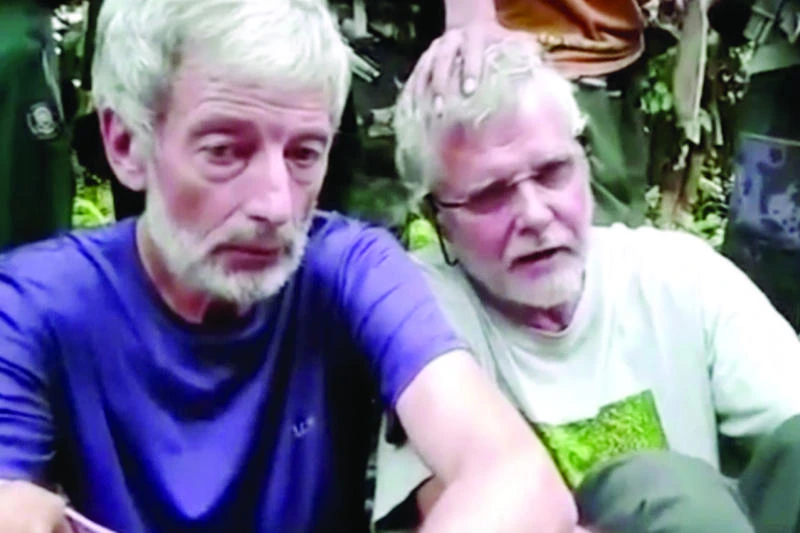
MANILA: The Philippine military came under increased pressure Tuesday to rescue more than 20 foreign hostages after their captors beheaded a Canadian man, but troops face a dilemma in how to succeed without endangering the remaining captives.
Abu Sayyaf gunmen beheaded John Ridsdel on Monday in the southern province of Sulu, sparking condemnations and prompting Canadian Prime Minister Justin Trudeau to pledge to help the Philippines pursue the extremists behind the “heinous act.”
“Canada condemns without reservation the brutality of the hostage takers and this unnecessary death,” Trudeau told reporters. “This was an act of cold-blooded murder and responsibility rests squarely with the terrorist group who took him hostage.”
Ridsdel’s head, which was placed in a plastic bag, was dumped by motorcycle-riding militants Monday night in Jolo town in impoverished Sulu, a densely forested province about 950 kilometers (590 miles) south of Manila, where the Abu Sayyaf and allied gunmen are believed to be holding 22 foreign hostages from six Western and Asian countries.
It’s a politically sensitive time for troops to carry out major offensives, at the height of campaigning in a closely fought race among four contenders in the May 9 presidential election.
President Benigno Aquino III and opposition politicians have had differences over the handling of the insurgency and the social ills that foster it. “The pressure on the armed forces is really immense,” said Julkipli Wadi, who has conducted extensive studies on the Muslim secessionist conflict in the south.
The underfunded military has to contend with escalating territorial disputes in the South China Sea while dealing with rebellions that have endured through several presidencies, fueled by the poverty, neglect and desperation that have not been tamed by political leaders, Wadi said.
A large-scale offensive could displace many villagers and draw attention to the longstanding security and social issues in the vote-rich south, homeland of minority Muslims in the largely Roman Catholic nation.
That could play to the advantage of Rodrigo Duterte, the tough-talking city mayor from the south who has emerged as the front-runner in the presidential race by a lofty promise to end crime in six months and restore law and order. Aquino has endorsed another candidate, Mar Roxas, whose platform focuses on continuing the president’s anti-corruption drive and economic reforms. All the presidential candidates condemned the beheading.
The Philippine military and police said “there will be no letup” in the effort to combat the militants and find the hostages, even though they have had little success in safely securing their freedom. Many hostages were believed to have been released due to huge ransom payments.
“The full force of the law will be used to bring these criminals to justice,” they said in a joint statement.
About 2,000 military personnel, backed by Huey and MG520 rocket-firing helicopters and artillery, are involved in the manhunt for the militants, who are believed to be massing in Sulu’s mountainous Patikul town, military officials said.
Trudeau outraged at Philippine beheading