DAGAMI: Philippine communities shattered by Super Typhoon Haiyan a year ago are starting to bustle again as a mega-reconstruction effort takes root, but millions of survivors still endure brutal poverty and are dangerously exposed to the next big storm.
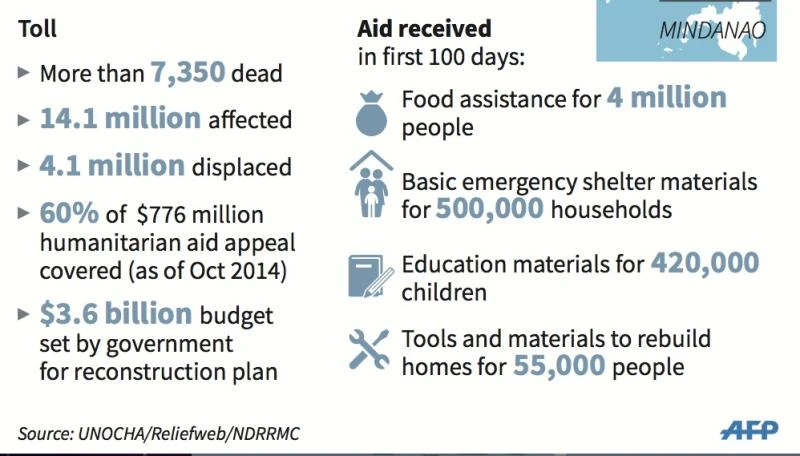
More than 7,350 people perished as Haiyan tore in off the Pacific Ocean with the strongest winds ever recorded on land and generated tsunami-like storm surges more than two-storys high.
The typhoon, on Nov. 8, smashed into a giant stretch of central Philippine islands that were home to 14 million people, laying to waste farming and fishing communities that were already among the nation’s poorest.
In some ways, the recovery has been remarkable.
Tacloban, the biggest city in the region and among the worst hit, again resembles many other chaotic Philippine urban hubs, with traffic jams, busy market stalls, packed shopping malls and queues at fast-food outlets.
In the countryside, lush green paddies are testament to successful rice planting campaigns that have sustained millions, while local and international aid agencies are helping to build thousands of new houses.
“We’re really happy, things will be a lot more comfortable,” Marianito Abrematea, 57, a farmer in the tiny village of Dagami, told AFP as he took a break from building his new, concrete-brick house funded by the Red Cross.
Like nearly all his 300 neighbors, Abrematea’s house was destroyed in the storm and he has been living for the past year in a hut made of thatched palm leaves.
“Now we’ll have houses of GI sheets (corrugated iron) and concrete, we won’t be so scared.”
Billions of dollars from the government and aid groups are being poured into the typhoon-hit region in an effort to help people living there, who make up more than 10 percent of the Philippine population.
Some of the big successes of the campaign have been the restoration of electricity within a few months, quick replanting of crops and sanitation programs that prevented major outbreaks of killer diseases.
The determination of the survivors to quickly rebuild their lives, and not become reliant on aid, has astonished many foreign relief workers, even those with experience in many other disaster zones across the world.
“The resilience of the Filipino people is amazing, they are like phoenix birds,” Camelia Marinescu, International Federation of the Red Cross and Red Crescent Societies chief in Tacloban, told AFP.
Many foreign aid workers also praise the national and local governments’ efforts, as well as their capabilities.
“If this had happened in some other countries in the region, the recovery would certainly not be like this,” Peter Agnew, a senior official with the United Nations Food and Agriculture Organization in Tacloban, told AFP.
Yet, there are no miracle short cuts to the grinding slog of recovery and the reality is many millions of people face years, or even the rest of their lives, enduring Haiyan-exacerbated misery.
The government’s masterplan envisages moving roughly one million people away from coastal areas that are deemed vulnerable to storm surges by the middle of 2016, when President Benigno Aquino’s term ends.
Typhoon-shattered Philippines slowly on mend