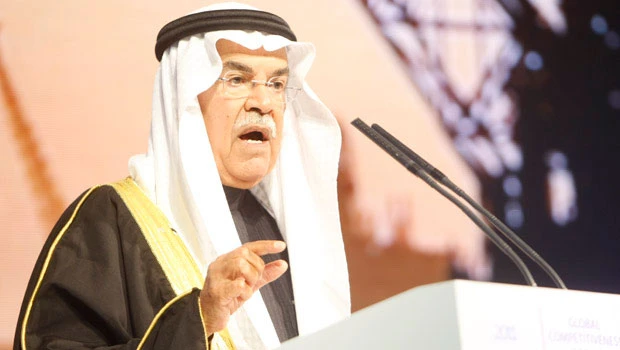
- KRAKOW, Poland: OPEC is ready to raise production to meet any increased demand, Saudi Arabia's Minister of Petroleum and Mineral Resources Ali Al-Naimi said on Thursday during a visit to Poland.
Asked whether the Organization of the Petroleum Exporting Countries would agree to raise oil production at its next meeting, Al-Naimi told a news conference: "That depends. We have to wait and see the data. If there is a need for an increase, we would decide accordingly. If there is no need, we will not.
"We always maintain a spare capacity, now at around 3-3.5 million barrels per day, so we can meet any shortages on the market," added Al-Naimi, who spoke after receiving an honorary degree.
Al-Naimi said Saudi Arabia now had total reserves of 265 billion barrels, adding this was enough for another 100 years of production. He declined to comment on what would be a fair price for crude in current conditions.
OPEC, which pumps more than a third of the world's oil, may raise supply targets by as much as 1.5 million barrels per day when ministers meet on June 8, a delegate said earlier on Thursday.
Saudi Arabia holds most of the group's spare capacity so is likely to produce most of any extra oil supply.
Ecuador's Oil Minister Wilson Pastor said on Thursday that OPEC countries may decide to increase output quotas when they meet next week if they see the global oil market under-supplied.
OPEC could agree to its first formal increase in supply quotas since 2007 when it meets on June 8 to hammer out its response to Arab unrest, extreme market volatility and pressure from the West for action, sources told Reuters.
"If there is a need for some countries to pump more they'll do so if the market is under-supplied," Pastor told Reuters.
"Let's see what happens in Vienna regarding the market analysis we'll do and we'll make a decision."
OPEC has resisted calls to boost output in the wake of the conflict in Libya, which has effectively halted exports from the OPEC member.
Raising formal output targets would force OPEC to confront tough issues.
OPEC members Iran, Libya and Venezuela could resist any rise in targets, industry publication Energy Intelligence reported on Wednesday, citing an OPEC insider.
Pastor said he sees the global oil market slightly under-supplied in the second half of the year due to some "imbalances" in supply and demand.
He said that OPEC aims to meet oil demand from consumer countries while keeping prices at a "reasonable" level and that group members will make a thorough analysis when they meet in Vienna next week to meet those goals.
"For OPEC members ... from $90 to $100 is an appropriate price that will not hurt economic growth in consumer countries," he said.
Ecuador is OPEC's smallest producer at about 500,000 barrels per day and does not have a lot of say on policy.
It has traditionally been a dove on global prices, especially compared with members such as fellow South American producer Venezuela, which say higher prices are justified.
The West's energy watchdog, the International Energy Agency, last month urged producers to boost supplies to protect the economic recovery.
Data this week from top oil consumer the United States has exacerbated concerns that the recovery in the world's largest economy is running out of steam.
Factory output growth is also slowing in China, engine of global demand growth for more than a decade.
Fuel costs are only part of a long list of economic concerns, the delegate said: "Some of it is the oil price, but that is not the whole story."
Even a little extra oil on the market could soothe concerns over Libyan supply and high fuel costs, J.P. Morgan oil analyst Lawrence Eagles said.
"This would be a positive policy step as far as consuming countries are concerned," Eagles said.