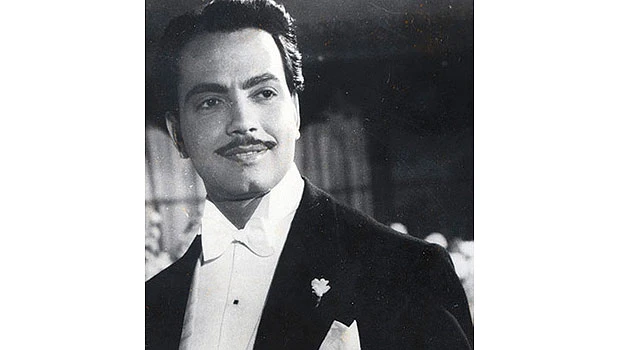
- JEDDAH: Arab film lovers will never forget Egyptian screen idol Kamal Shennawi who passed away on Sunday, starring in about 170 films in period spanning over 60 years.
“Kamal Shennawi’s works will remain a beacon for Arab film artists of coming generations,” said arts editor of Riyadh-based Al-Jazeera daily Salah Makharish, reacting to the news of Shennawi’s death at the age of 89. “He cut a path of his own in the world of acting. He excelled in all aspects of the art including in roles of a youthful lover, a sadistic villain or comedian,” Makharish said.
“Kamal Shennawi entered the hearts of the Arab youths through his diverse roles in hundreds of films,” said Ali Al-Faqandesh, arts editor of Arabic daily Okaz.
Shennawi used to handle all kinds of roles whether he played the lead or the support role of a hero or villain, as well as melodramatic or comedic characters, he said.
However, Al-Faqandesh believed that Shennawi did not get the official recognition a man of his caliber and service ought to have received.
With his extraordinary good looks he was the Don Juan of the Arabian screen, an actor whom all ladies wanted to be with and the man whom others wanted to be like.
An Egyptian journalist working in the Kingdom, Amal Ratib, said Shennawi was like a friend to her even if she never met him. He was admired by the common man, she said.
Khaled Al-Bishi, a Saudi in his 40s, said Shennawi’s works crossed geographical borders and found admirers in all Arab countries.
Originally a schoolteacher, Shennawi started his career with a minor role in 1948 but thanks to his talent and hard work he became the unrivaled superstar of Arab films within a few years.
His 1956 romantic movie with the popular actress of that time Shadia, “A Farewell At Dawn,” was the film that propelld him to the heights of superstar status. The film, produced by Shennawi and directed by Hassan El-Emam, was a love story between a poor girl and rich air force officer. It was shot at an air force academy. The film was banned during the Mubarak era in Egypt.
Shennawi’s health deteriorated after the death of his eldest son Mohamed.
One of Shennawi’s most notable political films was El-Karnak (1975), which was based on Naguib Mahfouz’s famous novel on political oppression in Egypt.
He played the role of a security officer who tortured political prisoners and supervised the rape of a girl in his office. He also had lead roles in “Thief and Dog” and “Al-Awamah No. 70,” which tested his extraordinary stage skills.