- Post-Qaddafi chaos exposes arsenals to raids by smugglers and militants in chaos-hit country
The collapse of strongman Muammar Qaddafi’s government and the ensuing chaos in Libya could prove to be boon to the militant groups in Africa and the Middle East by opening up arsenals of weaponry ranging from small arms to chemicals, experts are warning.
Rebels have seized much of the country including most of the capital Tripoli, but as of late Friday they were still battling Qaddafi loyalists and struggling to establish law and order in a country wracked by six months of civil war. Unorganized opposition fighters and ordinary Libyans have pried open weapons stores in the search for arms for battle and tradable goods.
“It’s very hard to say what is actually out there. The large arsenals in the hands of Libyan armed forces have been plundered. This plundering has been very disorganized. People walk in and take whatever they need and load them onto trucks. No one knows where those trucks are going,” said Pieter Wezeman, a research arms transfer program research, at the Stockholm International Peace Research Institute (SIPRI).
“There will be very many weapons from these arsenals spreading throughout Libya and maybe outside of Libya,” Wezeman, told The Media Line.
The weapons stockpile could find its way across the country’s desolate expanses and through its unguarded borders.
Hours after rebel fighters seized the leader’s Bab Al-Aziziya headquarters in Tripoli, looters were seen carrying out trophies like gold-plated pistols and submachine guns, not to mention flat-screen television sets and household goods. But the prize for arms smugglers and their clients is Libya’s vast arsenal of small and portable weapons.
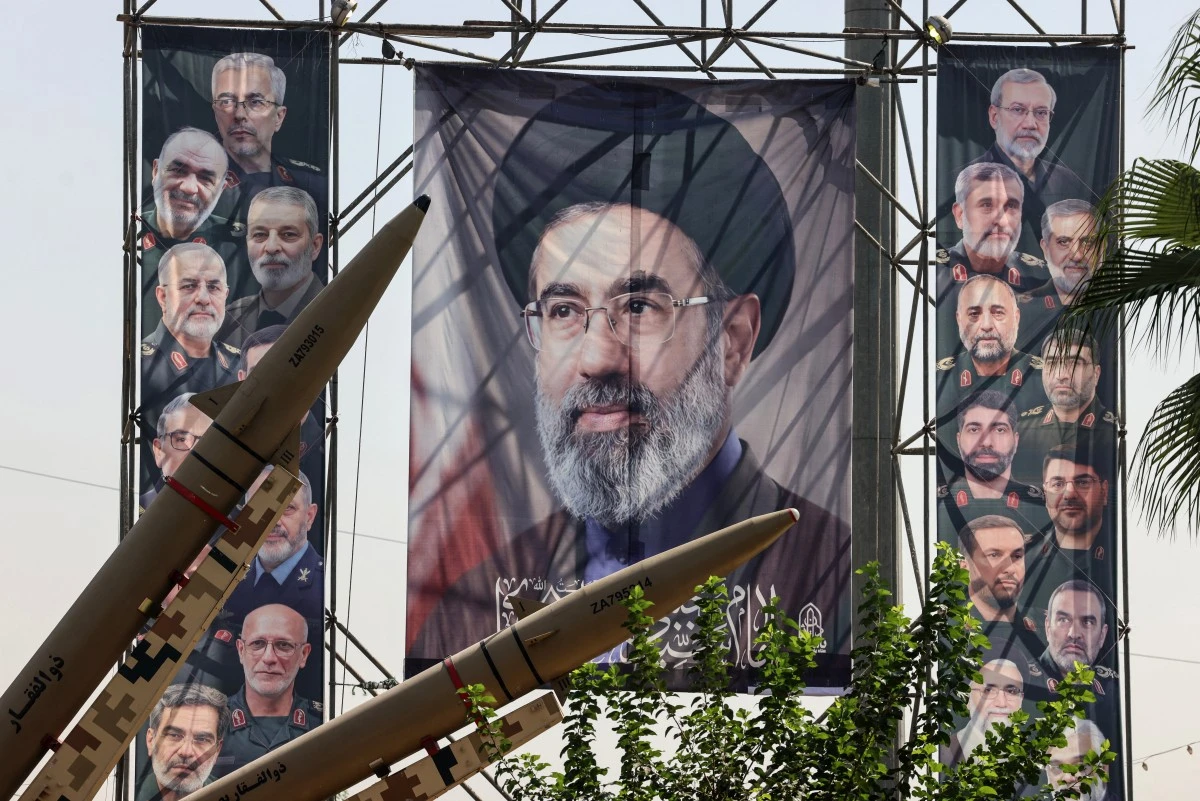
No one knows exactly what there is, where it is stored or in what condition it is in, but SIPRI has reported that the Ukraine supplied 100,000 rifles to Libya in 2007-08 while Russia reportedly sold Qaddafi an unknown number of its Igla-S, a man-portable infrared homing surface-to-air missile popular with militant groups. Also known as the SA-24 in one of its variants, it could be the biggest prize of all in the arsenal, Wezeman said.
Gen. Carter Ham, commander of US Africa Command, said last April in Congressional testimony that as many as 20,000 surface-to-air missiles were in the country when NATO operations began last March. “Many of those, we know, are now not accounted for,” said Ham, who was once in charge of the military operation in Libya.
The US has budgeted $3 million to date for two international weapons-abatement teams to find and destroy anti-aircraft systems and other munitions and land mines. They have found shoulder-launched anti-aircraft missile systems, including Russian SA-7 launchers.
State Department spokeswoman Victoria Nuland said on Tuesday that Washington is taking steps to make certain that “the governing forces in Libya have full command and control of any WMD or any security assets that the state might have had,” the Associated Press reported.
But many officials are worried that because NATO has refused to put personnel on the ground in Libya it is severely hindering efforts to secure or destroy.
“Libya has probably fewer of the most modern weapons terrorists would like to get their hands on because the country was subject to a United Nations arms embargo. Even after it was lifted,” Wezeman said, adding that Qaddafi had signed a few deals.
“They were looking at weapons but hadn’t ordered many yet, very little really modern material has reached Libya,” he said. “But small arms don’t have to be modern to be effective.”
Meanwhile, the threat of chemical and nuclear weapons getting into the hand of militants is less serious, experts said.
Libya dismantled its chemical weapons program eight years ago when it joined the Chemicals Weapons Convention.
The Organization for the Prohibition of Chemical Weapons has verified that two of the country’s three known chemical plants were destroyed and a third was converted by agreement into a pharmaceutical facility, said Michael Luhan, a spokesman OPCW, an Amsterdam-based group that monitors countries’ compliance with the convention. When unrest broke out last February, Libya was in the process of destroying stockpiles of mustard gas and other chemicals, stored in corroding drums, at a site southeast of Tripoli. Coincidentally, the equipment being used to destroy the stockpile broke down days before the fighting. Mustard gas can cause severe blistering and death, but Luhan said terrorists would likely have trouble making use of it.
“It would be difficult to weaponize the existing stockpile of mustard gas — difficult but not impossible,” he told The Media Line. “Whether it would be worth it depends on what someone would plant to do it. It’s in very suboptimal conditions right now. For it to be weaponized, the technical factors involved would make weaponizing it difficult.”
Qaddafi surrendered the hardware for his nuclear program and let the US remove about 5.5 kg of weapons-grade uranium from a nuclear research reactor near Tripoli two years ago. While there are still some 500 to 900 metric tons of raw uranium yellowcake stored in drums at Libya’s lone nuclear reactor, east of Tripoli, it would require considerable refining and enrichment to be used as an explosive.