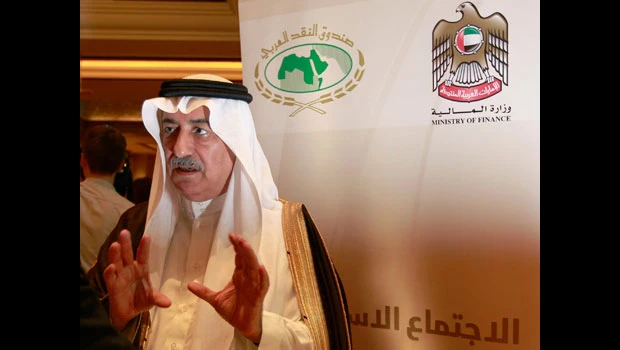
- JEDDAH: The financial crisis in Europe leading to slower economic growth poses risks for Saudi Arabia’s exports, according to Finance Minister Ibrahim Al-Assaf.
- However, he says, it may also present opportunities for its investors.
“Concerns could be for trade, or demand for Saudi production or exports. But on the other hand, it may be an opportunity for investors,” Reuters quoted Al-Assaf as saying in Abu Dhabi.Al-Assaf’s remarks came at a time when there are growing fears that a fresh crisis in Europe could trigger a global recession.Commenting on Al-Assaf’s remarks, Jarmo T. Kotilaine, chief economist at the National Commercial Bank (NCB), said: “It is obvious that a renewed crisis in Europe would probably result in significant price corrections for a number of assets, whether equities, real estate, private equity, or other areas. The impact is likely to vary country to country and sector to sector but a crisis will inevitably translate into opportunities for the savvy investor.”He pointed out that the advantage of the GCC (Gulf Cooperation Council) is its wealth of capital. Value opportunities elsewhere would promise not only long-term returns but also a chance to diversify. Many GCC corporates should pay particular attention to building their international profile through such acquisitions, which can be an attractive way to acquire skills and know-how as well, a strategy pursued by Chinese and many other emerging market companies with great success.Making use of opportunities in Europe can directly benefit the GCC as well, Kotilaine said. Reallocation of some existing foreign investments can enhance returns. But the financial as well as non-financial benefits for equity and direct investors can be particularly substantial. It gives GCC corporates a chance to acquire global market share and diversification and can bring them closer to their clients. Some of the knowledge and technologies are transferable and can be used to boost development and diversification in the GCC. “Naturally identifying and making proper use of such opportunities will require careful study and analysis but many of the opportunities can be relatively unique should the crisis worsen and should be viewed as long-term investments given the chance that the recovery may prove slow and uneven,” he added.“Building a greater GCC presence in Europe is in many ways a necessary and desirable aspect of the global rebalancing that needs to happen if the global economy is to return to sustainable growth. The deficits of the West and surpluses of emerging economies are in many ways a direct manifestation of the factors that gave us the crisis in the first place and should diminish with time even if a large element of the GCC surpluses is resource-driven and not directly linked to structural problems,” Kotilaine said.According to him, foreign investment can, moreover, help mitigate the crisis and restore confidence in parts of the European economy. The GCC countries can in such a way grow to assume a greater role in the shifting balance of global economic power. Such investments are particularly important given the still limited near-term opportunities for rebalancing through exchange rate corrections.According to the Barclays Wealth’s September Compass Report 2011, released on Wednesday, investors should stay invested and continue to favor developed equities despite market uncertainty.Kevin Gardiner, head of global investment strategy at Barclays Wealth, said: “The ongoing euro area sovereign debt crisis, the uncertainties surrounding US fiscal policy and disappointingly weak economic data, unsettled markets in August. However, while our own expectations for the second half are more modest than they were, we still believe that developed equity valuations are attractive.”Barclays Wealth believes the best tool for managing unsettled markets is asset allocation. Within a diversified portfolio, Alternative Trading Strategies (ATS), funds that aim to generate profits for investors by actively taking long and short positions in a wide range of markets, can both enhance returns and mute volatility.