- Essays grew out of the author’s well-liked podcast of the same name
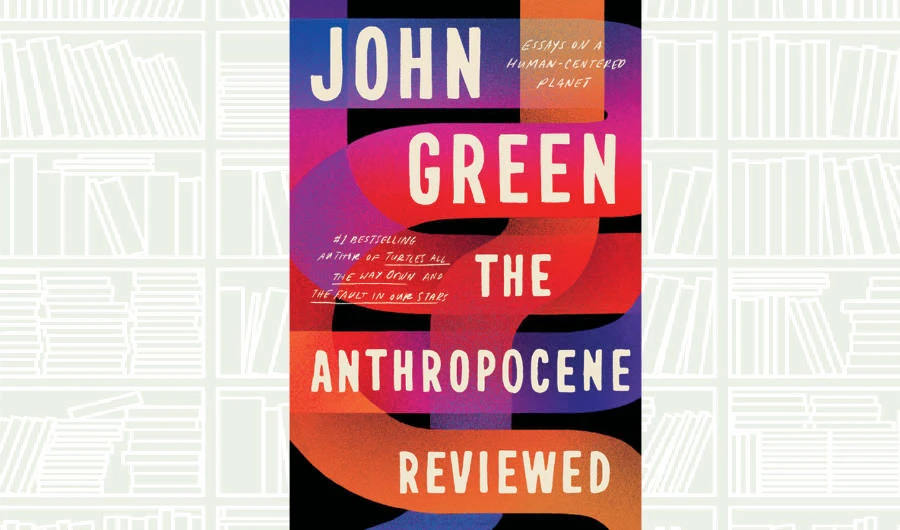
John Green’s “The Anthropocene Reviewed,” from 2021, is a book of 44 brief essays. It takes the star ratings familiar from online reviews and applies them to the marvels and oddities of a world shaped by people.
Most of the essays grew out of the author’s well-liked podcast of the same name, reworked and expanded for print.
Each one rates a topic from one to five stars, playing on internet review culture. Canada geese, Diet Dr Pepper, and the QWERTY keyboard are among the subjects.
Anthropocene is the term for our present geological age, one in which people have left the biggest mark on the Earth’s surface. It is also an age of extraordinary invention across science, technology, art, and trade. The title is a wry play on the online reviews people write about products and services.
The subjects range widely, from songs and lawns to historic events, a hot dog eating contest, and a giant ball of paint that thousands of people added to over decades.
Green writes himself into the reviews, which shows that he, like all of us, is a participant in this era and cares about how the planet fares. To me, that choice gives the book its strength.
Small, offbeat things earn a place as well. Scratch and sniff stickers and movie dinosaurs may not matter much, but they brighten ordinary days. Modern inventions such as air conditioning and antibiotics earn admiration too, though the essays also weigh their drawbacks.
In one of his essays, titled “Humanity's Temporal Range,” Green examines anxiety through numbers instead of feelings, a more analytical approach than he takes in his novels.
He looks at how widely certain worries are felt, including the belief that the world is about to end, and the figures suggest that predictions of an apocalypse often have little basis. The essay then turns to something closer to home: the ordinary fear of dying.
Green’s point is that the two are linked, and that dread of the world’s end is a larger-scale version of that personal fear. In my view this is one of the book’s most thoughtful moments.
Through linking a vast, distant fear to one that hits close to home, the essay makes the big question feel understandable instead of overwhelming.
The book also finds comfort in constancy, such as Halley’s Comet, which keeps coming back roughly every 75 years.
The book hopes for a world in which people stop wiping out vulnerable species, and where short lives are rich in ambition, content and love.