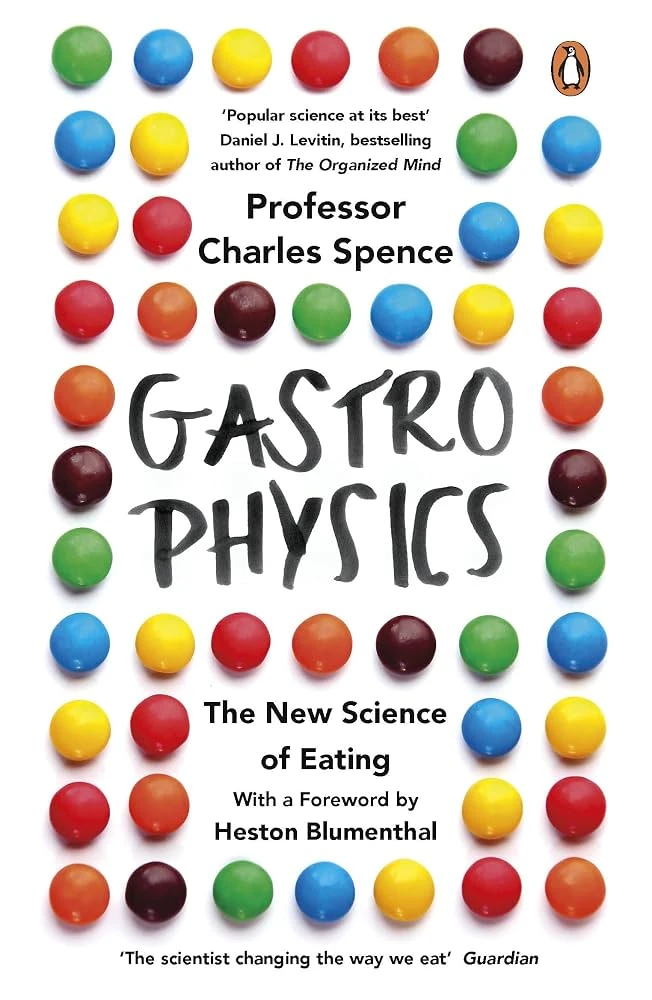
- Food for thought as we marinate thoughts about our dishes
In “Gastrophysics: The New Science of Eating,” Charles Spence, the head of the Crossmodal Research Laboratory at the University of Oxford, whips up a dish about why we eat, what we eat, and how seemingly unrelated things — like the color of a serving plate — can vastly affect our dining experience.
“The pleasures of the table reside in the mind, not in the mouth,” Spence writes.
Published by Viking, an imprint of Penguin Random House, in 2017, I have found this recent-for-me find to be quite delicious.
Spence writes: “Even something as simple as biting into a fresh, ripe peach turns out, on closer inspection, to be an incredibly complex multisensory experience.”
He also goes into “modernist chefs” and how they are now seemingly interested in what he calls “gastrophysics” — a term he defines as “the new science of eating.”
He credits culinary creatives for recombining known ingredients in fresh ways, and their desire to use emerging knowledge to enhance the art of eating.
The foreword, written by celebrated owner of three-Michelin-starred restaurant The Fat Duck Heston Blumenthal, sums it up best.
Blumenthal writes: “Upon meeting him (Spence), I discovered that many of the ideas I was exploring in my kitchen, he was also exploring in his lab.
“And so, as you’ll see in this book, he and I began doing research together on how we react to the food we see, hear, smell, touch, and put in our mouths. We eat with our eyes, ears, nose, memory, imagination and our gut.”
The book combines marketing, cognitive neuroscience, design, behavioral economics, and how we process the food we consume.
A useful book for restaurateurs, foodies and chefs alike, it provides food for thought as we marinate thoughts about our dishes.