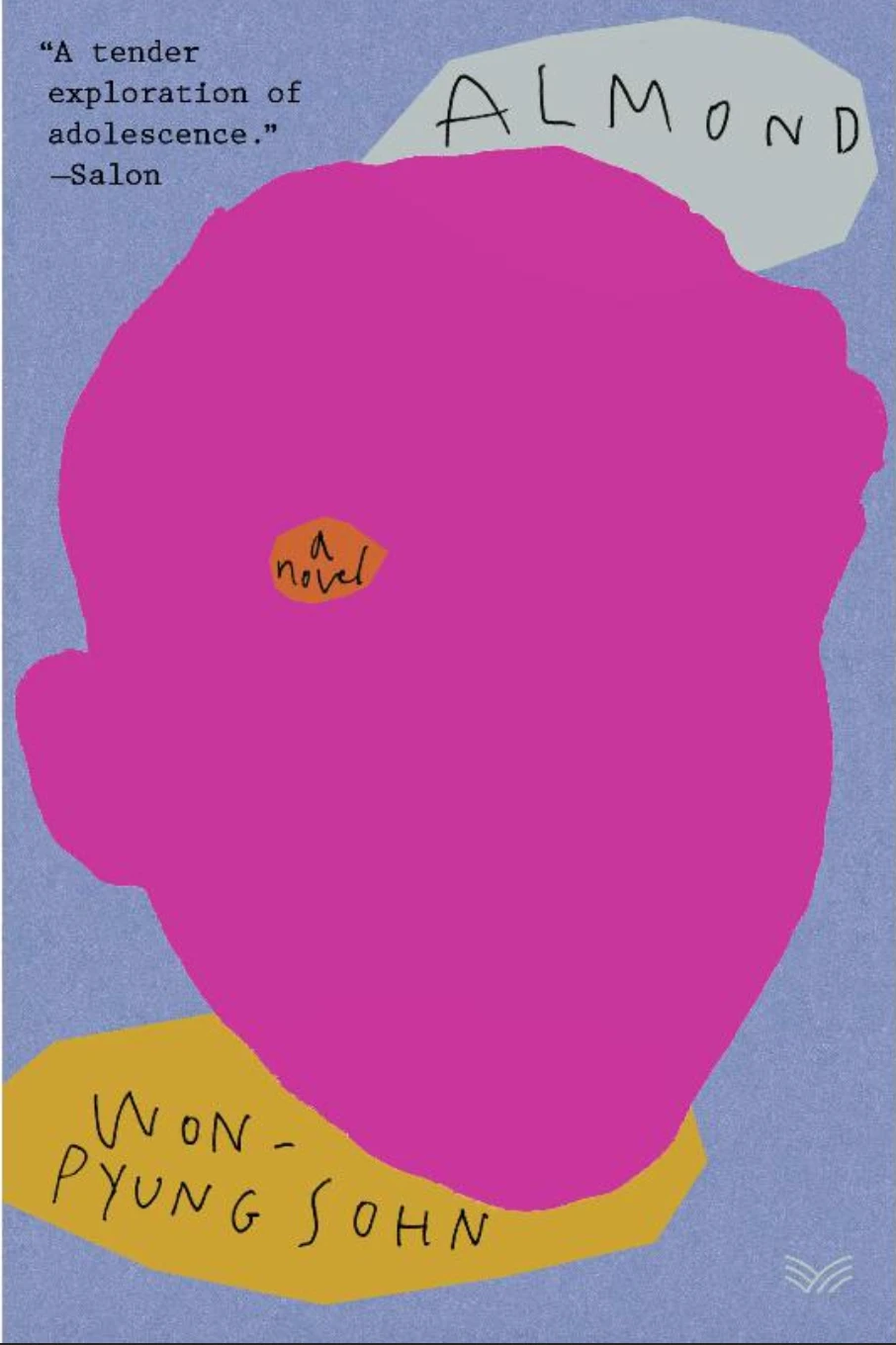
- 'Almond' by Sohn Won-pyung explores human connection through the lens of a character with alexithymia, who struggles to identify and express emotions
- The novel showcases the relationship between Yunjae, the protagonist, and his family, emphasizing the societal misunderstandings of his condition
Some books explore what it means to be human by examining our emotions. “Almond” by Sohn Won-pyung takes a different approach, asking what happens when the feelings that shape so much of human interaction do not come naturally.
Originally published in South Korea in 2017, the novel was translated into English by Sandy Joosun Lee and published in 2020.
I first picked up the novel because I was drawn to its artistic cover, with little idea of how deeply its story would affect me. What began as an impulsive choice soon became something much more meaningful, and “Almond” has since become one of my favorite books.
The novel explores empathy and the complexities of human connection. At its center is Yunjae, a teenage boy with alexithymia, a condition that makes it difficult for him to identify and describe emotions such as joy and anger.
Through Yunjae, readers encounter a world in which emotions are not instinctive responses but something to be observed, interpreted and learned.
His mother devotes herself to helping him navigate a society that often misunderstands him, while his grandmother calls him a monster yet loves him unconditionally. Together, they create a small but meaningful world of security around him, anchored by a second-hand bookstore run by his mother.
That fragile sense of stability is shattered by tragedy, forcing Yunjae to confront a world far less predictable than the one his family has tried to prepare him for. Later, he meets Gon, a troubled teenager who appears to be his opposite in almost every way. Where Yunjae struggles to recognize emotions, Gon is consumed by anger and acts impulsively.
Their unlikely friendship brings together two boys who seem to occupy opposite ends of the emotional spectrum, raising questions about whether understanding another person requires sharing their feelings or simply making an effort to see the world through their eyes.
For me, one of the most thought-provoking lines in the novel is, “Maybe understanding a language is like understanding the expressions and emotions of other people.” As someone who has always been drawn to language, I found this comparison particularly meaningful.
It made me reflect on how understanding another person, much like learning a new language, requires us to look beyond what is immediately apparent and recognize what we might otherwise miss.
What stayed with me most was how Yunjae’s story made me reconsider how easily we take our own feelings for granted. Emotions shape how we understand ourselves and connect with others, yet we rarely stop to consider how differently someone else might experience the world.
Perhaps that is what makes “Almond” so moving; it reminds us that understanding someone does not always begin with knowing how they feel, but with being willing to understand them.