George Orwell’s “Some Thoughts on the Common Toad,” first published in 1946, is often read as a gentle seasonal sketch. But reading it that way alone misses its edge.
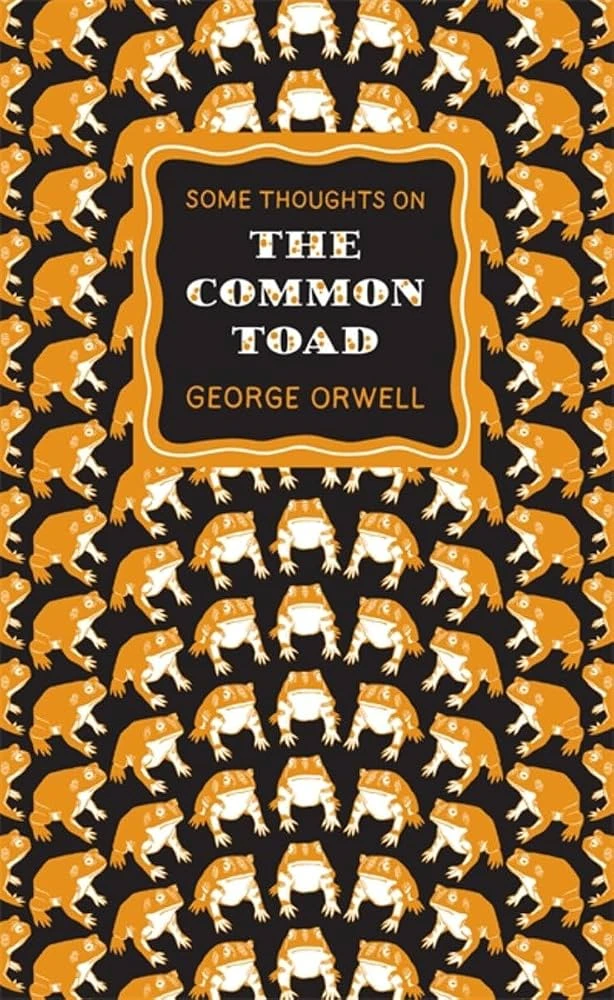
Penguin’s Great Ideas paperback edition, “Some Thoughts on the Common Toad,” was published in 2010. The 128-page collection brings together eight of Orwell’s essays on literature, politics and everyday life.
Orwell uses nature writing to make a political argument: that ordinary pleasures are worth protecting, and that a society which teaches people to abandon them risks losing something essential.
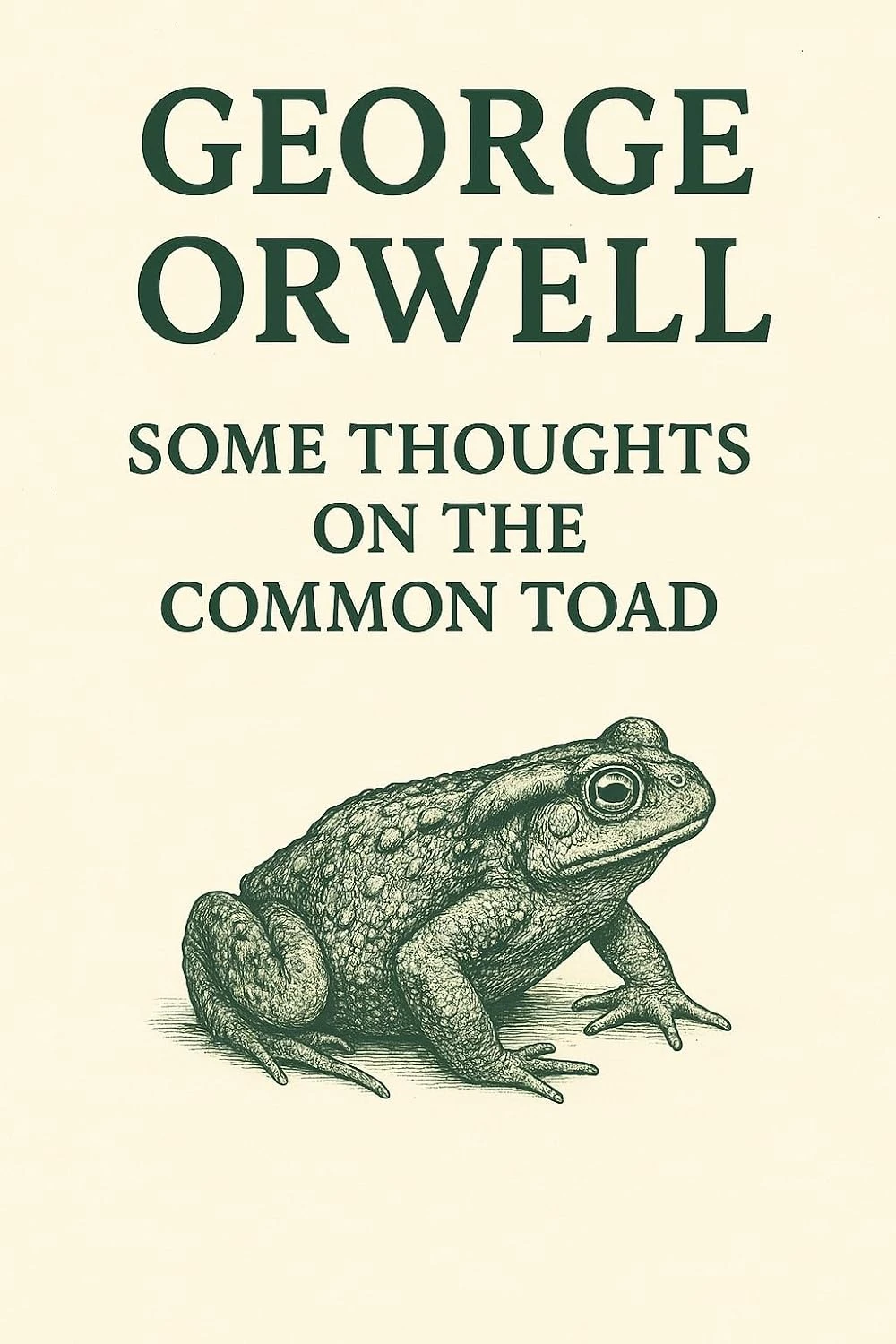
The essay opens almost like a field guide. Orwell follows the toad from its winter burrow to the nearest pond. Along the way, he pauses to admire the toad’s golden eye, which he compares to a gemstone.
The detail is not decoration. By choosing an animal that poets have mostly overlooked, Orwell makes his point before he states: beauty needs no prestige.
When he does state it, his central claim is that the small, unpaid pleasures of the natural world are not a distraction from serious life but one of its foundations.
The essay’s most durable insight is compressed into one line: “Spring is here, even in London N1, and they can’t stop you enjoying it.”
Orwell argues that people who keep the love of nature they had as children make a decent, peaceful future more likely.
The essay can, at times, make bold claims without much to support them. Its link between loving nature and a more peaceful future is striking, but Orwell offers little to explain it. He also acknowledges only in passing that the hungry, the sick and the imprisoned are shut out of the pleasures he describes.
Yet I found “Some Thoughts on the Common Toad” difficult to dismiss, because it refuses to treat joy as a luxury and instead treats it as a quiet form of resistance.
Essentially, people who stop noticing the return of spring lose more than a pleasant view. They lose some of the freedom and hope that make a better future worth working toward.