- The author emphasizes that flow enhances performance and makes everyday tasks more fulfilling, highlighting traits such as intense concentration and a sense of control
Last year, for three magical weeks, I felt driven to read more, practice my musical instrument for hours and exercise almost daily. Having always associated productivity with rigorous discipline and resistance to temptation I wondered how it was possible this felt so effortless.
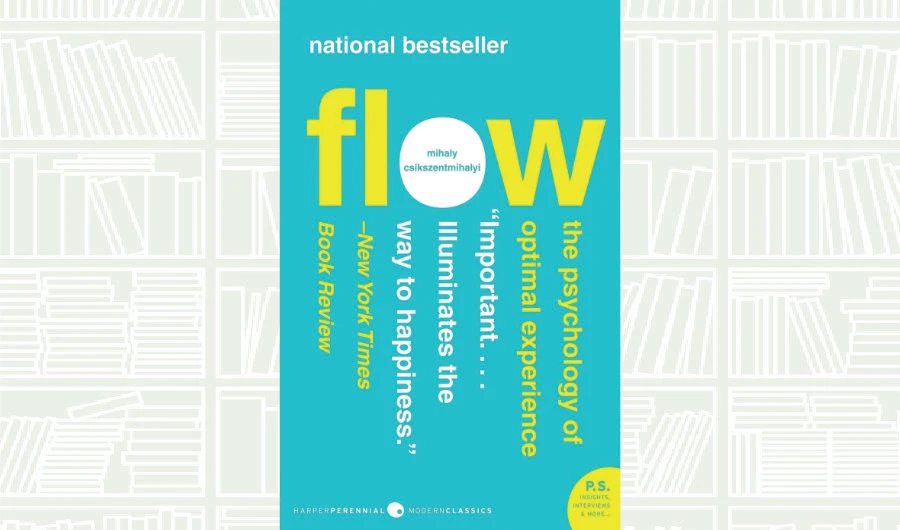
Looking into this mental state, and craving the experience again, I came across Mihaly Csikszentmihalyi’s “Flow: The Psychology of Optimal Experience.”
This explores the concept of flow, a state of heightened focus and immersion in an activity. The author examines how this optimal experience can enhance performance and make everyday activities more fulfilling and describes several characteristics including intense concentration, a loss of self-consciousness and a sense of control.
Csikszentmihalyi’s writing ultimately reassured me that such a state can be cultivated rather than left to chance. The book does not offer a step-by-step guide to experiencing flow but rather outlines the conditions necessary for this optimal experience.
According to Csikszentmihalyi, an activity must have clear goals and provide immediate feedback. There must also be a balance between the task’s challenges and the individual’s abilities, as excessive or insufficient challenge can lead to anxiety or boredom.
Interestingly, he distinguishes between pleasure and enjoyment, explaining how the latter involves extending our abilities and achieving something beyond our previous capabilities.
Throughout its 300 or so pages, the book draws on psychological research, interviews and case studies, illustrating through various personal anecdotes how the principles of flow can be applied to work, education, creativity and leisure.
The language is largely accessible to readers without a background in psychology, although it is occasionally academic and repetitive.
Given that the book was published in 1990, long before the scrolling pandemic, it is interesting to reflect on how capable we still are of experiencing such a state of deep concentration when we are so readily drawn to all sorts of distractions.