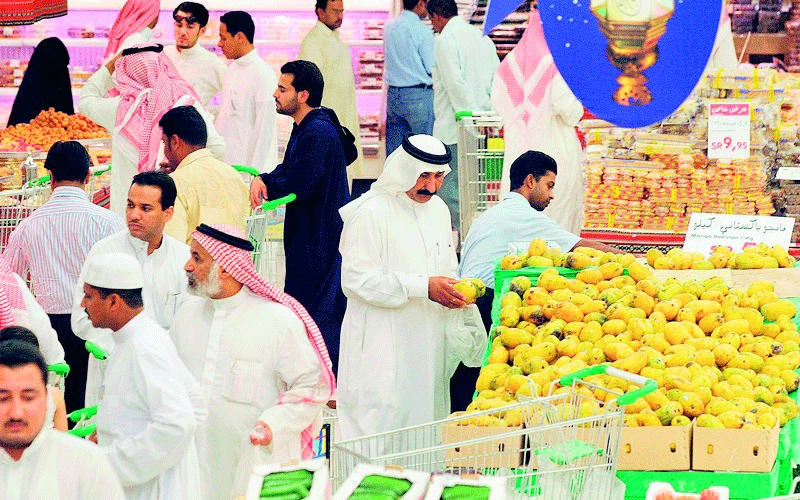
Demand for foodstuffs in the Riyadh region is expected to fall by more than 15 percent during the current Haj season. In Makkah, however, projections by experts indicate an upward swing in the sales graph despite the government reducing the number of foreign pilgrims by 20 percent and inland pilgrims by 50 percent.
The scaling down of pilgrims during the current season will bring down prices of foodstuffs compared to previous years, but will push up prices by 15 percent in the Western Region in general, said a local daily quoting Yusuf Al-Qifari, CEO of Othaim Markets.
He said demand for certain food items normally went up during Haj, including chicken, meat, rice, water, dairy products and juices.
Shibl Al-Naimi, duty manager at Tamimi Markets, forecasts that the sales of certain food products would drop by 10-15 percent in Riyadh. The prices of most food items are dictated by the demand-supply mechanism with the exception of basic commodities for which demand is high, such dairy products, milk, rice and sugar, he added.
Al-Naimi said the majority of investors in the food products sector try to offset low demand by offering discount offers on over-supplied commodities in their stores or on foodstuffs that are nearing expiry.
He attributed the price increase in foodstuffs in some markets to the monopoly of certain merchants and denied that the Haj season was a chance to raise prices as regulatory bodies control prices.
Abdullah Al-Qahtani, an investor at one of the supermarket chains, said that foodstuff prices were uniform in most places, except for small stores in neighborhoods where shop owners tended to raise prices.
Food reserves in the Kingdom are sufficient, with no possibility of shortage, he said. He attributed the occurrence of inadvertent crises to price manipulation by key dealers and importers who want to monopolize those goods in order to raise their prices.
Some commodities are pushed off the shelves during Haj since most traders tend to display fast-moving goods sought by consumers such as rice, sugar, dairy products and desserts, he said.
The quantity of imported foodstuffs via the Jeddah Islamic Port (JIP) dropped by 18 percent to nearly 766,000 tons during the past few months compared to 935,000 tons during the corresponding period last year.
Foodstuff sales fall in Riyadh but rise in Western Region