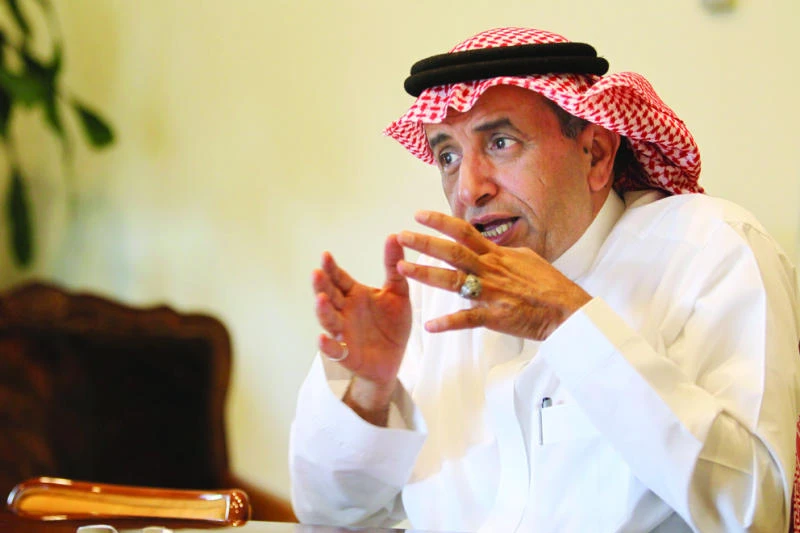
RIYADH: Saudi labor reforms to nudge more local people and notably women into jobs once held by expatriates have raised consumer spending and boosted revenue for retailers, Muhammad Al-Agil, chairman of Jarir Marketing Co, said.
Jarir, which sells books, office and art supplies, computers and some electronics, is the Kingdom’s largest listed retailer, opening its 32nd store this year.
In a market that rewards companies best placed to benefit from economic growth, which hit 5.1 percent last year, the chain’s shares have risen by 53 percent since the start of 2013, outstripping a 17 percent gain in the all-share index.
Al-Agil said labor reforms were now having an impact, particularly as more local women get jobs and spend their pay in Saudi Arabia.
“Instead of a basic foreign worker taking SR3,000, spending 700 here and sending the rest back home, the local girl will come and spend it at Jarir and other places, so we have more customers,” he said in an interview at the Reuters Middle East Investment Summit.
Riyadh is seeking to increase the number of Saudis employed by the private sector, introducing quotas that penalize companies with too many foreign employees.
One effect has been to raise the number of Saudi women in the workforce, adding to the impact of government reforms since 2011 aimed at limiting some retail sectors, such as lingerie and cosmetics, to female sales staff.
Al-Agil said Saudi retailers would benefit if the government reversed a long-standing ban on women driving vehicles.
Many households employ a foreign driver at rates of around SR2,000 a month, which eats into their spending money.
“Women driving will put more money in the family pocket,” he said.
AL-Agil said around 30 percent of Jarir’s staff are now locals, with Saudi nationals in around 85 percent of management jobs and 40 percent of shop floor jobs, but less heavily represented in areas such as warehousing.
Despite his backing for the government’s policy of encouraging employment of Saudis, he acknowledged it may have contributed to a delay in opening some new stores planned for this year as contractors complained of a labor shortage.
Al-Agil said Jarir aimed to grow gross profit by a fifth next year and 25 percent in 2015, with the increase based partly on store openings and partly on higher sales of electronics.
Al-Agil said sales of items such as tablets and smartphones have been 40 percent higher in the first nine months of 2013 than in the same period last year, partly due to prices being around a fifth lower than in 2012.
Jarir’s third-quarter net profit of SR186 million was 16 percent higher than a year earlier. Its increases in first and second quarter net profit over the equivalent periods of 2012 were also both in double figures.
The company recently announced it was seeking a 50 percent rise in capital to SR900 million by offering a bonus share for every two owned by stockholders.
Al-Agil said this would have a “beneficial” effect of stopping the share price from overheating, but the main goal was to finance capital spending to build news stores as the chain expands across Saudi Arabia and into other Gulf countries.
“We raised capital because our capex is close to SR200 million this year, and in the next two years we probably will spend 400-500 million,” he said, adding he saw no need for further capital increases in 2014-15.
Al-Jarir has contracted to build or lease 24 new shops, with six of them expected to open in 2014, Al-Agil said.
“We would like to double our size in five years,” he said.
Jarir Marketing sees gains from Saudi job reforms