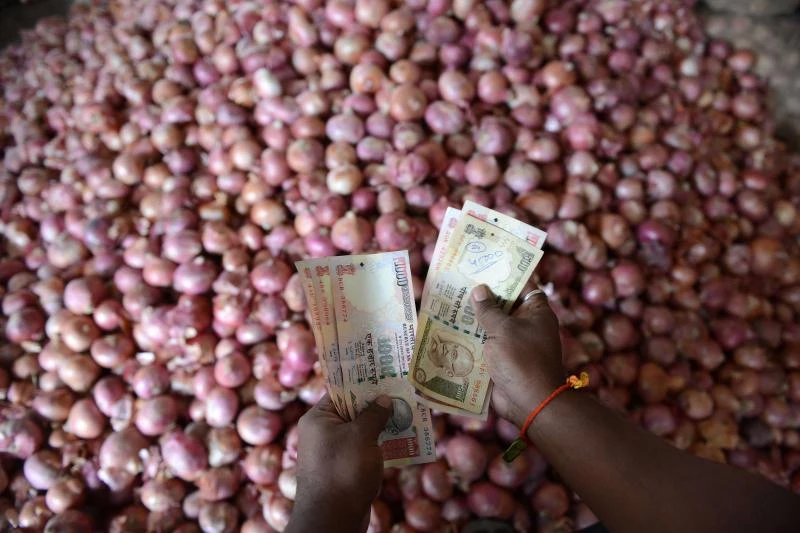
MUMBAI: A four-fold surge in the cost of onions helped push Indian inflation to a seven-month-high in September, data showed, fueling expectations of another interest rate hike as authorities struggle to get the economy back on track.
The Wholesale Price Index hit 6.46 percent last month, from 6.10 percent in August — much higher than analyst forecasts of 6.0 percent.
The rise was driven by surging vegetable and fuel prices.
“Rising input costs have pushed up core inflation,” said Rupa Rege Nitsure, economist with state-run Bank of Baroda.
India’s Planning Commission deputy chairman Montek Singh Ahluwalia admitted that inflation was high.
“I agree that inflation rate is still on the high side, but it will soften in a month or so,” Ahluwalia said in New Delhi.
Later in the day, India’s consumer price inflation data also showed a jump, to 9.84 percent in September from 9.52 percent in August.
The scandal-tainted Congress-led government of Prime Minister Manmohan Singh is anxious to tame inflation and revive the economy as it seeks a third term in office, with elections due by May 2014.
The main driver of the surge in inflation was food prices, which rose 18.40 percent year-on-year — while the cost of onions, regarded as a cooking essential, increased 322 percent owing to a supply shortage.
Fuel prices jumped 10 percent, data showed.
Onion prices have surged due to irregular supplies, which policymakers have blamed on hoarding by a section of traders in the Indian states of Maharashtra and Madhya Pradesh.
The cost of a kilogram of the humble root vegetable — a key ingredient in Indian curries — spiraled to a record 90 rupees in some Indian markets last month.
Prices then eased to near 60 rupees a kg and are expected to fall further, analysts said.
“But food inflation coupled with weak growth could become an election issue against the government,” said A. Prasanna, economist with I-Sec, an equity research firm.
This is the fourth successive month that wholesale inflation has been above the Reserve Bank of India’s comfort zone of 5.0 percent, which increases the odds the bank will raise interest rates again when it next meets.
India’s new central bank governor, Raghuram Rajan surprised markets last month by hiking interest rates as inflation began to creep up.
Rajan had earlier warned he was prepared to take unpopular steps to bring the economy back up to speed.
India’s economy grew by just five percent last year, its slowest pace in a decade, and some economists forecast expansion of under four percent this year.
The country’s public finances are also in trouble, with the current account deficit — the broadest measure of trade — hitting a record high last year.
“Concerns over inflation remain. We expect a 25 basis point hike in interest rates,” said Dharmakirti Joshi, chief economist with rating agency Crisil.
Prasanna also forecasts a similar rise in rates when the RBI meets on October 29 for its quarterly monetary policy decision.
But a leading industry lobby group called for a cut in rates.
“The rise in inflation should not come in the way of the forthcoming policy of monetary easing by the RBI,” said Chandrajit Banerjee, director general of the Confederation of Indian Industry (CII), as the arrival of crops planted in the monsoon season will provide some easing in food prices.
“It is of utmost importance to shore up flagging investor sentiment which has been adversely affected by high interest rates,” Banerjee said in a statement.
The government also revised upwards July’s inflation reading to 5.85 percent, from 5.79 percent reported earlier.
Onion costs spur Indian inflation