Russia has all the assets to be a major world leader, with a surface area of 17,098,242 km² — nearly twice that of the US which is 9,826,675 km² — stretching across nine time zones from Europe to the vicinity of Japan.
In the collective consciousness in most Middle Eastern and Western countries uttering the name Russia provokes askance: Daily news of the often bloody unfolding of events in Ukraine depict Russia as the culprit as the US nudges Europe for concerted economic sanctions against its supplier for nearly half of not only its fossil fuels (oil and gas) but its nuclear feedstock as well (uranium for example).
In the not too distant past, Russia was at odds not only with its perennial rivals for world supremacy, Europe and the US, but with most of the populations it controlled then within the iron curtain of the now defunct Soviet Union.
The coming decade could see a transformational awakening in the Russian economy as it adopts gradually free market measures to diversify and strengthen. Whereas until now its bargaining power with other mighty nations (mainly Europe and China) rests on its status as an unavoidable energy supplier, the status Russia could be aiming for is to buttress its current standing with downstream industrial knowhow.
The journey could be long though, slowed by corruption presently placing Russia in an abysmal triple digit rating with Transparency International.
Russia’s economic growth engines remain primary industries since oil and gas revenues contribute 52 percent to GDP and to over 70 percent of exports while sales of metals and timber constitute 14 percent of GDP, according to Petroleum Finance Company.
While Russia has a firm place amongst the top three world rich and producers of oil and gas, this standing alone will very likely fall short of helping Russia fulfill its ambition of being a superpower at par with the US in imposing its will in foreign affairs.
A quantum leap in technological developments with commercial significance across several fields is needed. The one of importance to us is petrochemicals.
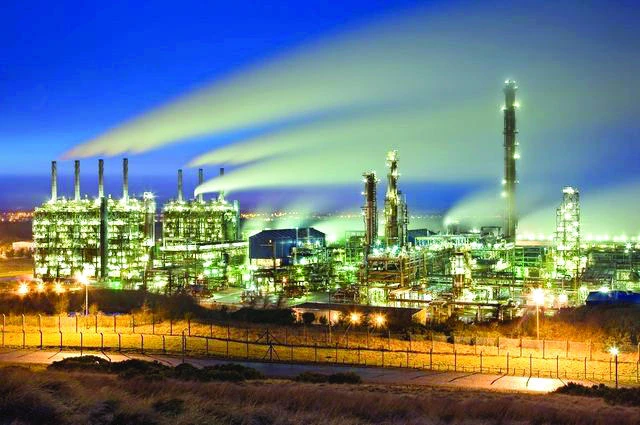
It is striking to notice how far behind Russia is still stagnating in chemical and petrochemical fields, where its capacity to produce polyolefins (which make up two thirds of the thermoplastic family) is comparable to even that of Iran and Nigeria, which although OPEC’s sixth largest producer, remains one of the poorest countries in the world.
Finland — with a population a fraction of Russia’s and plentiful reserves but a top ranking in Transparency International — affords its citizens one of the highest living standards in the world and its per capita consumption of prime plastics is nearly triple its gigantic neighbor’s which is still below 30kg per person per year in 2014.
Russia has however engaged in joint ventures with Western Companies to boost its thermoplastic production and is slated to become a net exporter of such products as of 2017.
Although its exports then of polyolefins will still be less than a million tons per year and targeted mostly at major world net importers such as Europe and China, GCC-based producers of similar products better take notice of this potentially formidable competitor about to impose its presence among the members of the highly exclusive club of most competitive plastics producers in the world now comprising only the GCC (mostly Saudi Arabia) and the US.
By 2023 Russia is reported to be exporting nearly 5 million tons a year of polyolefins alone and a part — however small — of these quantities could be offered converters not only in major importing poles like Europe and the Far East but even in the GCC if WTO regulations continue to pull down import tariffs of such products which have already gone down from 20 percent to 12 percent.
Geology and technology seem to be on Russia’s side in its daunting ambition of exploiting its hydrocarbon reserves: The extraction costs of both crude oil and natural gas are quite advantageous with respect to even the GCC and the US: In natural gas, the cost of extracting one million BTU ranges from less than $5 in South Russia to less than $2.5 in West Siberia; competitive with the US and with sandstone gas which seems to be the only possible alternative in the GCC, since there is no more unallocated conventional associated gas.
In crude oil, the cost of extracting one barrel of crude ranges from $24 in East Siberia (very close to what it costs in the US) to $7 in Russia’s Far East just about equal to what it costs in the GCC. Perhaps in a prescient initiative to enhance mutual economic interests Saudi Arabia has engaged Russia in exploring for gas in the Rubh Al-Khali basin in a joint venture — Luksar Energy — where the Russian partner has been allowed a twenty percent stake.
The major blocks to Russia’s economic development — including petrochemical developments — seem to be the imposed sanctions subsequent to Crimea’s annexation, and corruption.
Economic sanctions including boycott are causing the ruble to devaluate fast and generate inflation. This could lead to pauperization of the population through purchasing power loss and an increase in interest rates which leads to recession.
One possible remedy is for the Russian Government to resort to the Russian Stabilization Fund which was conceived in 2004, to help absorb economic adversity resulting from a sudden and hostile change in international economic circumstances toward Russia.
This fund proved effective in mitigating the woes of the 2008 global economic crisis which halted the growth of Russia’s economy hitherto growing at 6 percent a year (twice the global economic growth). The Russian Stabilization Fund could very well prove to be yet again the means to overcome the present economic hurdles.
Russia has shown it can reduce corruption significantly in areas such as military technology, including aeronautics where aircraft is being converted — albeit slowly — to commercial applications which could compete soon with established companies like Airbus and Boeing.
Currently, Russia and its Scandinavian neighbors (Finland, Norway) are in the process of establishing a fund — named Arctic Barents — to jointly exploit billions of reserves of crude oil and gas underneath the Arctic Ocean.
From its incipience, the partnership suffers from a crippling incompatibility as Norway and Finland frequently succeed one another at the top of the list of Transparency International whereas Russia is very close to the bottom.
The relevance of Russia’s potential emergence as a globally competitive petrochemical supplier underlies the present opportunities which could be seized by the Saudi converting sector in particular toward a new market where the per capita consumption of plastics is low yet but has been increasing steadily and will likely pick up momentum in coming years.
Recently, Europe slapped 6.5 percent in import tariffs on Saudi-made products imported to Europe which might impede the operation of recently added converting capacity in Saudi Arabia and jeopardize payback periods and delay profitability.
The nascent and emerging petrochemical sector of Russia will need modest but growing tonnage of Saudi-made plastic bags (Form Fill and Seal, FFS) to package their polymers and the underutilized Russian consumer market at large needs Saudi-made refuse bags, as well as packaging in various economic sectors: Agriculture (greenhouse, mulch, silage etc…), food and beverage chain, cosmetics, sanitation, pharmaceutical etc… Saudi-based converters in search of export markets to fill load on machines might be well served to research the Russian demand for their products.
The increased exports by Saudi-based converters will allow Saudi-based petrochemical producers to sell more of their products domestically.
The coming months and years will be interesting as we might witness the conquest by Saudi-based converters of an awakening giant of a yet virgin market.
Russian petrochemical sector: New frontier for Saudi-based converters