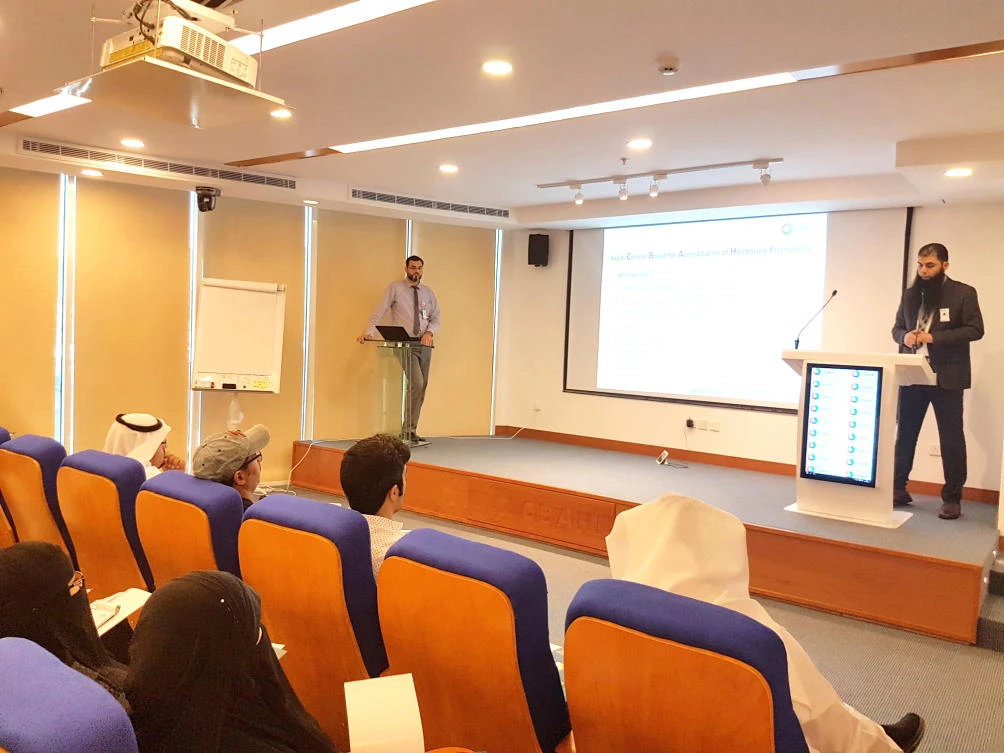
The Saudi Central Board for Accreditation of Healthcare Institutions (CBAHI) has launched the 4th session of its orientation/training program in the national standards of hospitals.
The program was inaugurated on Nov. 18 at CBAHI’s premises in Riyadh and will run for two weeks.
It is part of the group’s awareness mission aimed at boosting quality and safety standards in the Kingdom’s health care facilities.
Seven specialists in diverse fields are participating each from 52 hospitals across the Kingdom.
CBAHI selected the candidates based on their competencies, abilities and readiness to work with hospital management regarding the application of national standards.
During the program, two days are assigned for each domain, such as pharmacy and nursing.
Dr. Salem Al-Wahabi, director general of CBAHI, said: “CBAHI is attentive in applying the national standards within various health care facilities in the Kingdom. This reflects CBAHI’s contribution to promoting health care services where quality is not compromised.”
He added: “Achieving a patient’s satisfaction and loyalty to the facility is a top priority. It is crucial to educate health workers about the importance of the national standards that must be met in every health care facility. This is the gateway to achieving high quality and excellent medical services.” The program includes extensive discussion between the participants and trainers.
“The standards maintained by CBAHI of the health care facilities in the Kingdom are the basis toward realizing patients’ full satisfaction. Building patient loyalty requires delivering excellent services, and this is what CBAHI does,” said Hamad Al-Salhi, assistant director general for planning and development.
Majdah Shugdar, assistant general director for accreditation, said: “Field visits for accreditation carried out by a team of qualified and certified surveyors aim at ensuring quality standards and patient safety. This has been realized through unified work mechanisms approved by the hospital management and communicated to all workers and medical staff. The visits are also intended to endorse the accuracy and completeness of documentation of medical files and verify the workers’ certificates and competencies before they begin their tasks, to ensure that all physicians perform their medical duties in a dedicated and effective manner.”
The program was inaugurated on Nov. 18 at CBAHI’s premises in Riyadh and will run for two weeks.
It is part of the group’s awareness mission aimed at boosting quality and safety standards in the Kingdom’s health care facilities.
Seven specialists in diverse fields are participating each from 52 hospitals across the Kingdom.
CBAHI selected the candidates based on their competencies, abilities and readiness to work with hospital management regarding the application of national standards.
During the program, two days are assigned for each domain, such as pharmacy and nursing.
Dr. Salem Al-Wahabi, director general of CBAHI, said: “CBAHI is attentive in applying the national standards within various health care facilities in the Kingdom. This reflects CBAHI’s contribution to promoting health care services where quality is not compromised.”
He added: “Achieving a patient’s satisfaction and loyalty to the facility is a top priority. It is crucial to educate health workers about the importance of the national standards that must be met in every health care facility. This is the gateway to achieving high quality and excellent medical services.” The program includes extensive discussion between the participants and trainers.
“The standards maintained by CBAHI of the health care facilities in the Kingdom are the basis toward realizing patients’ full satisfaction. Building patient loyalty requires delivering excellent services, and this is what CBAHI does,” said Hamad Al-Salhi, assistant director general for planning and development.
Majdah Shugdar, assistant general director for accreditation, said: “Field visits for accreditation carried out by a team of qualified and certified surveyors aim at ensuring quality standards and patient safety. This has been realized through unified work mechanisms approved by the hospital management and communicated to all workers and medical staff. The visits are also intended to endorse the accuracy and completeness of documentation of medical files and verify the workers’ certificates and competencies before they begin their tasks, to ensure that all physicians perform their medical duties in a dedicated and effective manner.”